
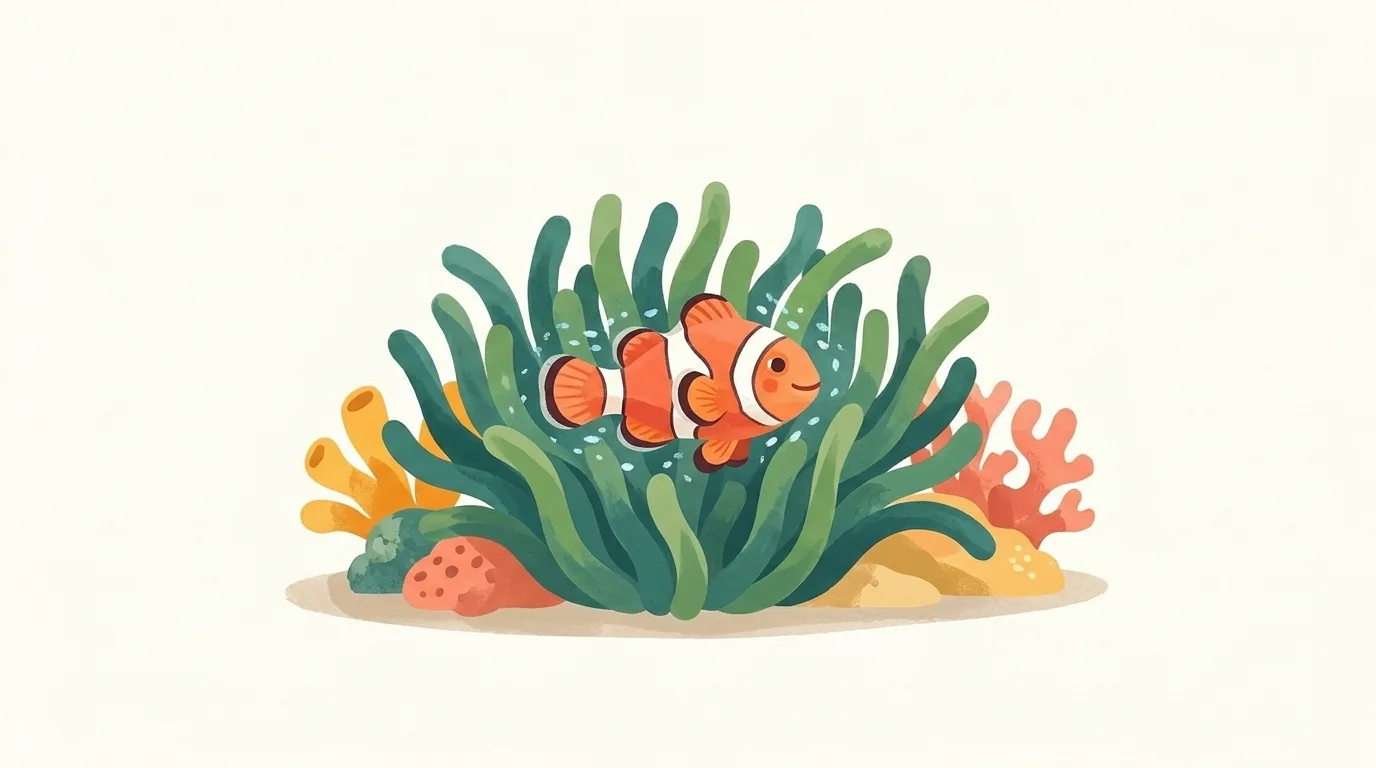
Illustration, made with AI
Why doesn't the anemone sting the clownfish?
Because of its slimy coat!
A clownfish is covered in mucus. Scientists think the mucus seems like part of the anemone, so the anemone doesn't treat the fish as food and its stingers never fire.
It's like wearing a disguise that tricks the guard!
Tell me more
An anemone's tentacles are packed with tiny stinging barbs called nematocysts. They protect the clownfish from bigger fish that might eat it. A clownfish has to get used to its anemone. It touches, nibbles and fans the tentacles over several hours. If it leaves its home for a while, it has to get used to it all over again. Scientists still argue about how much of the mucus the clownfish makes itself and how much it picks up from the anemone. A small group of clownfish lives together in one anemone.
Words to know
- mucusslippery slime a body makes to coat, protect and trap things
- tentacleslong, bendy arms that can grab or sting
- nematocyststiny stinging barbs on anemones and jellyfish
Try it at home
At an aquarium, find clownfish and watch them snuggle right into the waving tentacles. Count how far they swim from home.

 Dig deeper

 What else?


 Surprise me!