
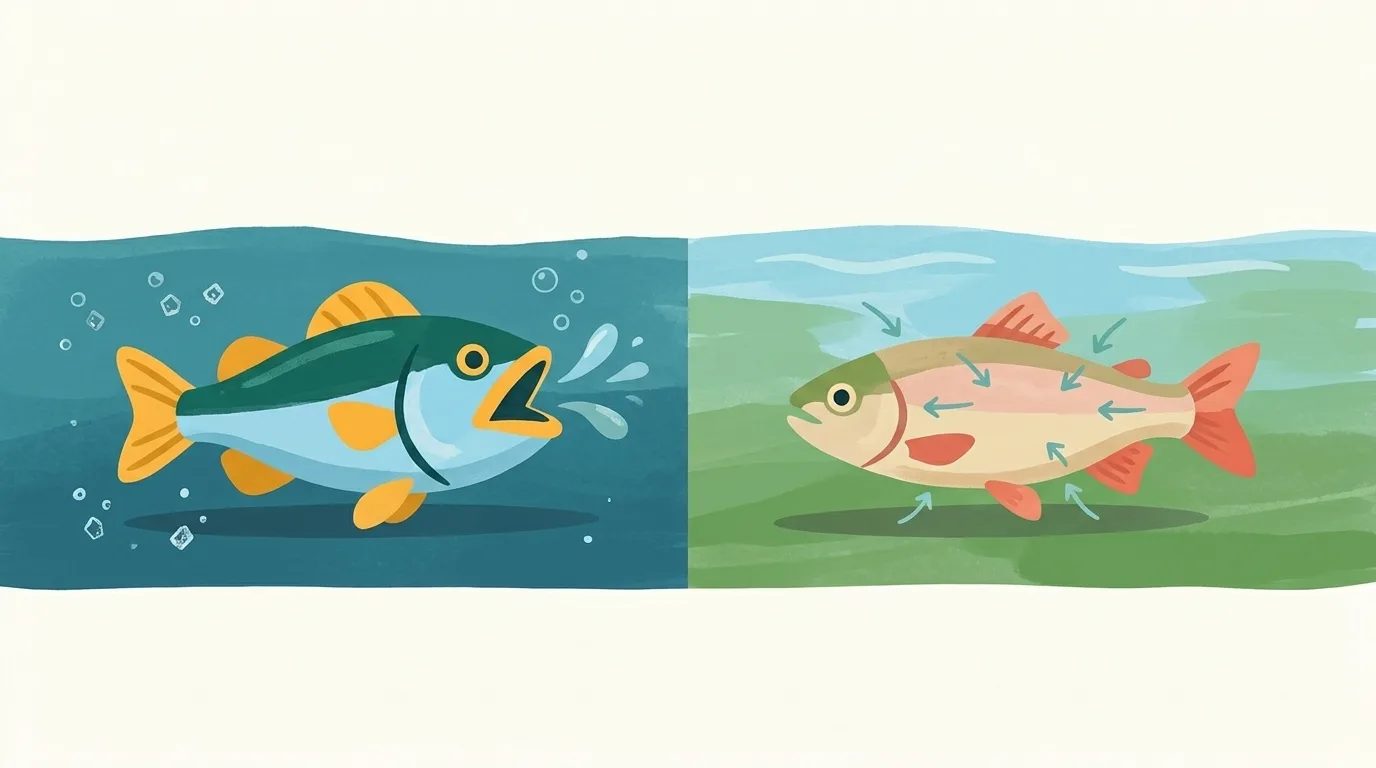
Illustration, made with AI
Do fish get thirsty?
Sea fish drink lots of water, but river fish hardly need to!
Salty seawater pulls water out of a sea fish's body through its gills, so it gulps seawater to refill. In a river, water soaks in instead.
So river fish pee a lot!
Tell me more
Water moves through thin skin toward the saltier side. That's called osmosis. A sea fish is less salty inside than the sea around it, so it keeps losing water. It drinks seawater, then pushes the extra salt out through special cells in its gills. A river fish is saltier inside than the river, so water flows in all day long. Its kidneys make lots of very watery pee to get rid of it, and its gills grab useful salt from the water. Sharks do it differently: they keep a chemical called urea in their blood, which helps them hold on to water.
Words to know
- osmosiswater moving through a thin skin toward the saltier side
- gillsbody parts that take oxygen out of water for breathing
- kidneysa body part that cleans your blood and makes pee
Try it at home with a grown-up
With a grown-up, sprinkle salt on a few cucumber slices and wait 10 minutes. Do water drops appear? The salt pulled water out, just like the sea does to fish.

 Dig deeper
 What else?



 Surprise me!