
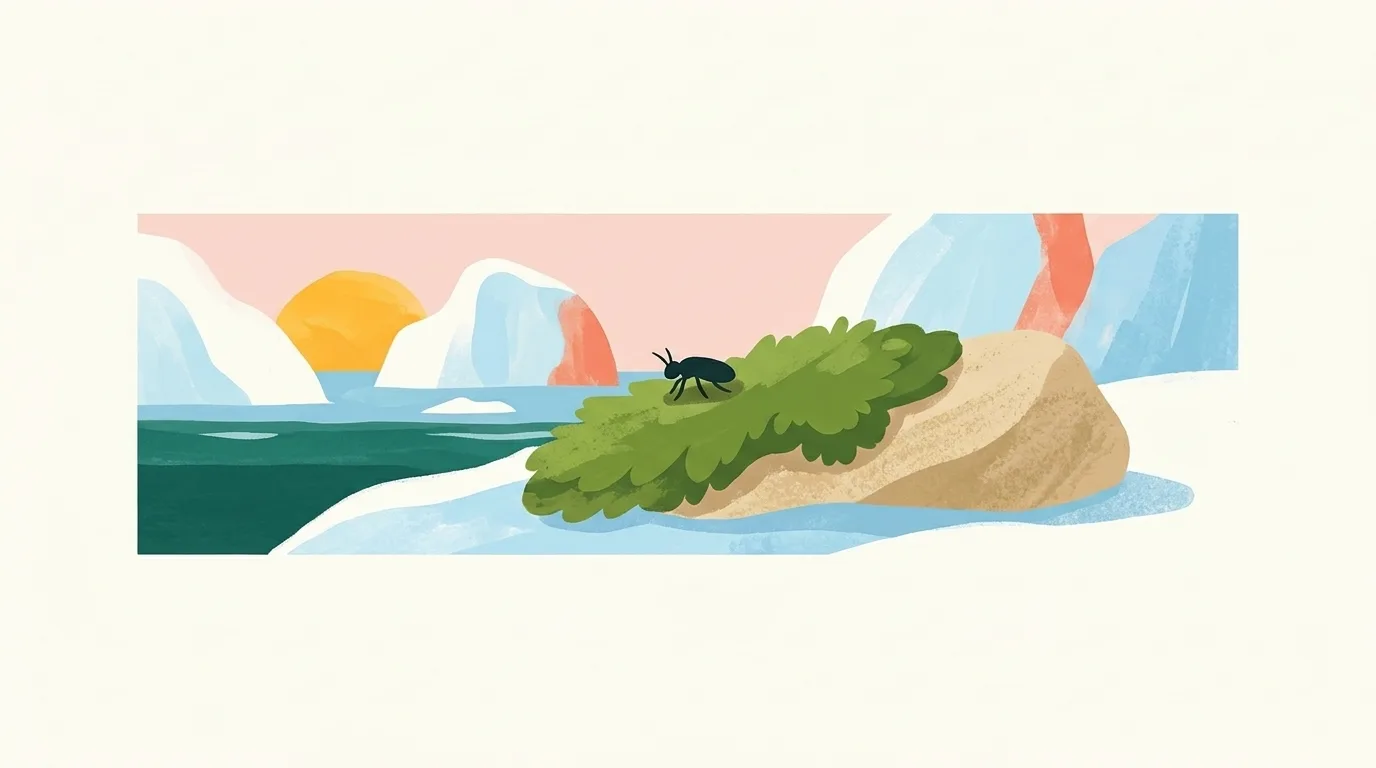
Illustration, made with AI
Are there any insects in Antarctica?
Yes! The main one is a tiny fly, the Antarctic midge, smaller than a grain of rice.
It has no wings, so the wind can't blow it away. In winter, sugars in its body work like antifreeze.
It's Antarctica's biggest year-round land animal!
Tell me more
The midge is only 2 to 6 millimeters long. Its larvae spend about two years eating tiny algae, moss and bits of old plants. To get through winter, a midge also dries itself out, so ice crystals can't form and burst its cells. Then it rests under a blanket of snow, which keeps it warmer than minus 15 degrees Celsius, the coldest it can survive. Many birds only visit Antarctica in summer, but the midge stays on land all year, which is why it wins the "biggest land animal" prize. Grown-up midges don't eat at all, and they live no more than 10 days.
Words to know
- antifreezesomething mixed into a liquid so it does not freeze
- larvaebaby insects that look like little worms
- algaetiny plant-like living things
Try it at home
Find a grain of rice. The Antarctic midge is about that long, or even shorter!
 Dig deeper
 What else?

 Surprise me!