
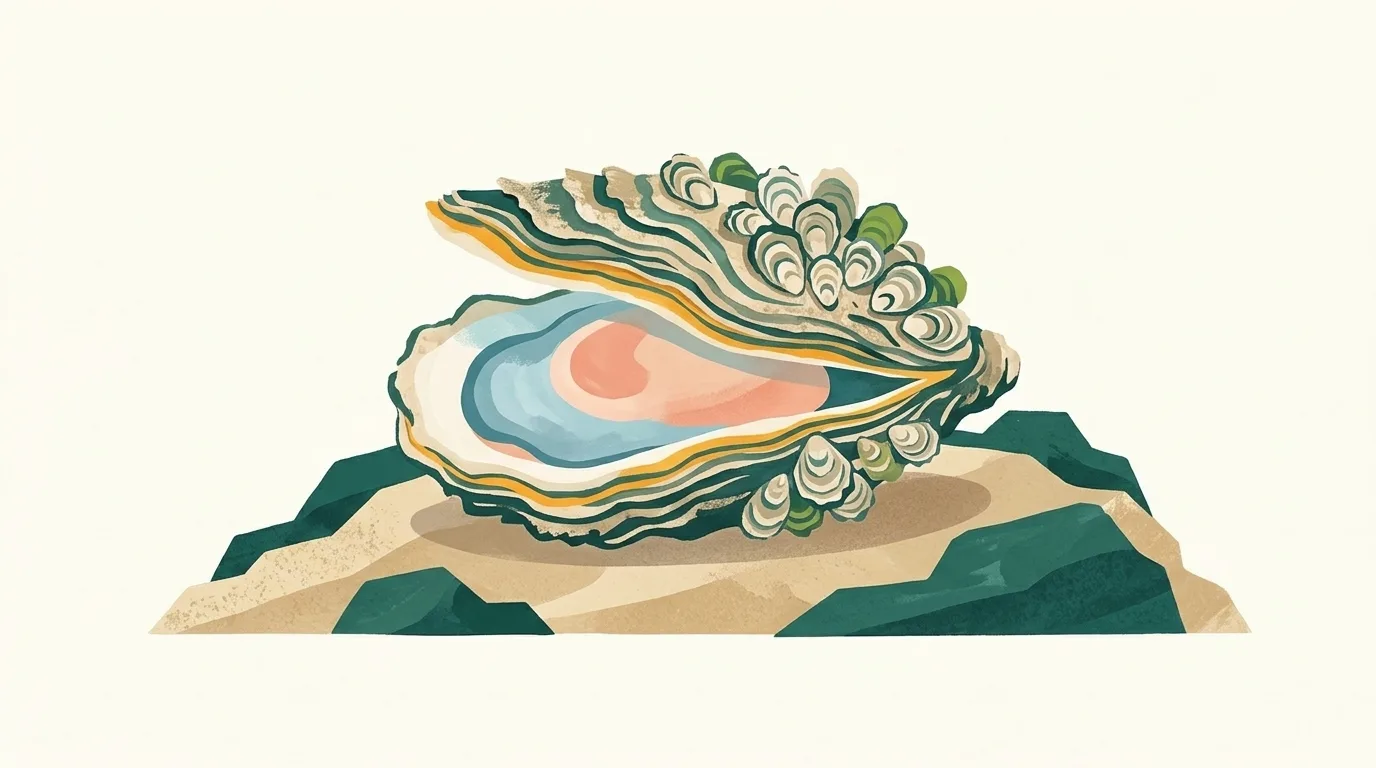
Illustration, made with AI
How do oysters make their shells?
An oyster builds its own shell from bits it pulls out of seawater!
A soft body part, the mantle, takes calcium from the water, mixes it with protein, and adds it to the shell, layer by layer.
The shell grows as the oyster grows.
Tell me more
The shell is made of calcium carbonate, the hard mineral of seashells, and its building blocks come from the seawater. Oysters start making their shells soon after they hatch. Baby oysters drift in the water, then settle on something hard, often another oyster's shell, and attach themselves for life. Then they're called spat. Over many years, oysters pile up on top of one another into a reef, a home for many other sea animals. Oysters can live to be 20 years old, and one oyster can filter up to 50 gallons of water a day.
Words to know
- mantlethe soft part of an oyster's body that builds its shell
- calciuma mineral that makes bones hard and strong
- calcium carbonatethe hard mineral that eggshells and seashells are made of
Try it at home
Look closely at a seashell, with a magnifying glass if you have one. Can you see thin lines where new layers were added as the animal grew?
 Dig deeper
 What else?
 Surprise me!