
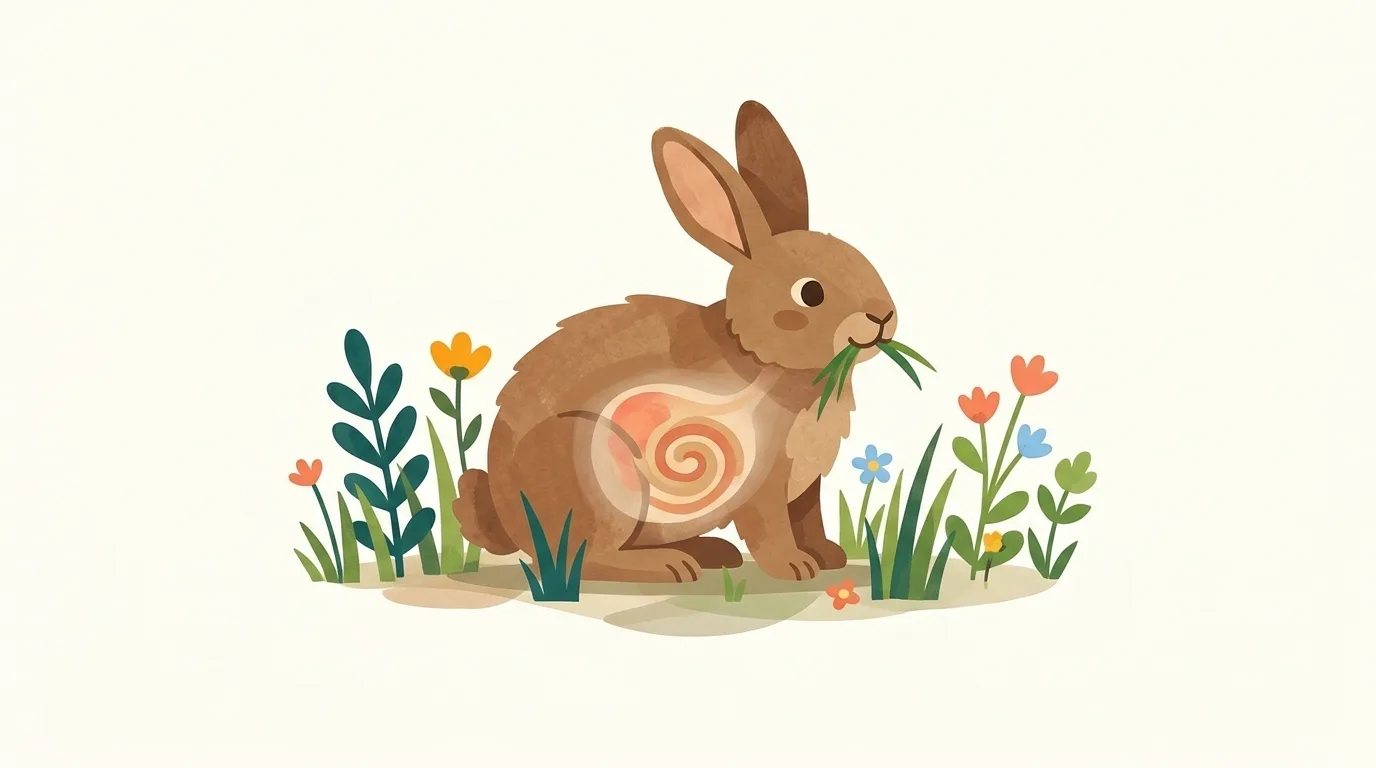
Illustration, made with AI
Why do rabbits eat their own poop?
To eat their food twice! Grass is tough, so a second trip through the tummy gets more goodness out.
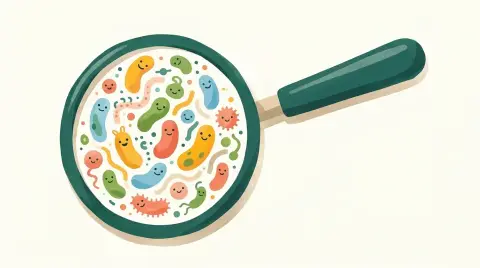
Tiny microbes in a gut pouch turn grass into vitamins. They come out in soft poop, which the rabbit eats.
It looks like a tiny blackberry!
Tell me more
Rabbits make two kinds of poop. Hard pellets are leftovers the rabbit doesn't need. The soft, special ones are called cecotropes. They are made in a pouch in the gut called the cecum, where microbes break down tough grass. Cecotropes come out about eight hours after a meal. The rabbit swallows them whole, without chewing, so their slimy coating stays in one piece. They are sometimes called "night poop", but rabbits make them all day and all night. Guinea pigs, mice, hamsters and chinchillas do the very same trick to get more from their food!
Words to know
- cecotropessoft special rabbit poop full of vitamins
- microbesliving things too tiny to see without a microscope
- cecuma pouch in the gut that helps break down tough plants
Try it at home
At a park or farm, look for rabbit droppings, but don't touch. Are they round and dry? Those are the leftovers a rabbit doesn't eat.
 Dig deeper
 What else?
 Surprise me!