
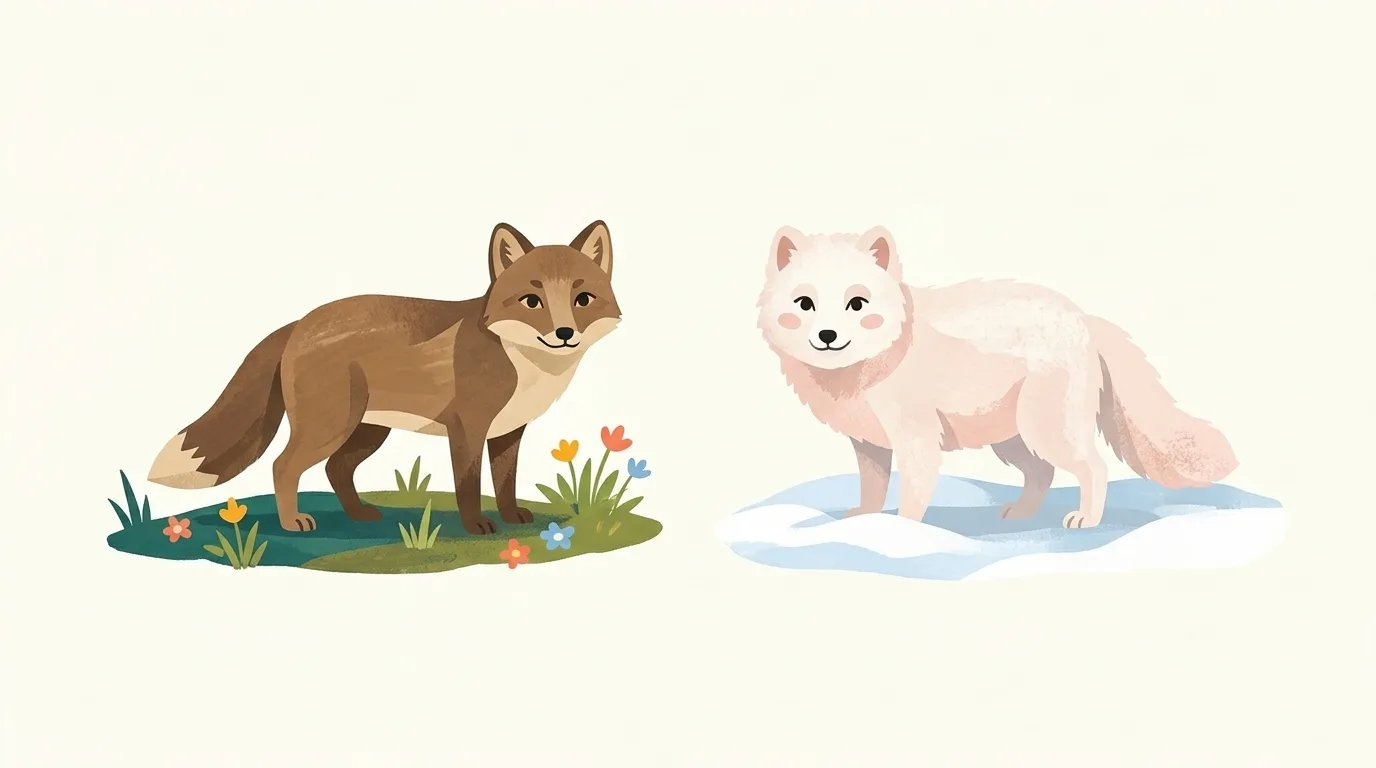
Illustration, made with AI
Why do some foxes turn white in winter?
Arctic foxes don't change color like paint. They shed their brown summer fur and grow a new white coat!
White fur blends in with snow. That camouflage helps a fox hide and sneak up on dinner.
Like swapping a summer shirt for a snowsuit.
Tell me more
Arctic foxes molt twice a year. In Alaska, white foxes start shedding their long winter fur in early April, and by November their thick white coat is complete again. That winter fur is warm, too: it gives the best insulation of any mammal. Arctic foxes even have fur on the soles of their feet. Not every Arctic fox turns white. Some Arctic foxes, called blue foxes, stay dark all year, just a little lighter in winter. Blue foxes mostly live on coasts, where their dark fur blends in with cliffs and rocks, while white foxes mostly live inland on snowy tundra.
Words to know
- camouflagecolors or patterns that help an animal blend in and hide
- moltto shed old fur, feathers or skin and grow new
- insulationstuff that keeps warmth in and cold out
Try it at home
Put a white sock and a brown sock on a white pillow. Step back. Which one is harder to spot? That's how white fur hides a fox in snow.

 Dig deeper

 What else?



 Surprise me!