

Illustration, made with AI
How do white blood cells fight germs?
They gobble germs up! A white blood cell wraps around a germ, swallows it, and breaks it apart.
Germs and nearby cells give off chemical signals. White blood cells follow them straight to the germs.
Like a dog following its nose to a treat!
Tell me more
This gobbling is called phagocytosis, from an old Greek word meaning "to eat". Once they get the signal, white blood cells called neutrophils take about thirty minutes to leave the blood and reach the germs. Other white cells, called B cells, make antibodies: sticky markers that grab onto germs so they are easier to destroy. Some white cells help your body remember germs it has met before, so it can fight them faster next time. White blood cells are made in your bone marrow. They are only about 1 percent of your blood, but your body's defence depends on them.
Words to know
- phagocytosiswhen a cell wraps around something and swallows it
- antibodiessticky helpers your body makes that grab onto germs
Try it at home
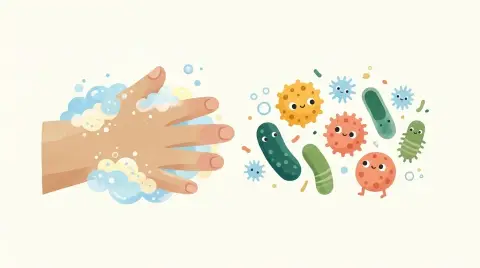
Wash your hands with soap for as long as it takes to sing a song. Fewer germs get in, so your white blood cells have less to fight.

 Dig deeper
 What else?

 Surprise me!