
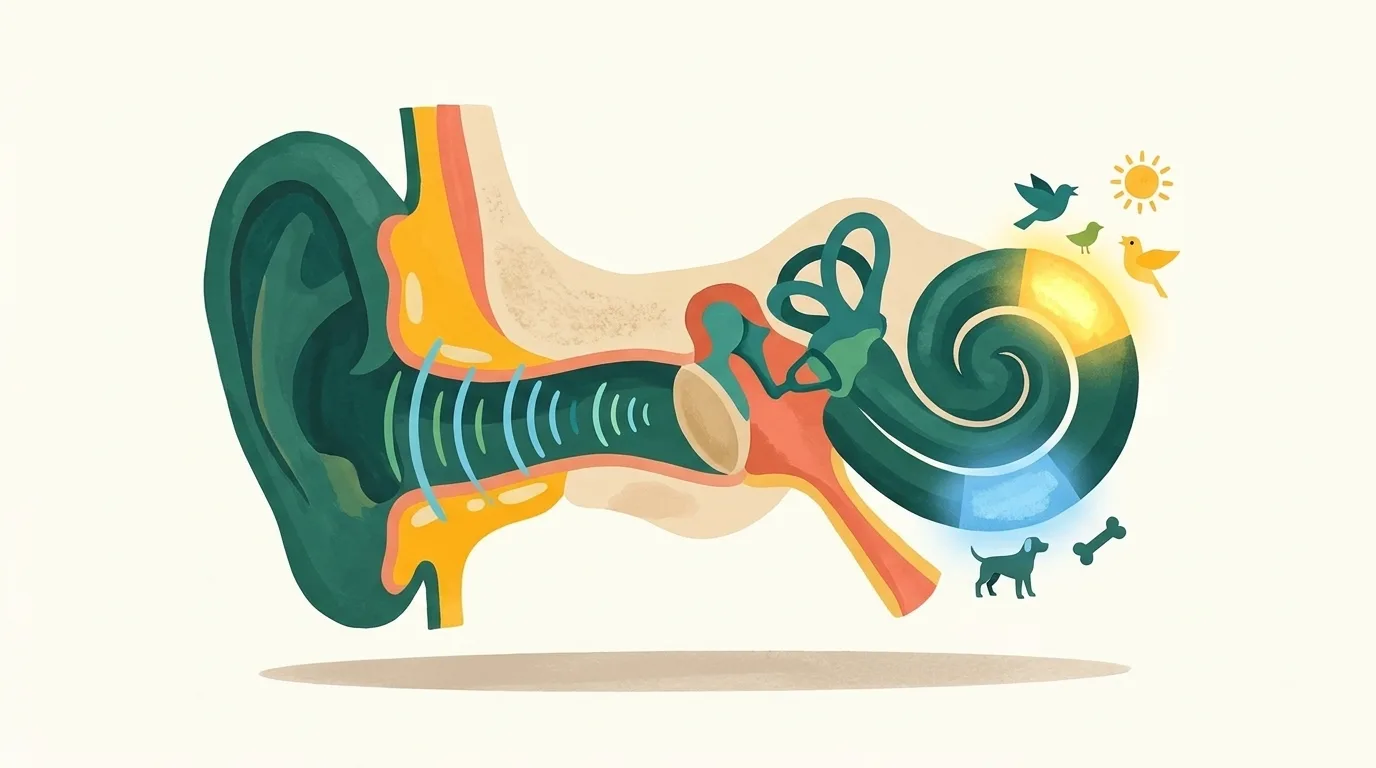
Illustration, made with AI
How does my ear tell a high sound from a low one?
Deep in your ear is a curly tube shaped like a snail shell, lined with tiny hair cells!
High sounds wobble the hair cells near its wide start. Low sounds wobble ones near its middle. Your brain knows which spot moved.
Like piano keys.
Tell me more
The curly tube is called the cochlea, from an old word for snail shell, and it is full of liquid. Sound first hits your eardrum, a thin skin that shakes. Three tiny bones pass the shaking on and make it stronger, then the liquid in the cochlea starts to ripple. A wave travels along the tube, and the hair cells ride it. When their tiny hairs bend, little gates open and they send an electrical signal. A nerve carries the signals to your brain, which turns them into a sound you understand. A baby crying is high, and a big dog barking is low.
Words to know
- cochleaa snail-shaped tube deep in your ear that helps you hear
- hair cellscells with tiny hairs that send signals when they bend
- eardruma thin skin inside your ear that shakes when sound hits
Try it at home
Hum a very low note, then a very high one, with a hand on your throat. Feel the slow buzz and the fast buzz.

 Dig deeper
 What else?



 Surprise me!