
Illustration, made with AI
Why does a cracker taste sweet if I chew it for a long time?
Your spit is turning the cracker's starch into sugar!
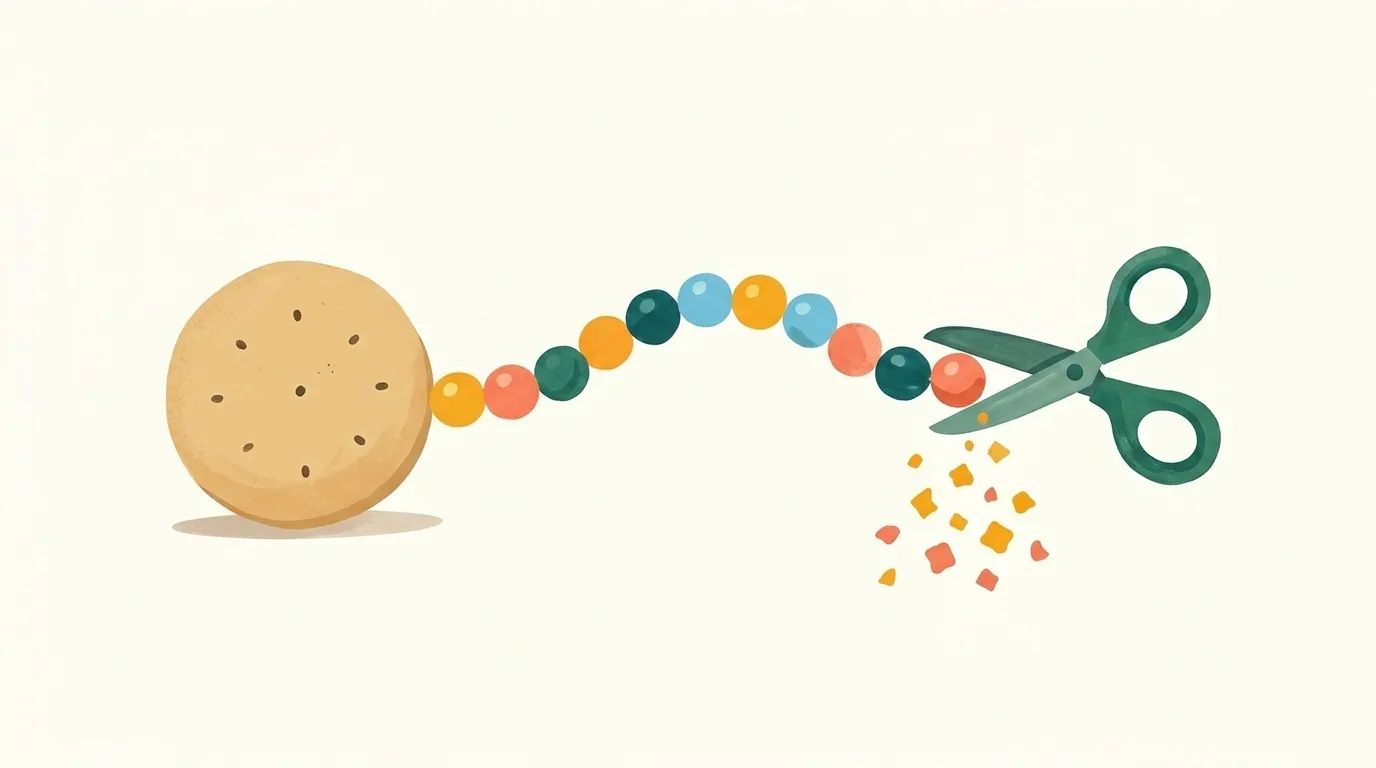
Spit holds an enzyme called amylase. It snips starch, a long chain of sugar bits, into smaller sugar pieces that your tongue tastes as sweet.
It's like scissors cutting up a paper chain!
Tell me more
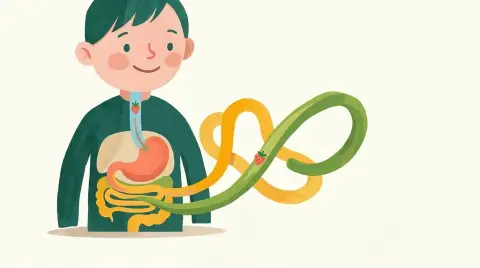
Digestion starts before you even take a bite. Smelling or just thinking about tasty food makes glands near your ears, under your tongue and by your jaw start making saliva. Enzymes are helper chemicals that make changes happen fast, and your body has lots of different ones. Amylase works on starch. In your stomach, strong muscles mix food with juices full of acids and other enzymes. Later your pancreas sends enzymes that break down protein, fat and carbohydrates in your small intestine. Different enzymes work on different kinds of food, so your body needs a whole team of them to digest a meal.
Words to know
- enzymesa helper chemical that makes changes happen fast
- salivaspit, the wet stuff inside a mouth
- starchthe soft, filling stuff inside grains
Try it at home
Chew a plain cracker slowly for a whole minute before you swallow. Notice when it starts to taste a little bit sweet!
 Dig deeper

 What else?
 Surprise me!