
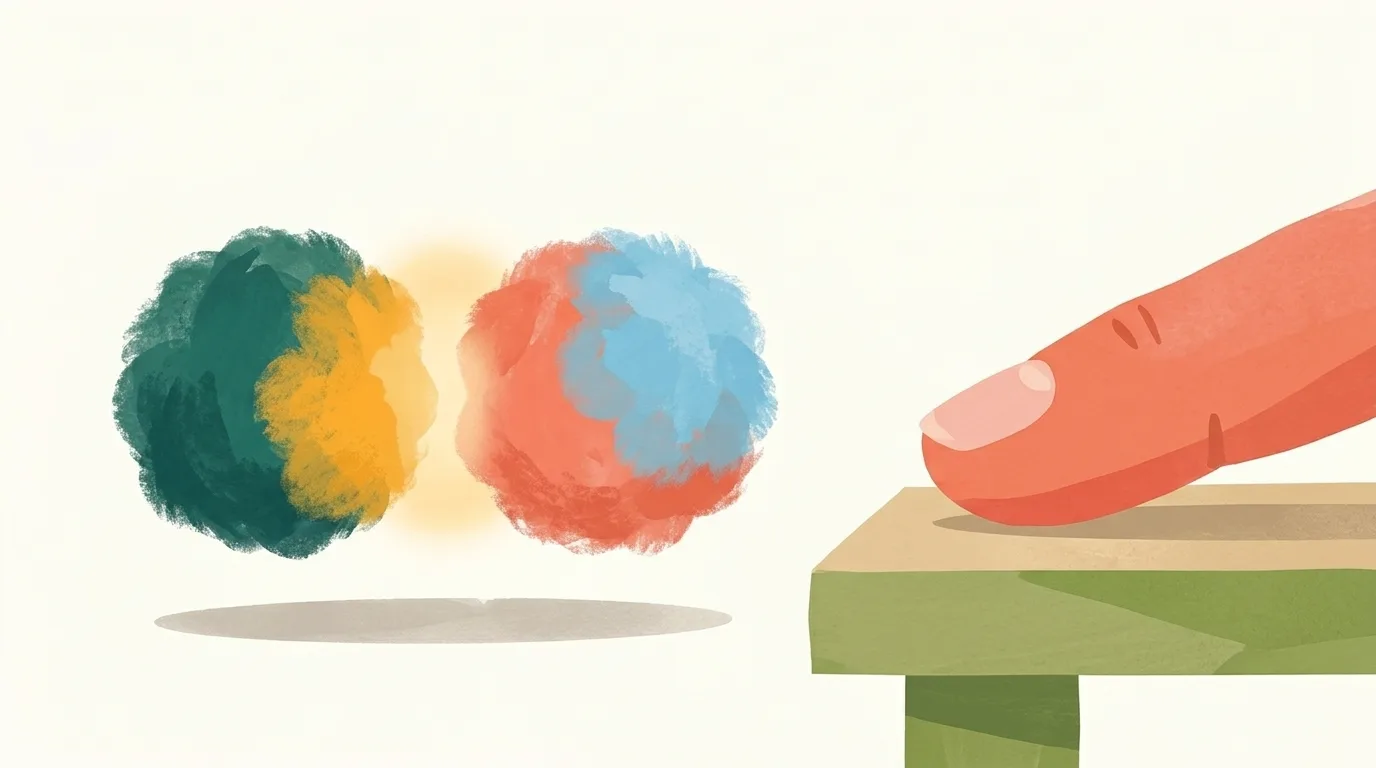
Illustration, made with AI
Do atoms ever really touch?
Not quite! When you touch something, your atoms and its atoms push each other away before they really meet.
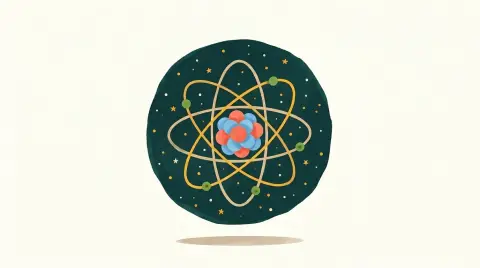
Atoms have electrons on the outside. Electrons push away other electrons, so atoms that come close usually push apart.
That push is what your fingers feel!
Tell me more
Electrons carry a kind of electricity called a negative charge, and things with the same charge push apart. There's a second, very short-range push too, from a rule about how electrons can be arranged. Sometimes atoms do get close enough to share electrons. That's how atoms join up into molecules, and it even happens a tiny bit when you touch things. And atoms don't have a sharp edge: the outside is a fuzzy cloud of electrons. So one physicist says it isn't even clear what 'touching' means for atoms. They're tiny, too. A human hair is about 1 million carbon atoms wide!
Words to know
- atomsa tiny building block that everything is made of
- electronssuper tiny bits inside every atom that carry electricity
- moleculesone of the tiny pieces everything is made of
Try it at home
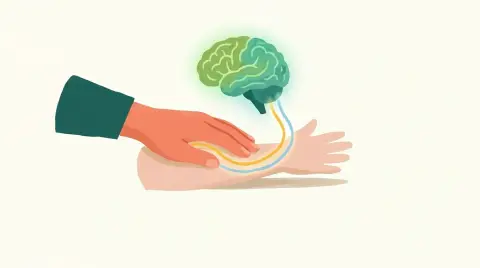
Press your hand gently on a table. It feels solid, but what you feel is countless tiny pushes between atoms!

 Dig deeper
 What else?

 Surprise me!