
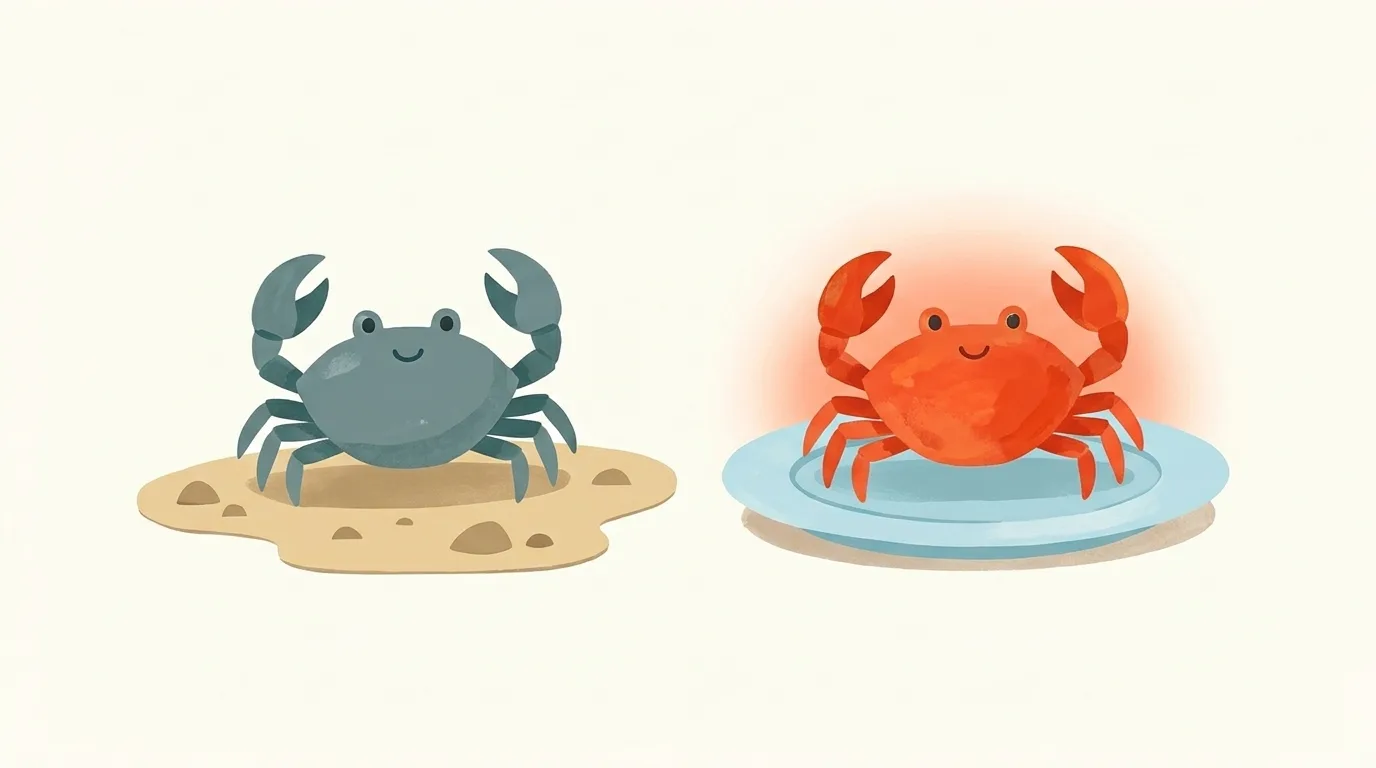
Illustration, made with AI
Why do crab and shrimp shells turn red when cooked?
The red was hiding in the shell all along!
A live crab's shell holds a red-orange color called astaxanthin, wrapped up tight by a protein that makes it look bluish-gray. Heat breaks that protein, and the red-orange color shows.
Like unwrapping a present.
Tell me more
In the wild, crabs and shrimp usually have dull shells: brown, olive-blue, gray or muddy. Those colors help them blend in with the seafloor, so hungry animals have a harder time spotting them. Heat doesn't change the red pigment itself. It only breaks the wrapping protein, called crustacyanin. Cooks can even use the color as a clue: if the shell isn't red enough, it probably isn't cooked enough. Fish farmers feed astaxanthin to salmon to make their meat redder, and to clownfish to make them more orange. It's one of a big family of colors found in yellow, orange and red animals.
Words to know
- astaxanthina red-orange color found in crab and shrimp shells
- proteintiny building pieces in food and in your body
- pigmenttiny colored bits that give something its color

 Dig deeper

 What else?


 Surprise me!