
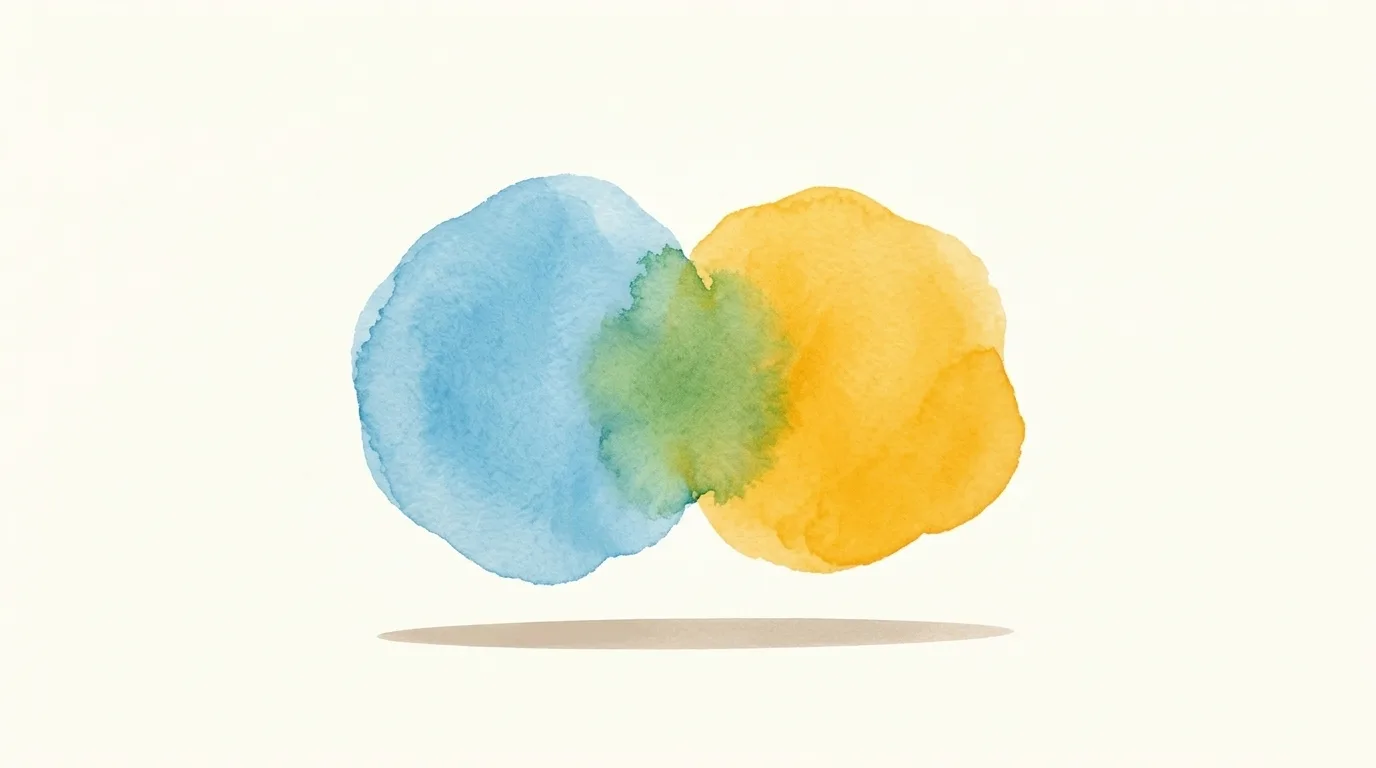
Illustration, made with AI
Why do watercolors spread out on wet paper?
Water carries the color across the paper.
Paper is full of tiny gaps, and water creeps through narrow spaces on its own. On wet paper the color is carried along and blends softly. On dry paper the edges stay sharp.
Tell me more
Watercolor paint has four main parts: pigment, a binder called gum arabic, extras like glycerin and honey, and water. Painters call painting on damp paper wet-on-wet, because colors spread and blend softly. Painting on dry paper gives sharper edges and more control. Watercolor paper is often made partly or fully from cotton. Watercolors look see-through because the binder soaks into the paper and leaves pigment bits on top, so the paper shines through. Liquid creeping through tiny gaps is called capillary action. A wash is a thin, even coat of diluted paint, often used for skies.
Words to know
- pigmenttiny colored bits that give something its color
- binderthe sticky part of paint that holds the color on
- capillary actionhow liquid creeps up through tiny gaps, like in a sponge
Try it at home with a grown-up
With a grown-up, dampen a piece of paper with a wet brush. Touch a dot of blue and a dot of yellow near each other. Watch them spread and make green where they meet.

 Dig deeper

 What else?

 Surprise me!