
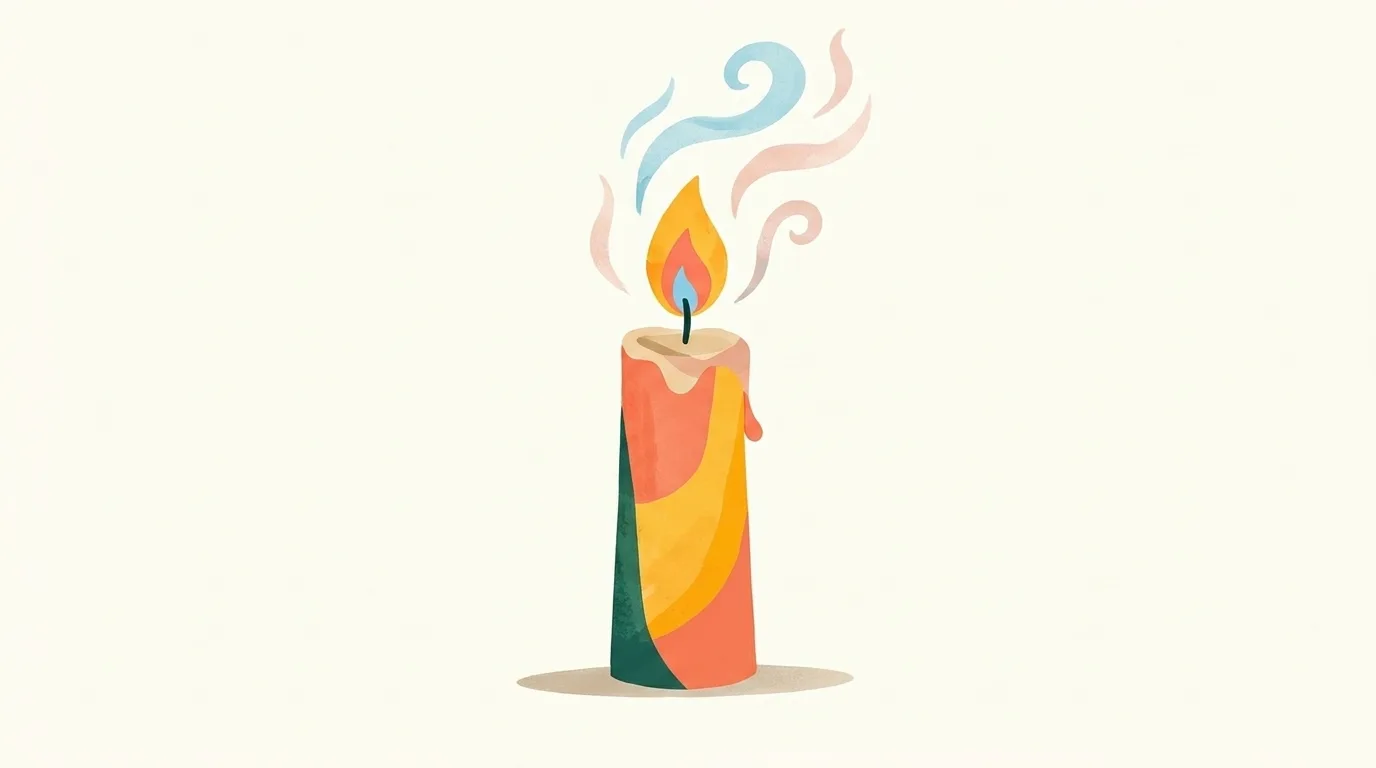
Illustration, made with AI
Where does candle wax go when it burns?
Into the air! A candle flame turns wax into a gas and burns it.
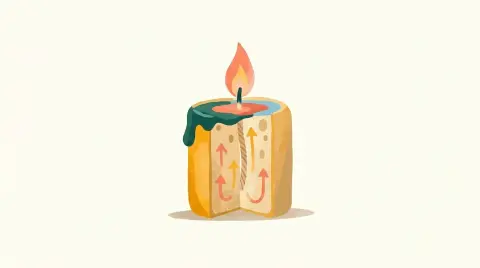
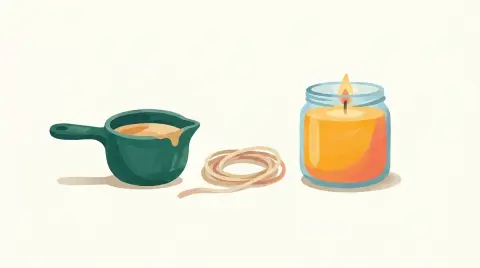
Heat melts the wax, and the wick soaks it up. Near the flame it becomes a gas and burns into invisible carbon dioxide and water vapour.
That's why candles get shorter!
Tell me more
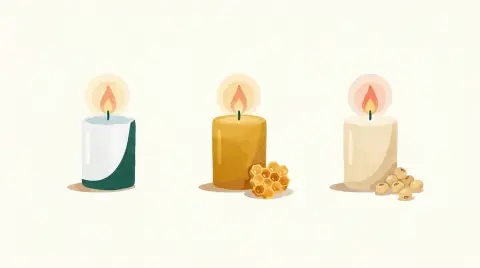
The wick pulls liquid wax up through its tiny gaps, a bit like a paper towel soaking up a spill. That's called capillary action. A candle flame is not the same heat all over. The bright yellow part is the brightest, but not the hottest. The hottest spot is the faint, almost invisible outer edge, low down just above the dim blue part, at about 1,400 degrees Celsius. That's much hotter than a kitchen oven. For most of history, candles were made from beeswax or from animal fat called tallow. Today, most candles are made from paraffin wax, which comes from oil.
Words to know
- wickthe string in a candle that carries melted wax to the flame
- capillary actionhow liquid creeps up through tiny gaps, like in a sponge
- water vapourwater as an invisible gas in the air
Try it at home with a grown-up
With a grown-up, wrap a strip of tape around a candle to mark its height. Let it burn for an hour, then look. It's shorter: the wax went into the air!
 Dig deeper
 What else?

 Surprise me!