
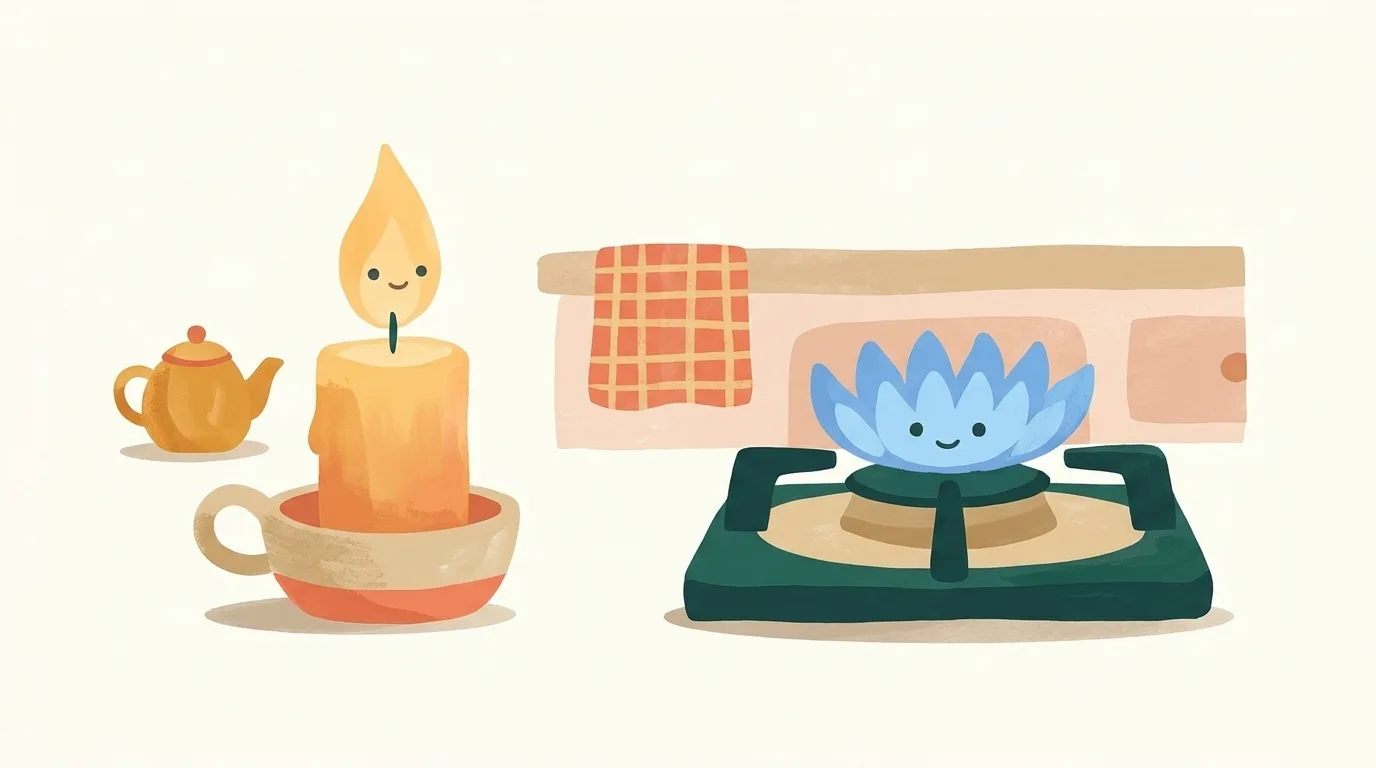
Illustration, made with AI
Why are some flames blue and some orange?
It's all about air! How much air mixes with the fuel decides the colour.
With plenty of air, gas burns completely and glows blue. Without enough, tiny bits of unburned fuel, called soot, glow yellow and orange.
Like a toaster wire glowing hot.
Tell me more
Fire needs oxygen from the air to burn its fuel. In a gas cooker or a science burner, the gas is mixed with air before it burns, so the flame is neat and blue. A candle or campfire can't mix in air first, so its flame is full of glowing soot. Look closely at a candle and you can often spot a little blue near the bottom, where there is less soot. Sodium, a metal found in table salt, turns a flame bright yellow. Fireworks use other metals the same way: copper makes green flames, and strontium makes red.
Words to know
- soottiny black bits left when things don't burn all the way
- oxygenan invisible gas in air that living things and fire need
Try it at home with a grown-up
With a grown-up, look closely at a lit candle. Find the small blue part near the wick at the bottom and the bright yellow part above it.

 Dig deeper
 What else?

 Surprise me!