
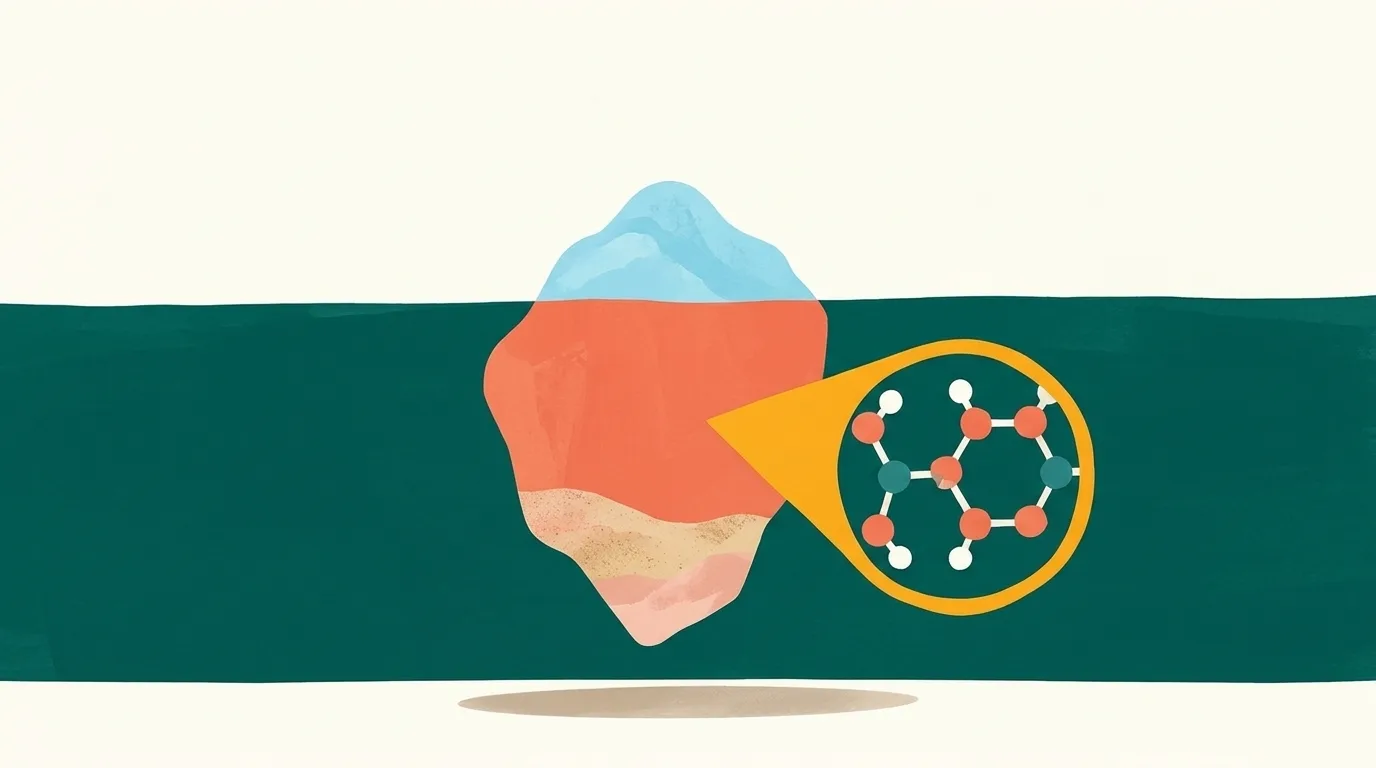
Illustration, made with AI
Why does water take up more room when it freezes?
Freezing water lines up in an open pattern full of gaps!
As water turns to ice, its molecules lock into six-sided rings. Those rings hold them farther apart, so ice takes up about one-tenth more room.
It's like friends holding hands in a ring.
Tell me more
Fresh water gets about 9% bigger as it turns to ice, which is unusual. Because the same water is spread out over more space, ice is less dense than water, and that is why ice cubes and giant icebergs float. Even so, most of an iceberg hides under the water, with only a small part sticking up. The pattern ice makes is a crystal built from hexagons, with an oxygen atom, part of a water molecule, at every corner. Growing ice pushes very hard indeed. It can even burst water pipes in a cold winter.
Words to know
- moleculesone of the tiny pieces everything is made of
- crystala solid whose tiny pieces line up in a neat, repeating pattern
- hexagonsshapes with six straight sides
Try it at home
Fill a small plastic cup to the very top with water and freeze it overnight. Look the next morning: the ice has grown up over the rim.

 Dig deeper
 What else?


 Surprise me!