
Illustration, made with AI
How do scientists dig up a dinosaur?
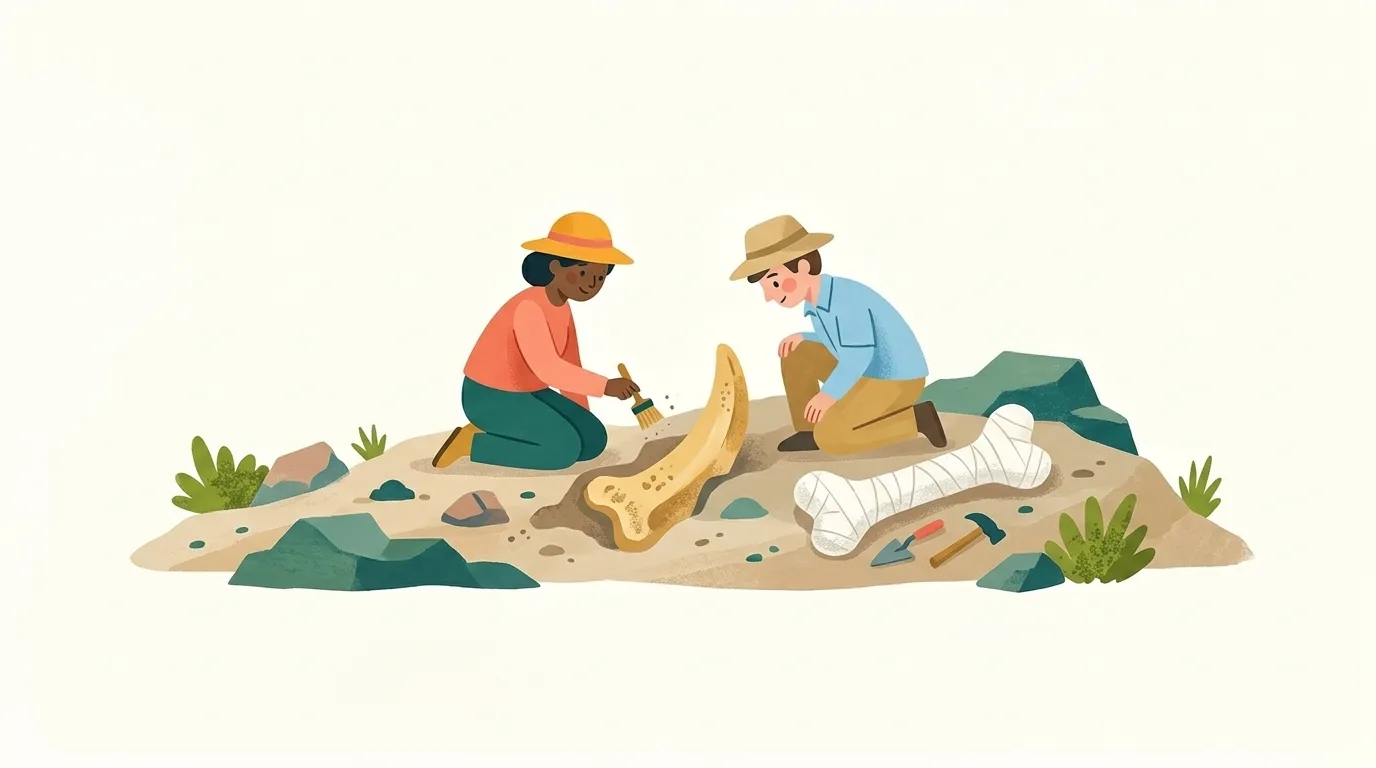
Very carefully! They chip and brush away rock, then wrap bones in plaster to carry them.
Fossils can be fragile and snap easily, so a hard plaster jacket keeps each bone safe on the way to a museum.
Like a cast on a broken arm.
Tell me more
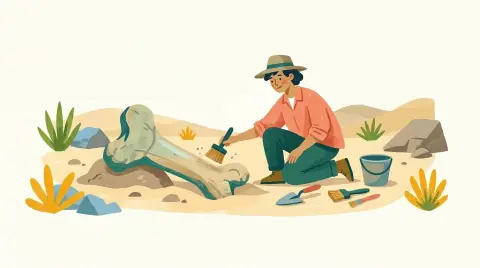
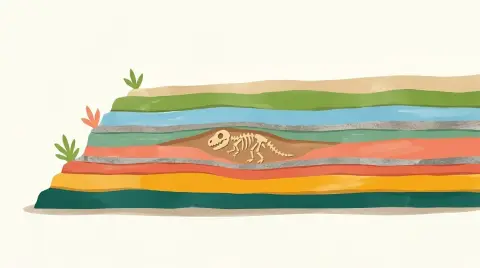
Fossil hunters look where rock is wearing away, like river banks, sea cliffs and quarries. Often they spot bones poking out of a cliff. They clear rock with hammers, chisels, trowels and stiff brushes, and take notes, photos and sketches of where each bone lay. In the lab, workers called preparators slowly remove the last rock from each bone. When the famous T. rex called Sue was cleaned, millions of visitors watched through glass windows! People finding fossils are asked to get the landowner's permission first and to record every detail.
Words to know
- fossilremains or traces of long-ago living things, turned to stone
- chiselsa metal tool with a sharp edge for cutting wood or rock
- plaster jacketa hard plaster wrap that keeps fossil bones safe
Try it at home
Bury a few toy dinosaurs in a tub of sand. Dig them up like a fossil hunter with a spoon and an old paintbrush, slowly, so nothing gets knocked.
 Dig deeper
 What else?
 Surprise me!