
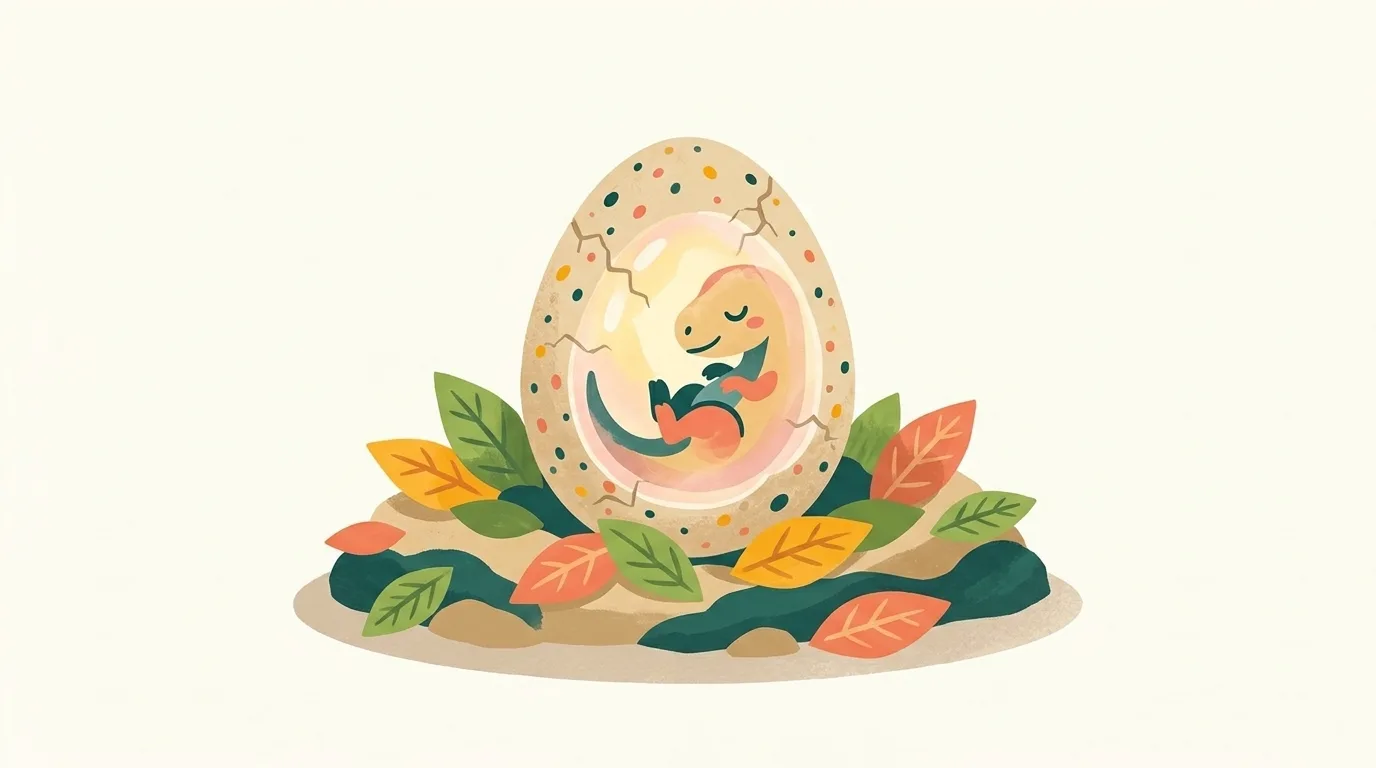
Illustration, made with AI
How did a baby dinosaur breathe inside its egg?
Through tiny holes in its eggshell, called pores!
Oxygen, the part of air living things need, seeped in through the pores. Carbon dioxide, the used-up gas, seeped out.
A chick inside a hen's egg breathes the very same way.
Tell me more
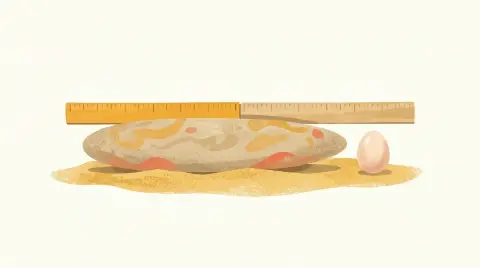
Inside the shell, the baby was wrapped in thin layers called membranes, like the ones in bird and reptile eggs today. Dinosaur eggs had very different pores. Eggs buried in soil or damp mounds of plants needed more air, so their shells let gas through faster than eggs laid out in the open. Eggs laid in dry places let less through, which kept them from drying out. By measuring the pores and the thickness of a fossil eggshell, scientists can work out how the egg was laid. Even the biggest dinosaur eggs from long ago were smaller than the eggs of the extinct elephant bird.
Words to know
- porestiny holes in a shell or skin, often letting air through
- oxygenan invisible gas in air that living things and fire need
- membranesa thin, soft layer, like a skin, that wraps something
Try it at home with a grown-up
With a grown-up, put an egg in a glass of warm water and watch closely. Tiny bubbles may appear on the shell: air coming out through the pores!

 Dig deeper
 What else?

 Surprise me!