
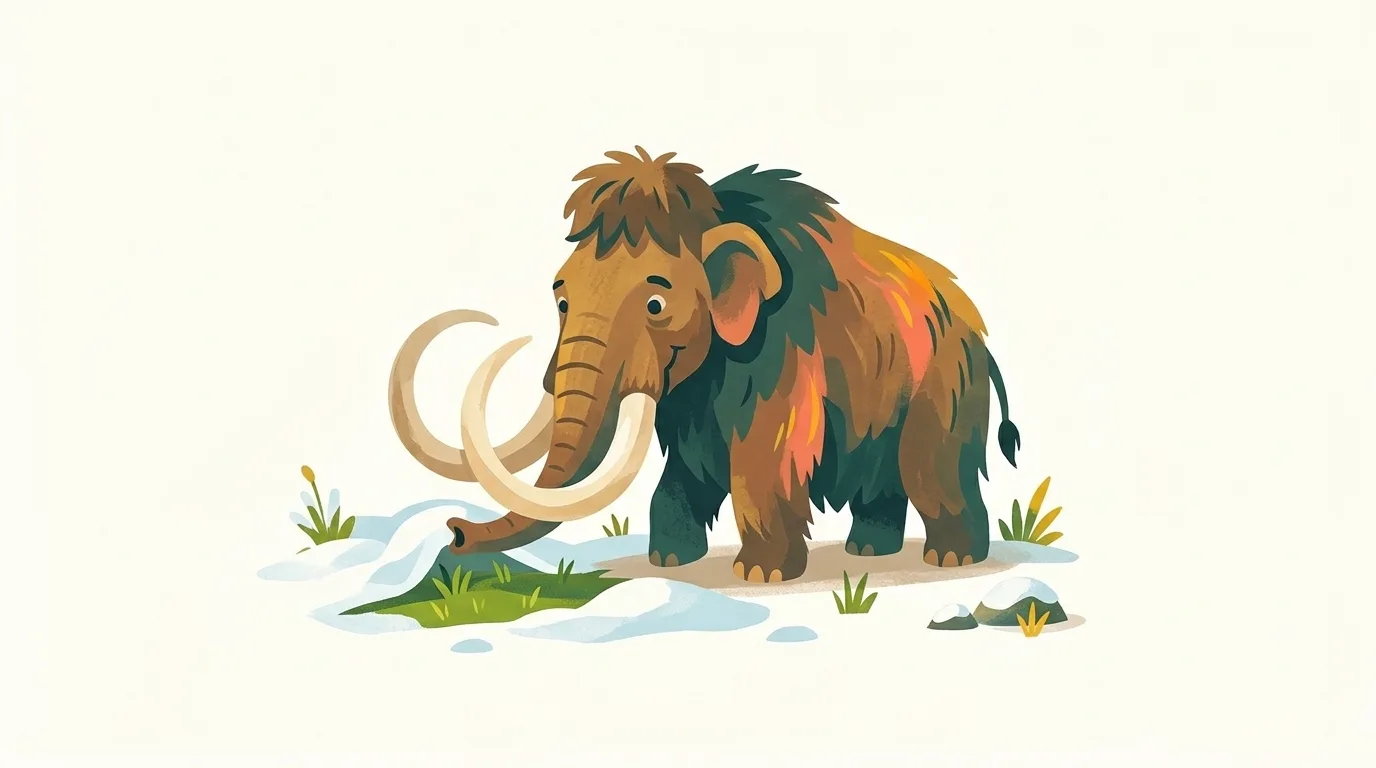
Illustration, made with AI
Why did mammoths have such curly tusks?
To make them easier to carry! The tusks curled in toward each other, keeping the heavy weight near the head.
Weight held far out twists the neck. A curl keeps it close.
Like hugging a heavy bag instead of holding it out at arm's length.
Tell me more
Tusks are really giant front teeth called incisors. A mammoth's tusks kept growing all its life, by 2.5 to 15 centimetres each year, and about a quarter of each tusk was hidden inside the skull. Babies grew little milk tusks a few centimetres long at six months old, then swapped them for grown-up tusks a year later. Mammoths used their tusks like shovels to sweep snow off plants and to break ice for a drink. We know because many tusks have flat, polished patches where they rubbed the ground. Scientists can even count growth rings inside a tusk to tell a mammoth's age.
Words to know
- incisorsflat front teeth for biting and cutting
- growth ringslines inside a bone, tusk or tree, one for each year
Try it at home
Hold a heavy book straight out at arm's length, then hug it close to your chest. Which is easier? That's why curly tusks helped.

 Dig deeper

 What else?

 Surprise me!