
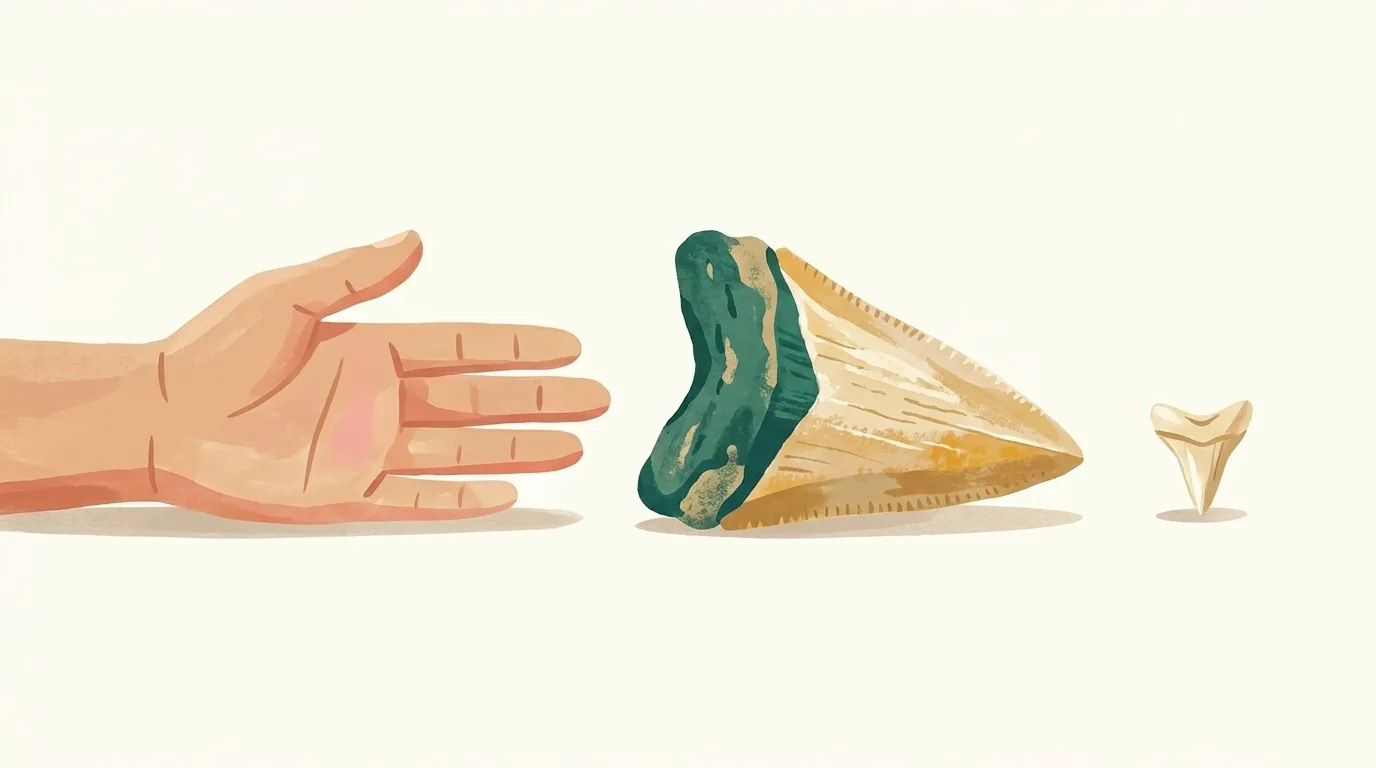
Illustration, made with AI
How do we know about Megalodon from just teeth?
Its teeth are clues! Bigger teeth mean a bigger shark.
A shark's skeleton is mostly cartilage, which rots away fast. Teeth are hard, so they last as fossils.
It's like guessing a dog's size from its paw print.
Tell me more
Scientists compare Megalodon teeth to great white shark teeth, which have a very similar shape. A rare fossil backbone found in Belgium had 150 vertebrae, the bones of the spine, and helped show its size too. Most Megalodons were probably about 10 metres long, but the biggest may have reached 14 to 24 metres. Its biggest teeth are about 18 centimetres long, as big as a grown-up's hand. It probably hunted whales, seals and sea turtles. Its back fin stuck up taller than a grown-up. Megalodon lived from about 23 million to about 3.6 million years ago.
Words to know
- cartilagebendy, rubbery stuff, like the tip of your nose
- fossilremains or traces of long-ago living things, turned to stone
- vertebraethe small bones that make up a backbone and neck
Try it at home
Look at your hand and a grown-up's hand side by side. Bigger body, bigger hand! Scientists use the same idea with shark teeth.
 Dig deeper
 What else?
 Surprise me!