
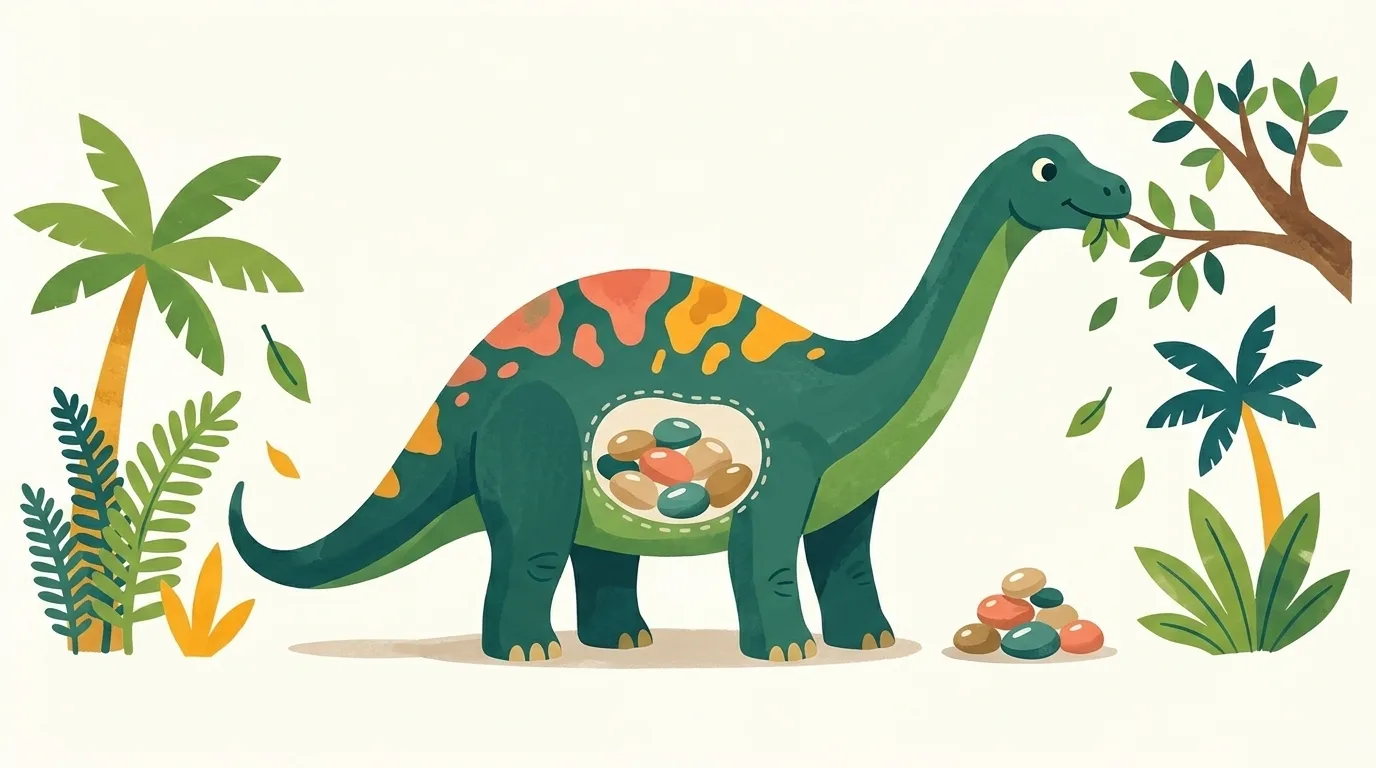
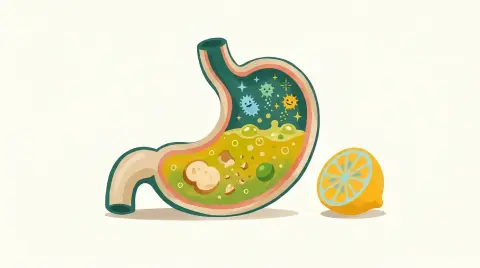
Illustration, made with AI
Why did some dinosaurs swallow stones?
Scientists think it helped grind their food!
Some plant-eaters couldn't chew well. Stones in a muscly stomach pouch called a gizzard rubbed together and mashed up tough plants.
Chickens still do this today: they swallow grit to help grind their food!
Tell me more
These stomach stones are called gastroliths, from old Greek words for "stomach" and "stone". Many animals use them now, like crocodiles, alligators, seals, sea lions and plant-eating birds. Ostriches swallow stones that can be more than 10 centimetres long. The biggest stones found with giant sauropod dinosaurs are about that size too. Real gastroliths are polished on their bumps but not in their dents, because they rubbed against other stones and food, like rocks in a rock tumbler. Some water animals may have used stones as weight to help them sink. Scientists still argue about how much sauropods used them.
Words to know
- gizzarda muscly part of the gut that grinds up food
- gastrolithsstones an animal keeps in its stomach
Try it at home
Ask a grown-up if you can watch chickens or pigeons peck. They swallow tiny bits of grit to grind their food, just like those dinosaurs!
 Dig deeper
 What else?
 Surprise me!