
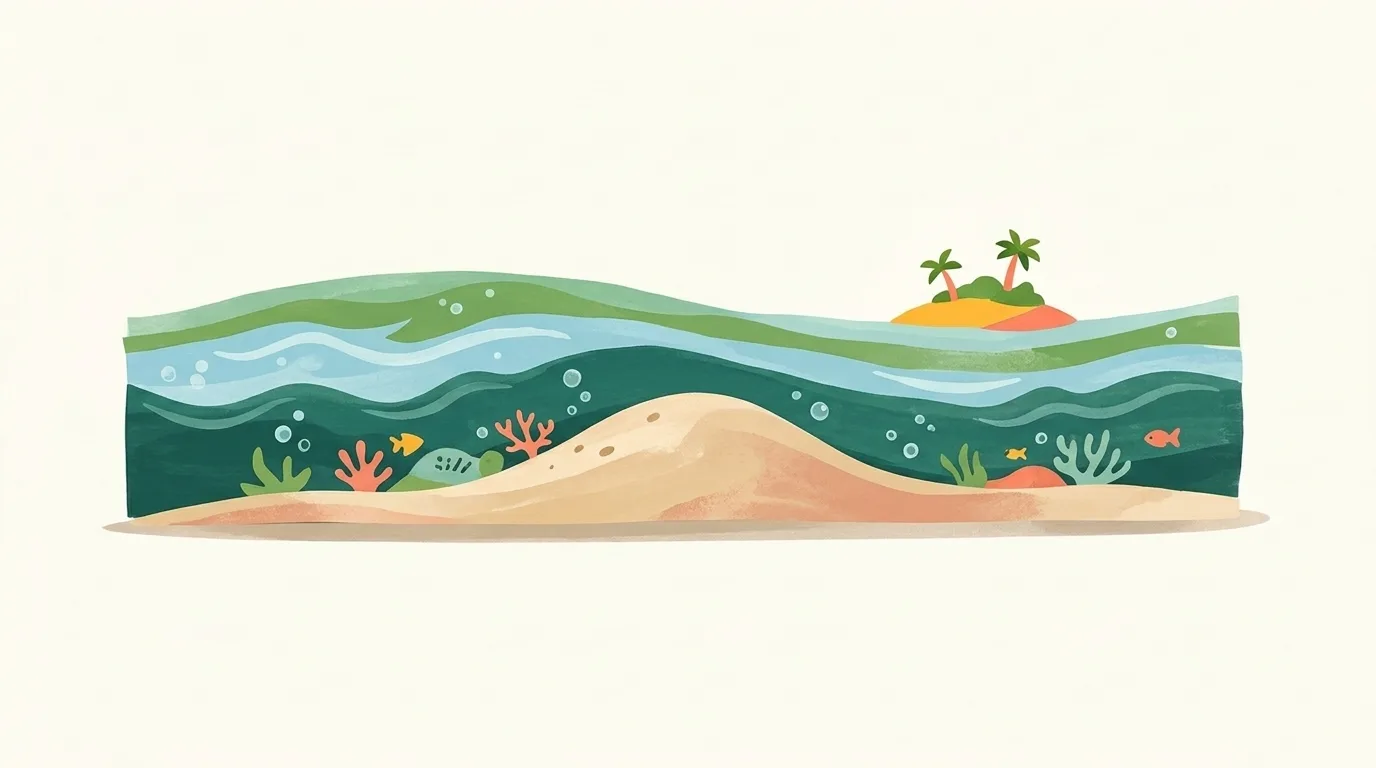
Illustration, made with AI
How can an earthquake make a giant wave?
An earthquake can jerk the sea floor and shove the water above it.
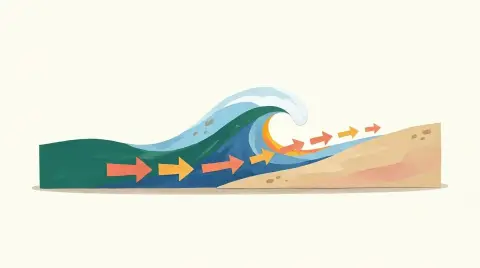
That push spreads out as a tsunami. Near land the water gets shallow, so the waves slow, bunch up and grow tall.
Like cars bunching up when the front ones slow.
Tell me more
A tsunami is a series of waves, not just one. Far out in the deep ocean, it may be only about 30 centimetres high, so it's hard to even notice. But each wave is enormous from front to back: up to 200 kilometres long, while everyday waves are about 100 metres. Out there it races along at more than 800 kilometres an hour, as fast as a jet plane. Near the coast it slows to under 80 kilometres an hour, and all that water piles up high. If the sea at the beach suddenly pulls far back, go to high ground with a grown-up.
Words to know
- tsunamia giant ocean wave made by the sea floor moving
Try it at home with a grown-up
In the bath, lay your hand flat under the water, then lift it up fast. Watch the ripple spread across the tub!
 Dig deeper
 What else?

 Surprise me!