
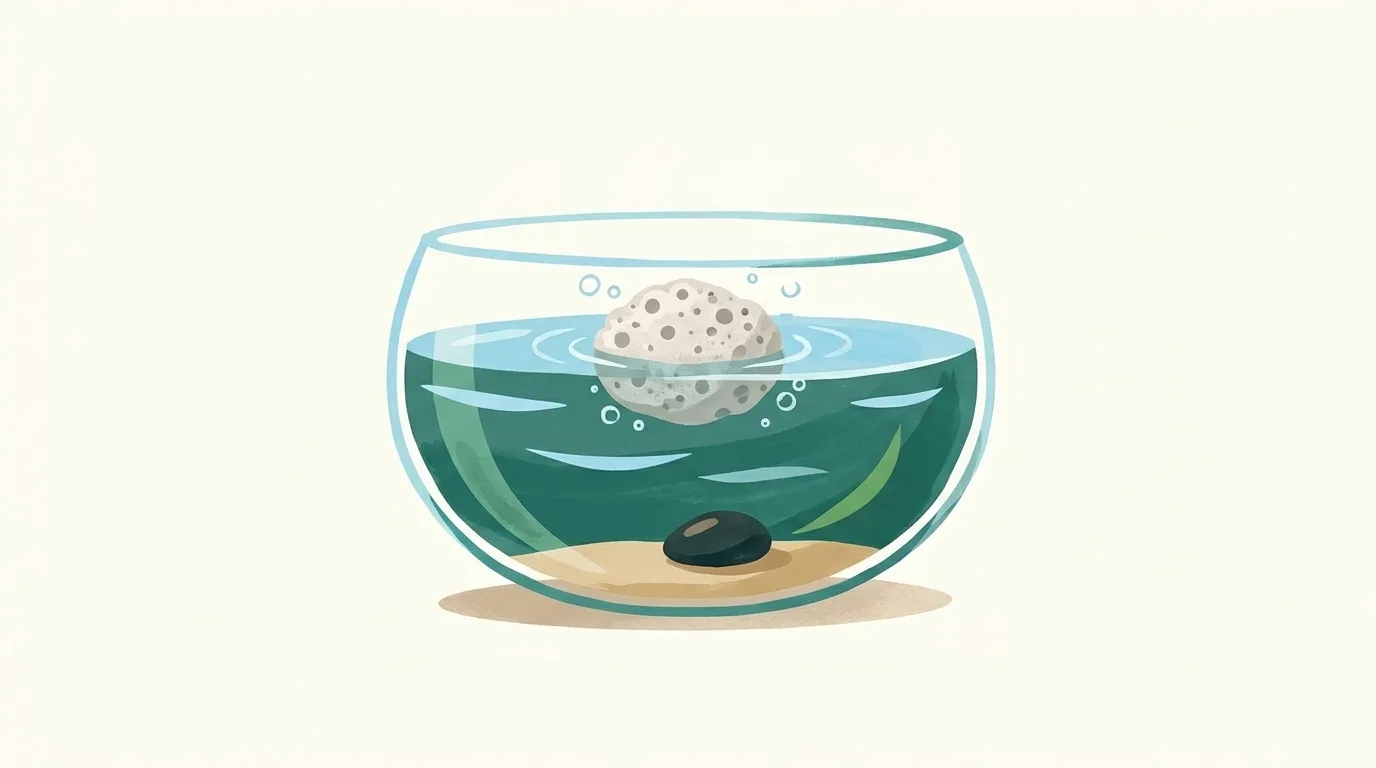
Illustration, made with AI
Why can some volcano rocks float?
Because they're full of bubbles! A volcano rock called pumice is mostly tiny holes.
When a volcano blasts out hot, fizzy magma, the gas foams into bubbles, and the rock cools so fast the bubbles get trapped.
Like a hard, stony sponge that floats!
Tell me more
Between 64 and 85 percent of a piece of pumice is empty space. How heavy a piece is depends on how thick the stone walls between its bubbles are. It can float on water for years, until water slowly fills the holes and it sinks. After a huge eruption in 1883, so much pumice landed in the sea that kilometres of water were covered with floating rock. Pumice is rough, so people use it to scrub. Pumice stones scrub away rough skin. Long ago in ancient Rome, powdered pumice went into toothpaste, and today it helps make stone-washed jeans.
Words to know
- pumicea light, bubbly rock that comes from volcanoes
- magmahot melted rock while it is still underground
Try it at home with a grown-up
Ask a grown-up for a pumice stone (the kind for scrubbing feet). Drop it in a bowl of water next to a pebble. Which one floats?

 Dig deeper
 What else?


 Surprise me!