
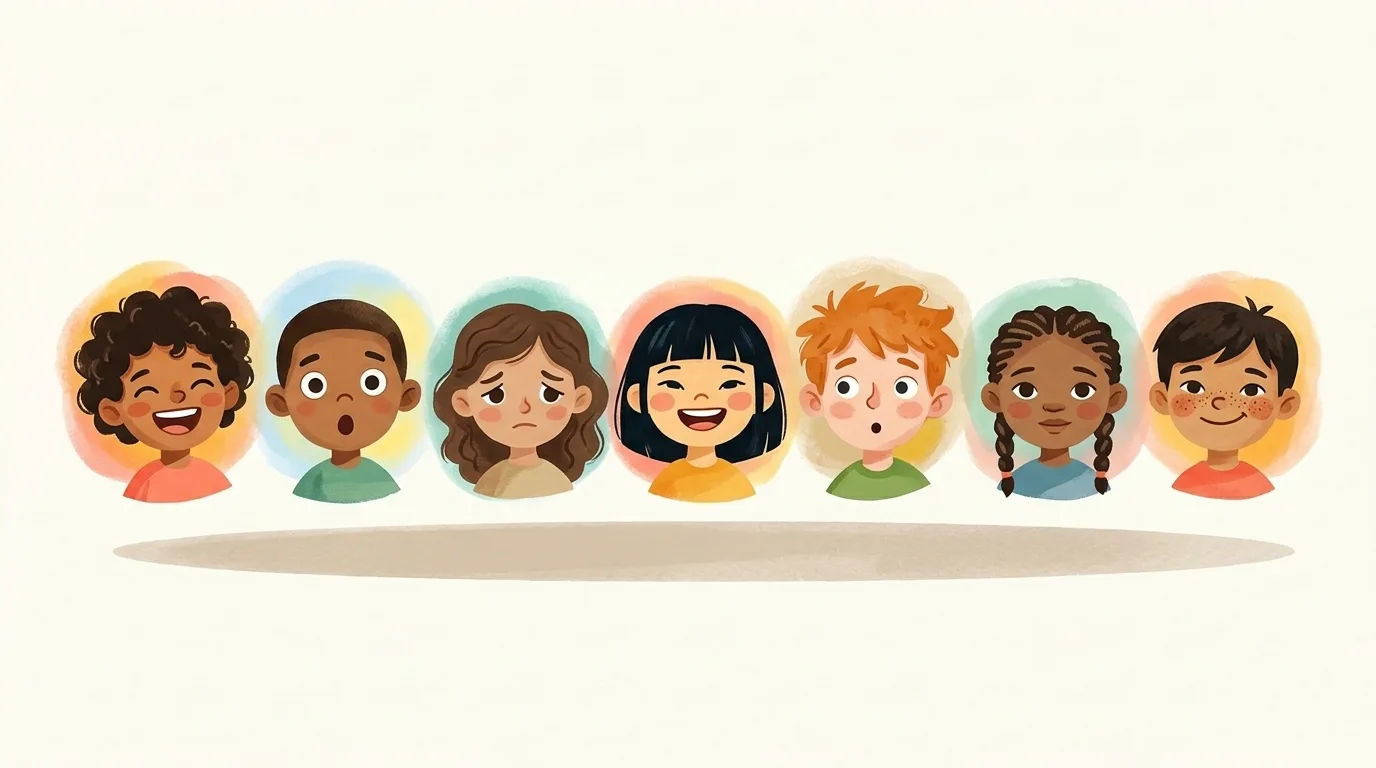
Illustration, made with AI
Why does my face show how I feel without me trying?
A deep part of your brain moves your face by itself!
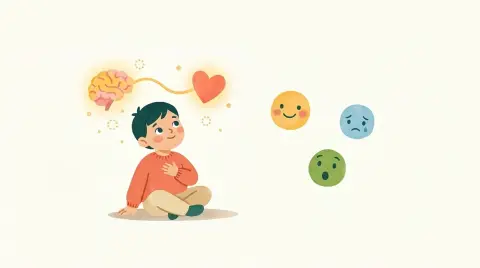
A real feeling takes an automatic path to your face muscles. A pretend photo smile uses a different path, one you control.
Your face muscles pull your skin, like strings moving a puppet.
Tell me more
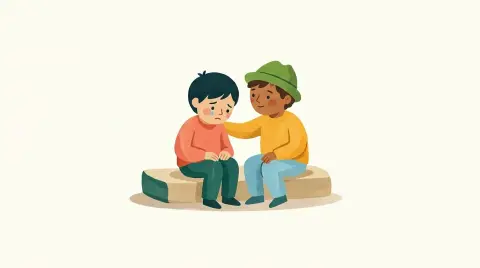
Babies younger than two show surprise, anger, fear and interest on their faces long before they could learn it. Your face also makes small moves you may not notice: a scrunched-up brow when you concentrate, or raised eyebrows when you listen closely. Some faces seem to mean the same thing almost everywhere in the world, like a smile for happy and tears for sad. Scientists still argue about just how many expressions work that way. Faces help people share feelings without words, so others can tell when you need a hug or when you are full of joy.
Words to know
- musclesa body part that pulls to make things move
Try it at home
Look in a mirror. Make a happy face, a sad face and a surprised face. Can a grown-up guess each feeling?

 Dig deeper
 What else?

 Surprise me!