
Illustration, made with AI
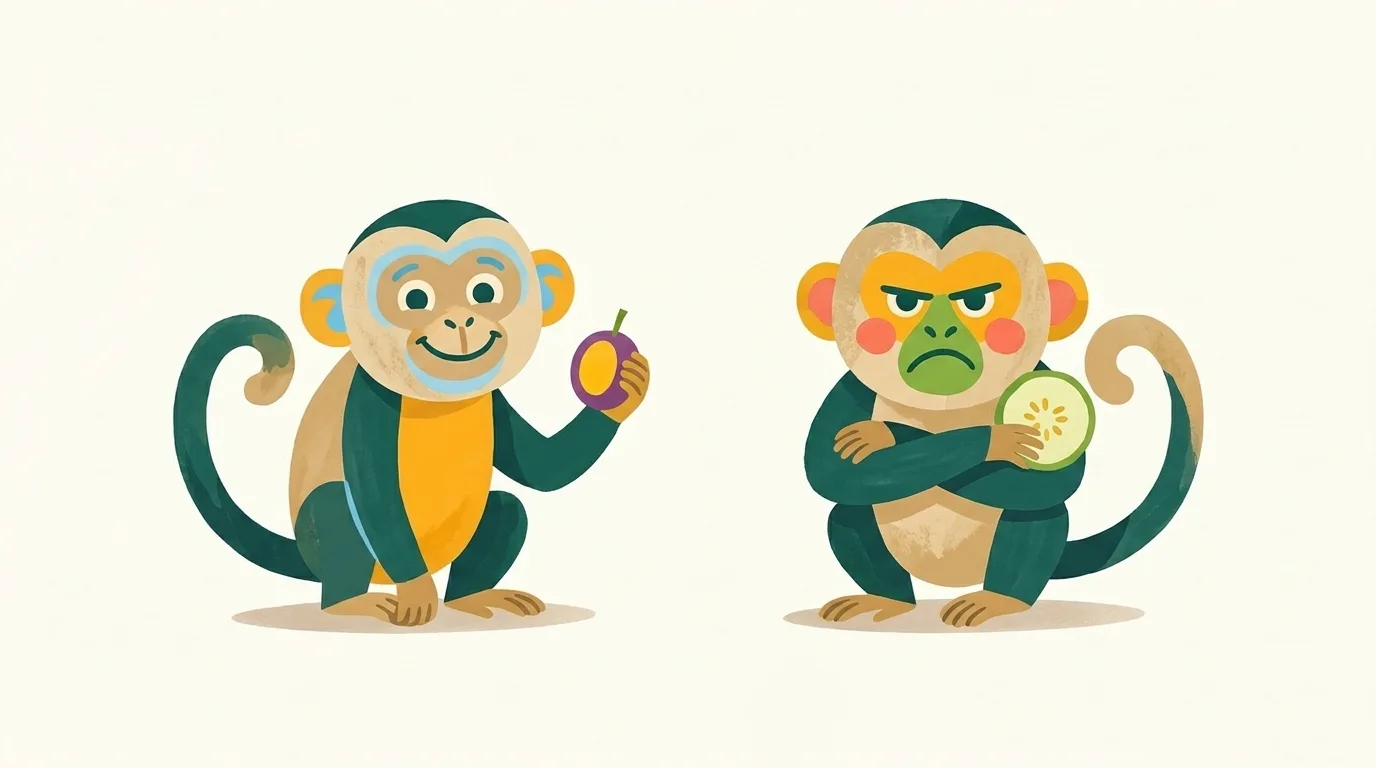
How did scientists test if monkeys mind unfair pay?
Scientists gave two monkeys the same job but different rewards, and watched!
Both happily traded a token for cucumber. But when one saw its partner get a grape for the same job, it often refused to play.
Some even threw the cucumber back!
Tell me more
The first scientists to test this were Sarah Brosnan and Frans de Waal, with five capuchin monkeys, and they wrote about it in 2003. Each monkey handed a small token to a person in return for food. Grapes are much more wanted than cucumber. When both got cucumber, all was fine. When one got a grape for the same effort, the other often stopped joining in. Scientists call this inequity aversion: caring about fairness and not liking unfair shares. It has since been seen in chimpanzees, dogs, wolves, rats, crows and ravens too. Some chimpanzees and capuchins even protest when they are the ones who got the better reward.
Words to know
- fairnesswhen everyone is treated in a way that feels right
 Dig deeper
 What else?
 Surprise me!