
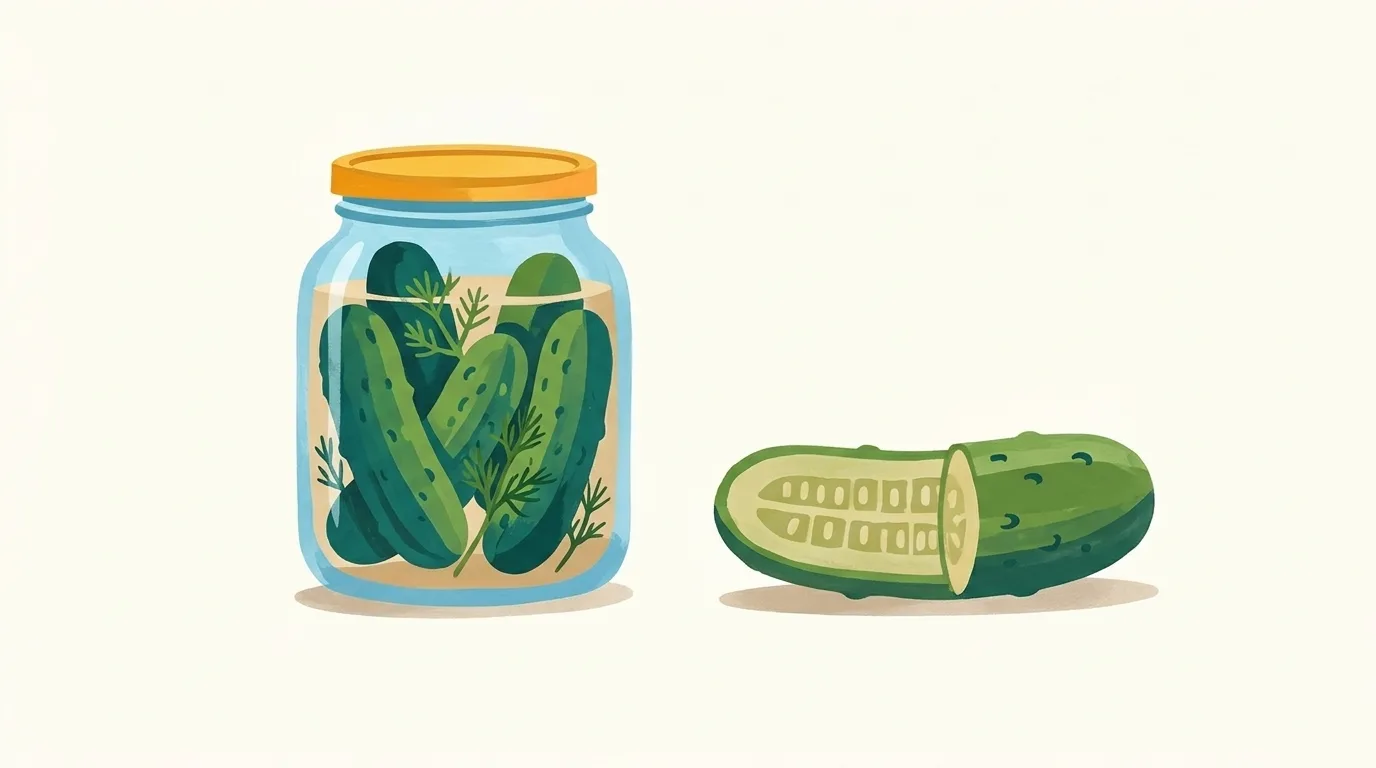
Illustration, made with AI
How do pickles stay crunchy?
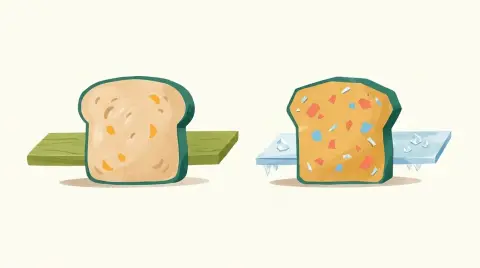
A plant glue called pectin holds a cucumber's cells together.
If the glue breaks down, the cells come apart and the pickle goes soft. Calcium helps the glue hold tight, so pickles stay crisp.
Like mortar holding bricks in a wall.
Tell me more
Cucumbers carry their own softening helpers. The flower end of a cucumber, called the blossom end, may hold an enzyme that makes pickles too soft. So home picklers slice a thin piece off that end before pickling. Some picklers add a little calcium chloride to help keep pickles firm. Timing matters too: a half-sour pickle spends only a short time in its salty water, called brine, and stays crisp and bright green. A full-sour pickle is left to ferment all the way. People have been pickling for a very long time. Archaeologists think people in ancient Mesopotamia pickled food more than 4,000 years ago.
Words to know
- pectinthe natural glue that holds plant cells together
- enzymea helper chemical that makes changes happen fast
- brinevery salty water
 Dig deeper
 What else?
 Surprise me!