
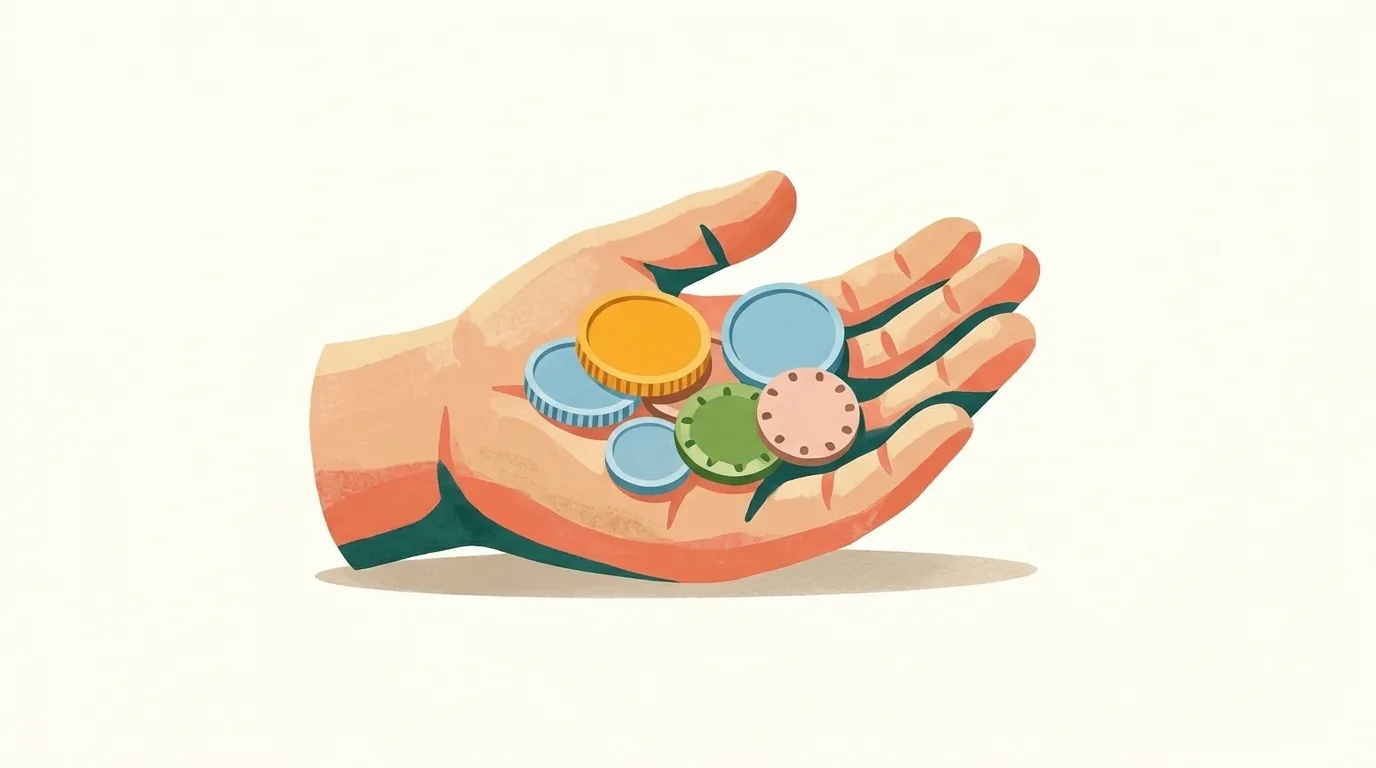
Illustration, made with AI
Why are coins different sizes?
Coins come in different sizes so you can tell them apart fast, even without looking!
Size, thickness and bumpy or smooth edges help people sort coins by feel. That's very helpful for people who are blind.
Your fingers can read money!
Tell me more
Euro coins were designed together with groups that speak for blind people. They get bigger and heavier as they're worth more, and the 20 cent coin has seven little dents around its edge. But size doesn't always match value. The US dime is worth more than a penny or a nickel, yet it's smaller than both! That's because dimes used to be made of silver. If a dime were too big, its silver would be worth more than ten cents, so it was made small and thin. Since 1965, dimes have had no silver in them, but they kept their small size.
Try it at home with a grown-up
Close your eyes and ask a grown-up to put different coins in your hand, one at a time. Can you tell which is which just by feeling?
 Dig deeper
 What else?

 Surprise me!