
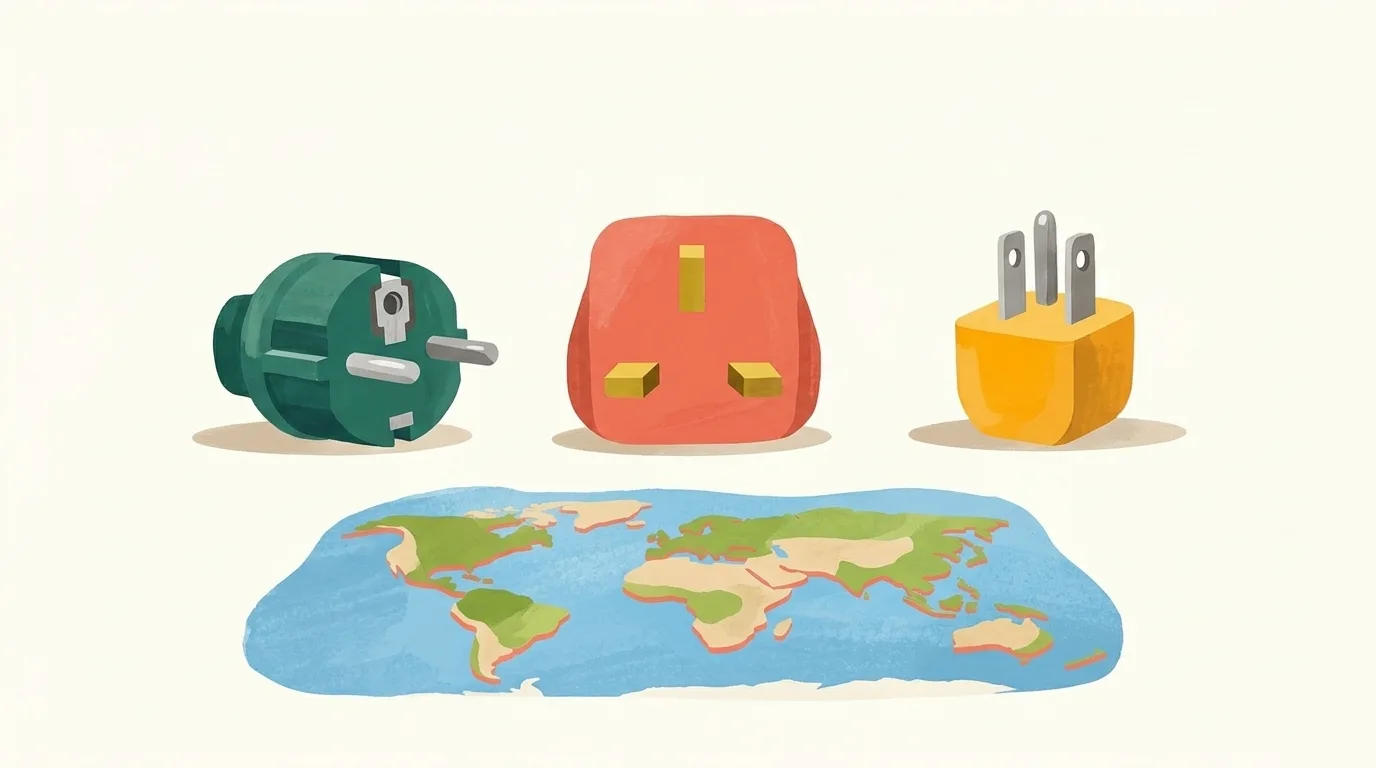
Illustration, made with AI
Why do different countries have different plugs?
Countries built their electricity systems bit by bit, over about 140 years!
Inventors kept improving plugs, adding round pins or a third safety pin. Countries picked up each idea at different times.
It's like friends inventing their own rules for tag.
Tell me more
Electricity is pushed through wires by voltage. The first power grid, built in the United States in the 1880s, sent 110 volts into homes, because the lights of that time worked best that way. Companies in Europe later chose 220 volts, which let them use thinner copper wires and save money. The third pin on many plugs, called the ground, gives escaping electricity a safe path away from you. Today there are 15 main kinds of home plugs around the world. Switching everyone to one kind would cost billions of dollars, so no country wants to change. Travelers pack adapters instead.
Words to know
- voltagehow hard electricity is being pushed
- gridthe network of wires bringing electricity to buildings
Try it at home with a grown-up
With a grown-up, look at the plugs on three unplugged things at home. Count the pins on each one. Are they all the same?
 Dig deeper
 What else?
 Surprise me!