
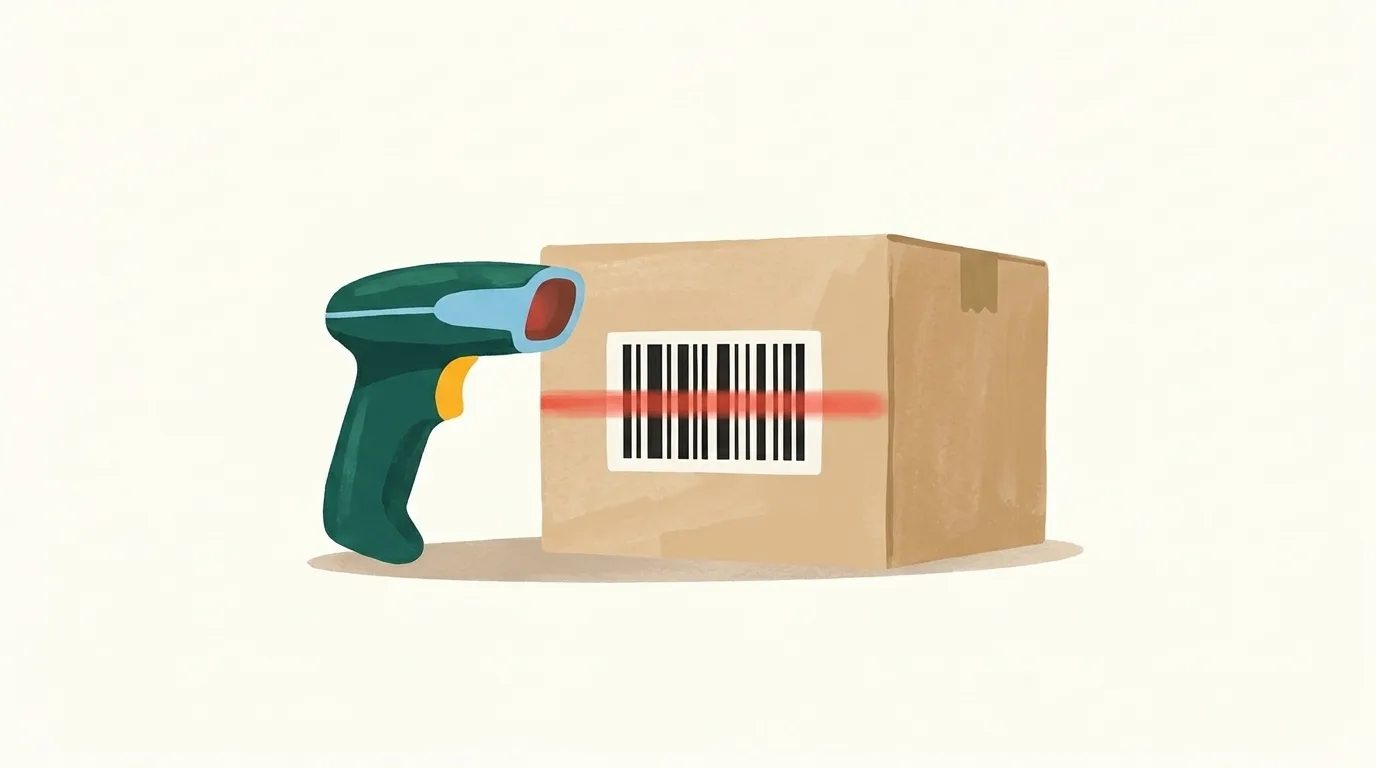
Illustration, made with AI
How does the shop scanner read a barcode?
The scanner shines light on the stripes and reads what bounces back!
White spaces bounce light back, and black bars soak it up. A sensor turns the bright-and-dark flicker into a number.
Every kind of thing in the shop has its own number.
Tell me more
Some scanners sweep a laser beam across the stripes using a spinning wheel of mirrors. Others use hundreds of tiny light sensors lined up in a row. Each one measures the light right in front of it. In the US, the thick and thin bars on most shop goods stand for 12 numbers. Those same numbers are printed underneath, too. The barcode was invented by Norman Joseph Woodland and Bernard Silver. Woodland's idea came from Morse code, which uses dots and dashes. In 1974, a pack of chewing gum became the first thing scanned with this code in a US shop.
Words to know
- sensora part that notices something and sends a message
- lasera very thin, bright beam of light
Try it at home
Find three barcodes at home on boxes or books. Read the numbers under the stripes. Are any two the same?

 Dig deeper

 What else?

 Surprise me!