
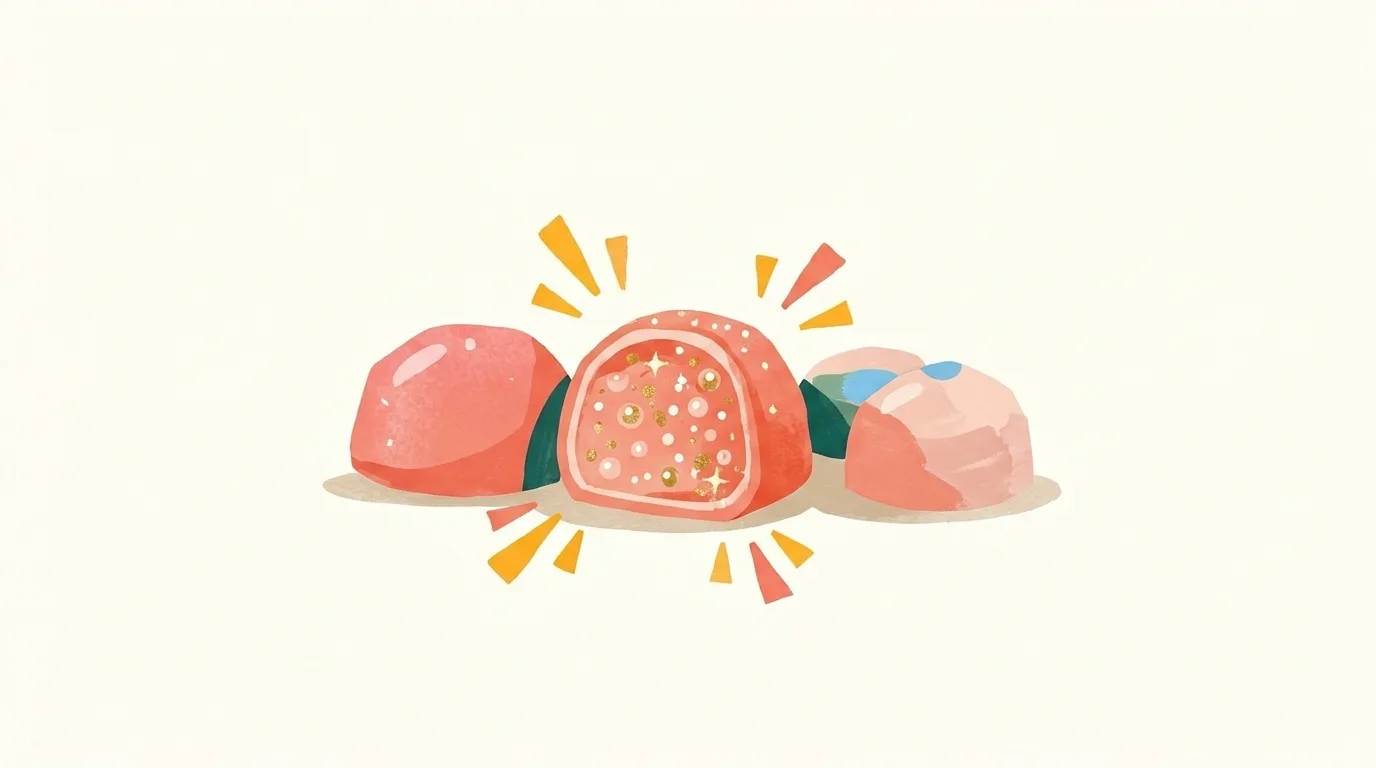
Illustration, made with AI
What makes popping candy pop?
Tiny bubbles of squeezed gas are trapped inside the candy!
Candy makers cook sugar syrup nearly dry, then stir in carbon dioxide gas under huge pressure. The candy hardens around the bubbles. In your mouth, it dissolves, and each bubble bursts: pop!
Like mini balloons.
Tell me more
The gas is pushed in at about 730 pounds per square inch, around 50 times the push of the air around you. Most of the trapped bubbles are smaller than half a millimeter. The candy is kept squeezed while it cools and hardens. When the pressure is finally let go, the candy shatters into the little rocky pieces you find in a packet. The idea was first patented in 1961 by two food chemists. Some people used to think popping candy and soda were a bad mix. Not true! A whole packet holds less gas than half a can of soda.
Words to know
- carbon dioxidean invisible gas we breathe out, also the bubbles in fizzy drinks
- pressurehow hard something pushes or squeezes
 Dig deeper

 What else?



 Surprise me!