
Illustration, made with AI
Why does plastic take so long to rot away?
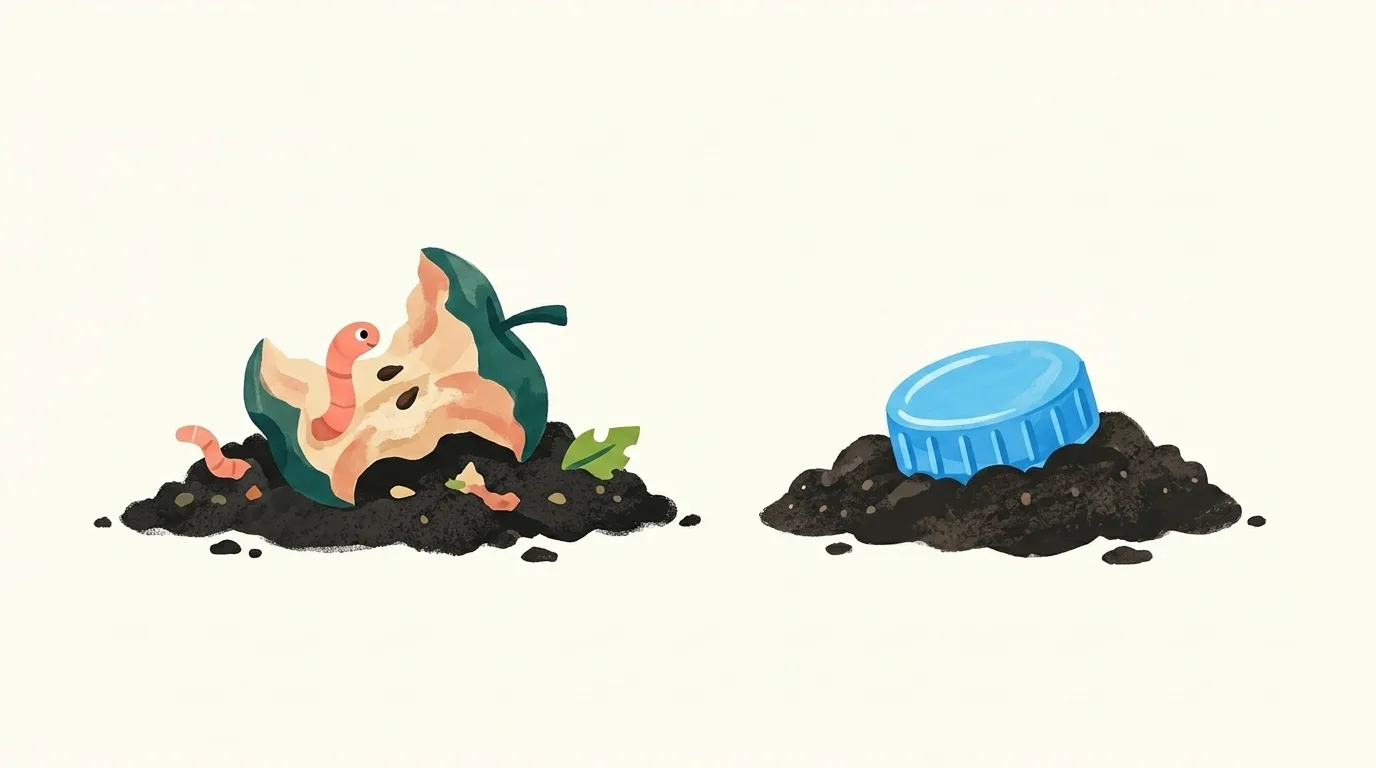
Because tiny living things called microbes can't eat it!
Things rot when microbes break them down. Plastic's atoms are held by super-strong bonds, and most microbes can't break them.
An apple peel rots away in weeks, but a plastic bottle could last hundreds of years.
Tell me more
Microbes have been munching plants and animals for billions of years, with help from other decomposers like worms, flies and fungi. But the first fully human-made plastic was only invented in 1907, so to microbes plastic is a brand-new food they don't recognize. Plastic is made of polymers: long chains, each with thousands of parts linked together, often carbon joined tightly to carbon. Instead of rotting, plastic slowly cracks into smaller and smaller pieces. Bits shorter than five millimetres, about the size of a pencil eraser, are called microplastics. Fish and birds can mistake them for food, which is why reusing and recycling plastic helps.
Words to know
- microbesliving things too tiny to see without a microscope
- decomposersliving things that break down dead stuff into soil
- polymersvery long chains of tiny pieces joined together
Try it at home
Bury a slice of apple and a small piece of plastic in a pot of soil. Dig them up after two weeks. Which one is changing?
 Dig deeper
 What else?

 Surprise me!