
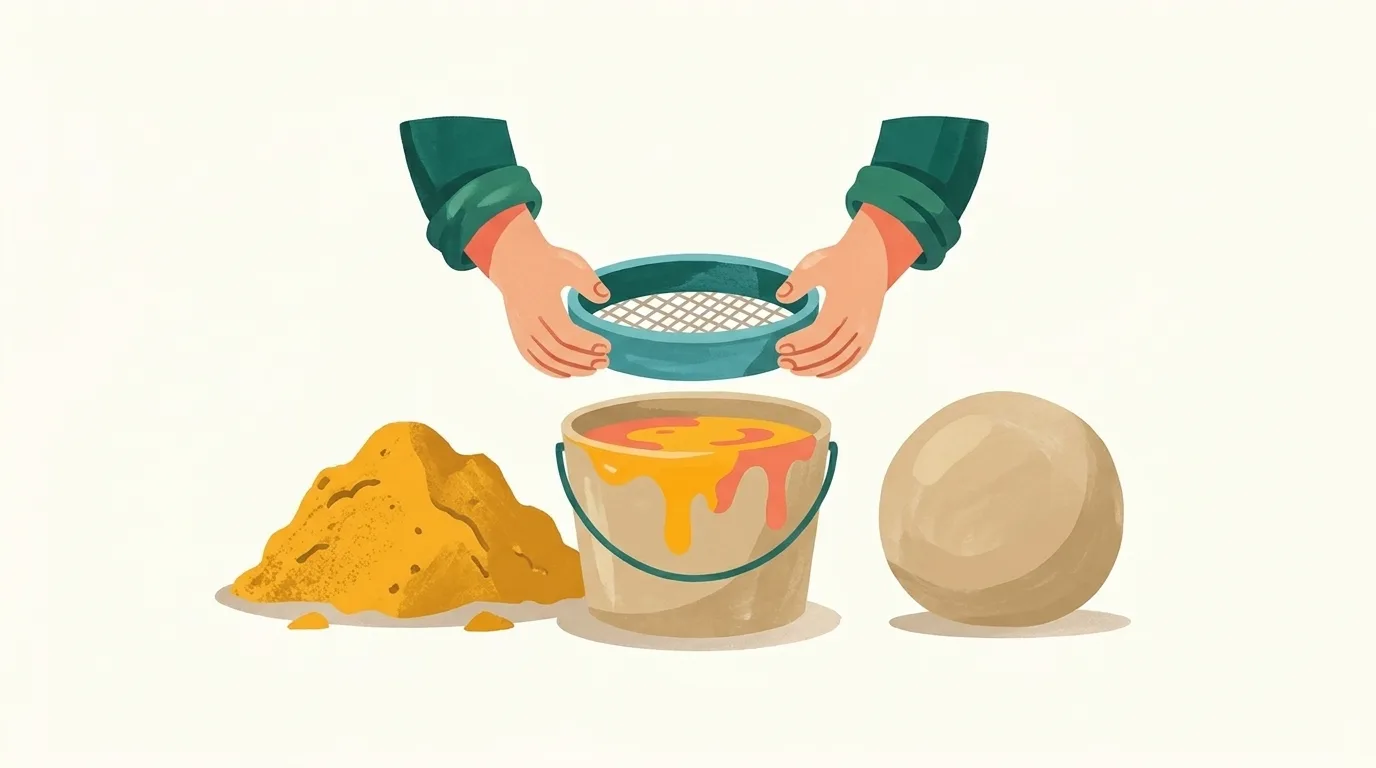
Illustration, made with AI
How do you make clay for pottery?
Clay comes out of the ground! It's rock that weather slowly broke into teeny tiny bits.
Potters dig it up, mix it with water, and sieve out roots and grit. Then it dries until it's squishy.
It's like making extra-smooth mud.
Tell me more
Clay is made of very tiny, thin plates. When clay is damp, the plates stick together but can still slide, which is why clay holds whatever shape you press it into. Before shaping, potters knead the clay to spread the water evenly and squeeze out trapped air. This is called wedging. After a pot is shaped and dried, it's baked in a kiln at about 1,000 to 1,400 degrees Celsius. The heat changes the clay for good, so it can't turn back into mud. Each little clay plate is far too tiny to see, even with a magnifying glass.
Words to know
- claysticky, smooth mud that holds a shape
- kilna super-hot oven for baking bricks, pots and clay
Try it at home with a grown-up
With a grown-up, stir a spoonful of garden soil into a clear jar of water. Leave it overnight. What layers do you see in the morning?
 Dig deeper
 What else?

 Surprise me!