
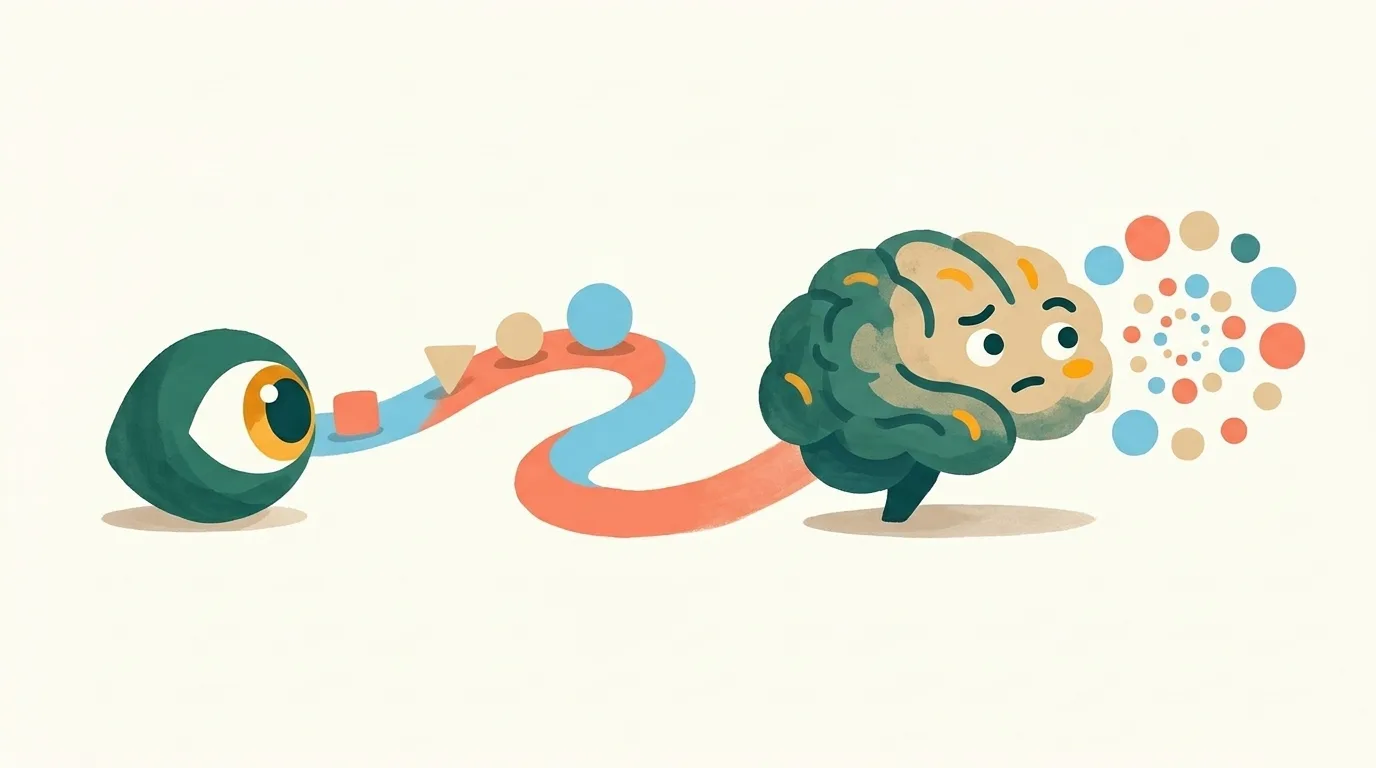
Illustration, made with AI
How do optical illusions trick us?
Your brain makes quick guesses about what your eyes see, and sometimes it guesses wrong!
Your eyes send simple clues, and your brain fills in the blanks. Illusions are pictures that trick those guesses.
A pattern that's still can even seem to move.
Tell me more
Your brain can't see by itself. It depends on your eyes, which talk to it in a very simple language, like a little child who knows only a few words. Most of the time your brain understands just fine: what color an orange is, how big a chair is, how far away the door is. Brains are extra quick to notice movement, maybe because spotting a rustle in the bushes helped people long ago. Some illusions happen early on the long trip from eye to brain, and others much later. Here's the surprise: for many illusions, scientists still don't know exactly how they work.
Words to know
- illusionssomething that tricks your eyes or your brain
Try it at home
Draw two lines the same length. Add arrow tips pointing in on one line and pointing out on the other. Which line looks longer? Measure them to check!

 Dig deeper


 What else?
 Surprise me!