
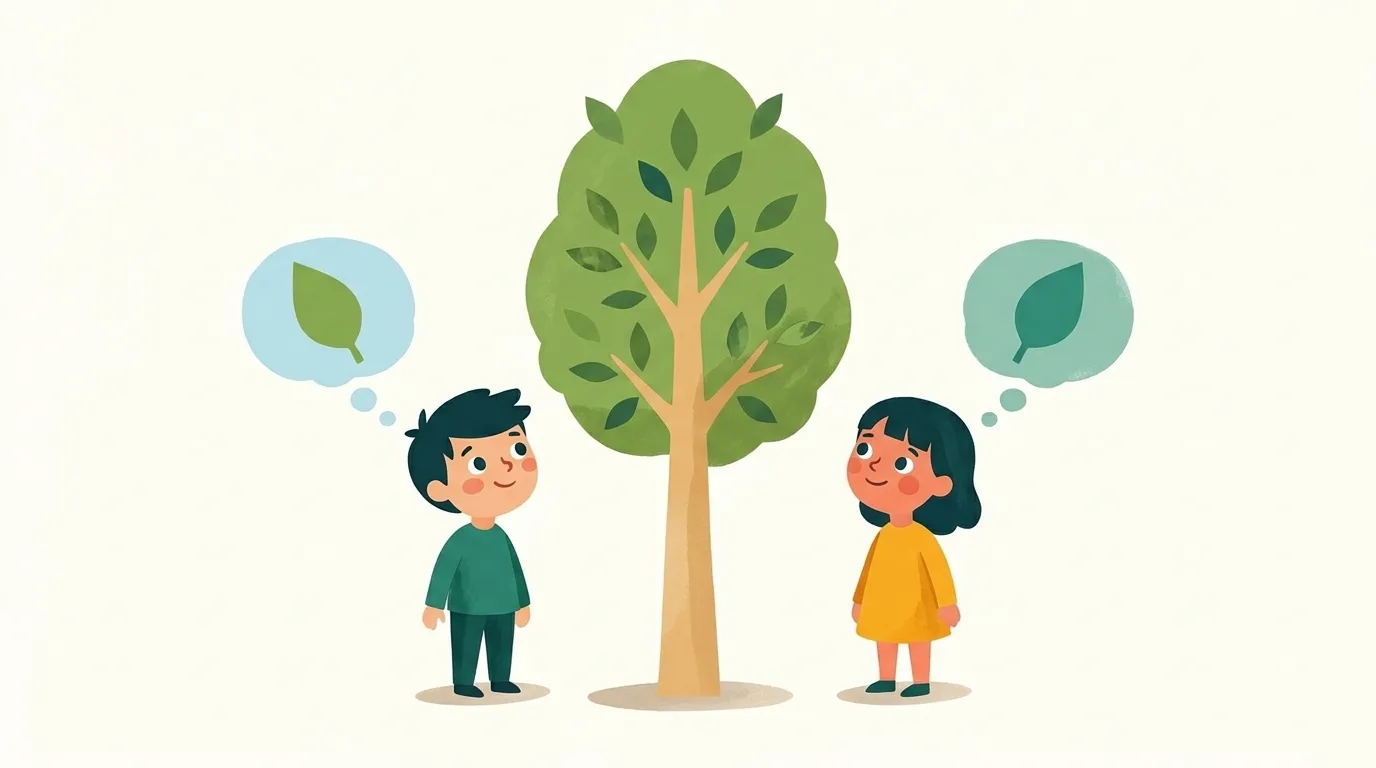
Illustration, made with AI
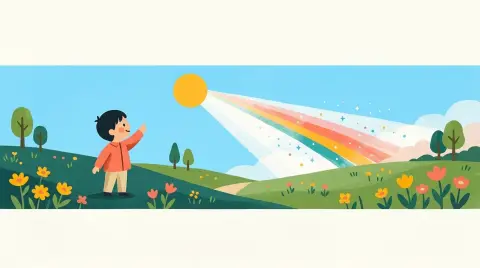
Do we all see the same colors?
Maybe not exactly, and nobody can be sure!
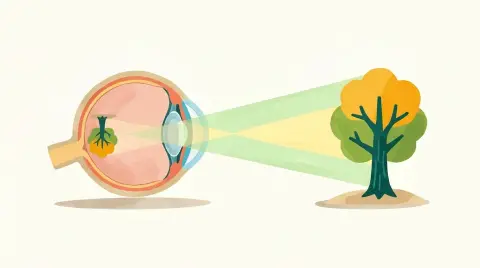
Color happens in your eyes and brain. Eye cells called cones catch different kinds of light, and your brain mixes their signals. Cones can differ.
Your green might look a little different from a friend's.
Tell me more
Most people have three kinds of cones: one for blue, one for green and one for red. Many people have only two kinds. They find red and green hard to tell apart, and both can look sort of brownish. That's called being colorblind, but colorblind people don't see in black and white. Some people may have four kinds of cones, though nobody knows exactly how many. Your brain also learns color names: a baby who hears about a green ball links that word to what she sees. Even lying on one side for a while can make colors look a bit different in each eye.
Words to know
- coneseye cells that see color
Try it at home
Lie on your left side with your eyes shut for five minutes. Then sit up and look with just your right eye, then just your left eye. Do the colors look a little different?
 Dig deeper

 What else?
 Surprise me!