
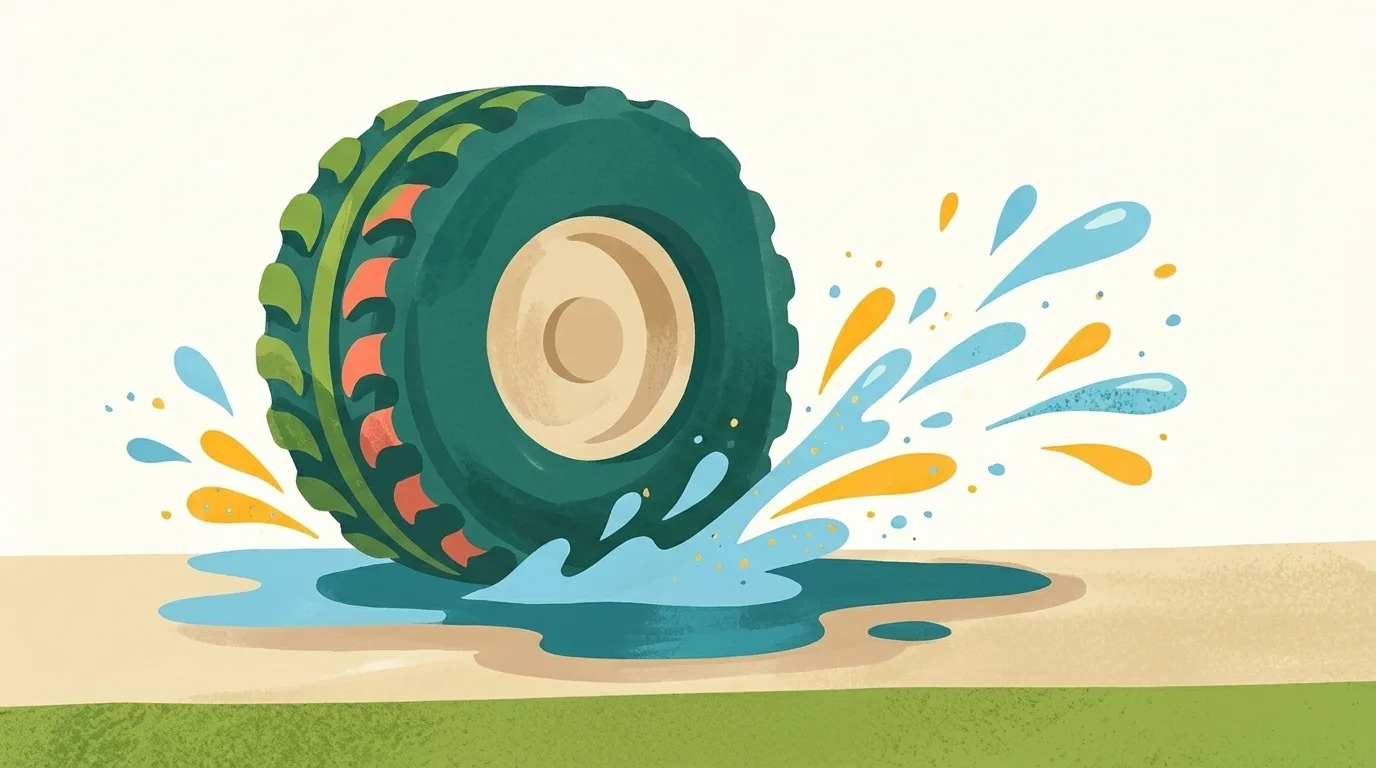
Illustration, made with AI
Why do tires have bumpy patterns on them?
So they grip the road! The bumpy pattern is called tread.
On a wet road, grooves between the bumps carry water away. Then the rubber keeps touching the road, instead of sliding on water.
It's like the ridges on rain boots that stop you slipping.
Tell me more
If a tire can't push the water away, it can ride up on a thin layer of water. That's called aquaplaning, and then steering and brakes stop working well. Airport runways have grooves cut into them too, so landing planes don't skate on rainwater. Tires for soft mud or snow have big chunky bumps called lugs. But racing tires for dry tracks, called slicks, have no tread at all, so as much rubber as possible touches the road. The first tire filled with air that really worked was made in 1888, by a vet named John Boyd Dunlop, for his son's tricycle.
Words to know
- treadthe bumpy pattern that grips the road or ground
- gripholding on tight without slipping or sliding
- aquaplaningwhen a tire slides on a layer of water
Try it at home
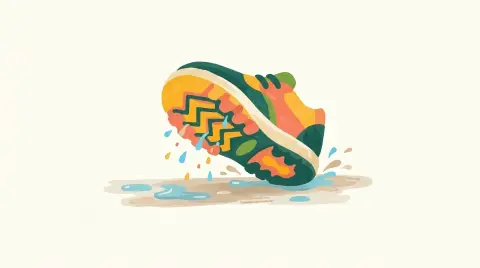
Look at the bottom of your sneakers and at a bike or car tire. Trace the grooves with your finger. Can you follow where the water would squeeze out?
 Dig deeper
 What else?


 Surprise me!