
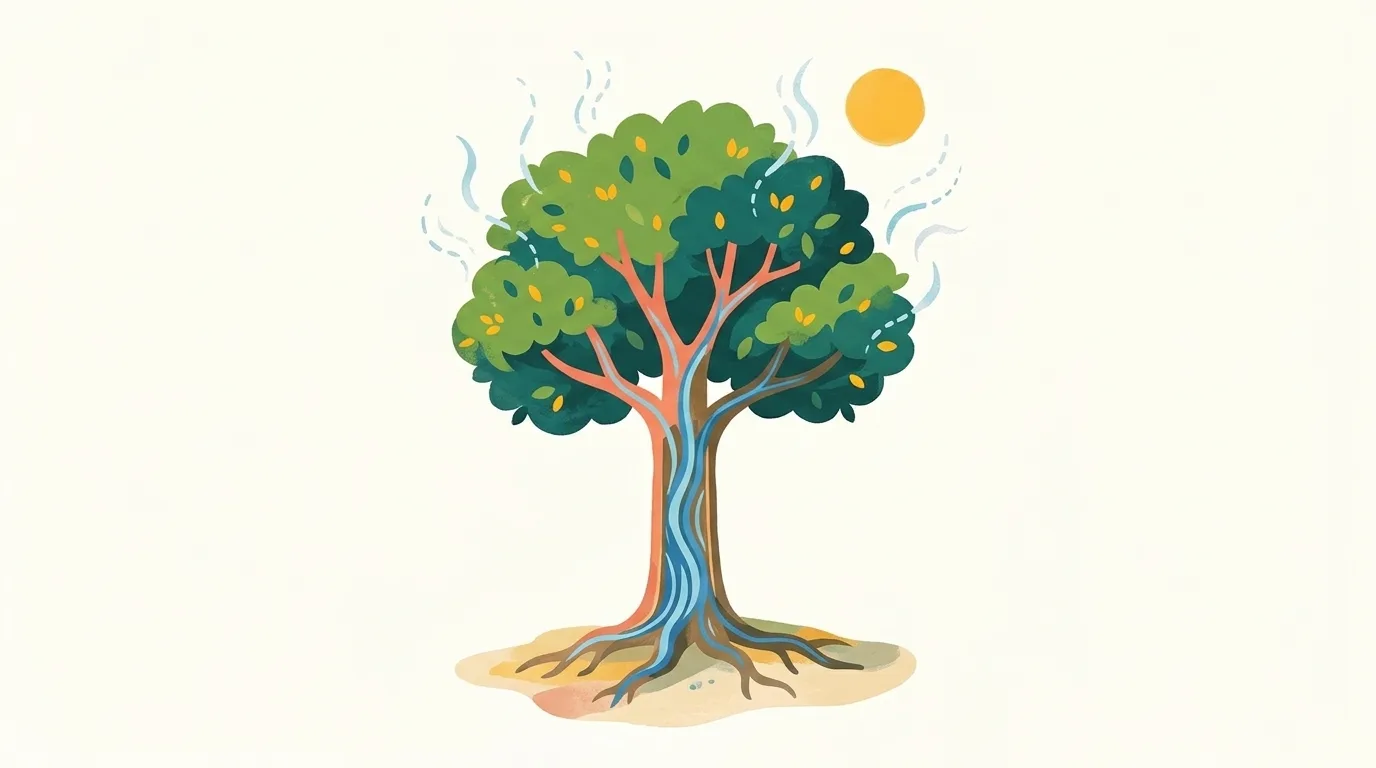
Illustration, made with AI
How does water climb all the way up a tree?
The leaves pull it up! Water escapes from tiny holes in leaves into the air.
Water sticks to itself, so each bit leaving tugs the next bit up thin tubes from the roots.
Like friends holding hands: pull one, everyone follows!
Tell me more
The thin tubes are called xylem, and the tiny holes in leaves are called stomata. Water escaping from leaves into the air is called transpiration. The tree doesn't spend any energy doing it. Only 3 parts or fewer out of every 100 parts of water a plant drinks are used for growing. Almost all the rest goes out into the air. That helps keep the plant cool, a bit like sweat cools you. When a plant loses water faster than its roots can drink, it closes its stomata to save water, but then it takes in less air to make food, and grows more slowly.
Words to know
- xylemthin tubes inside a plant that carry water up
- stomatatiny holes in leaves that let air in and water out
- transpirationwater escaping from leaves into the air
Try it at home
Put a celery stalk in a glass of water with a few drops of food coloring. Wait a day, then look: the color has climbed up the tubes!

 Dig deeper
 What else?



 Surprise me!