
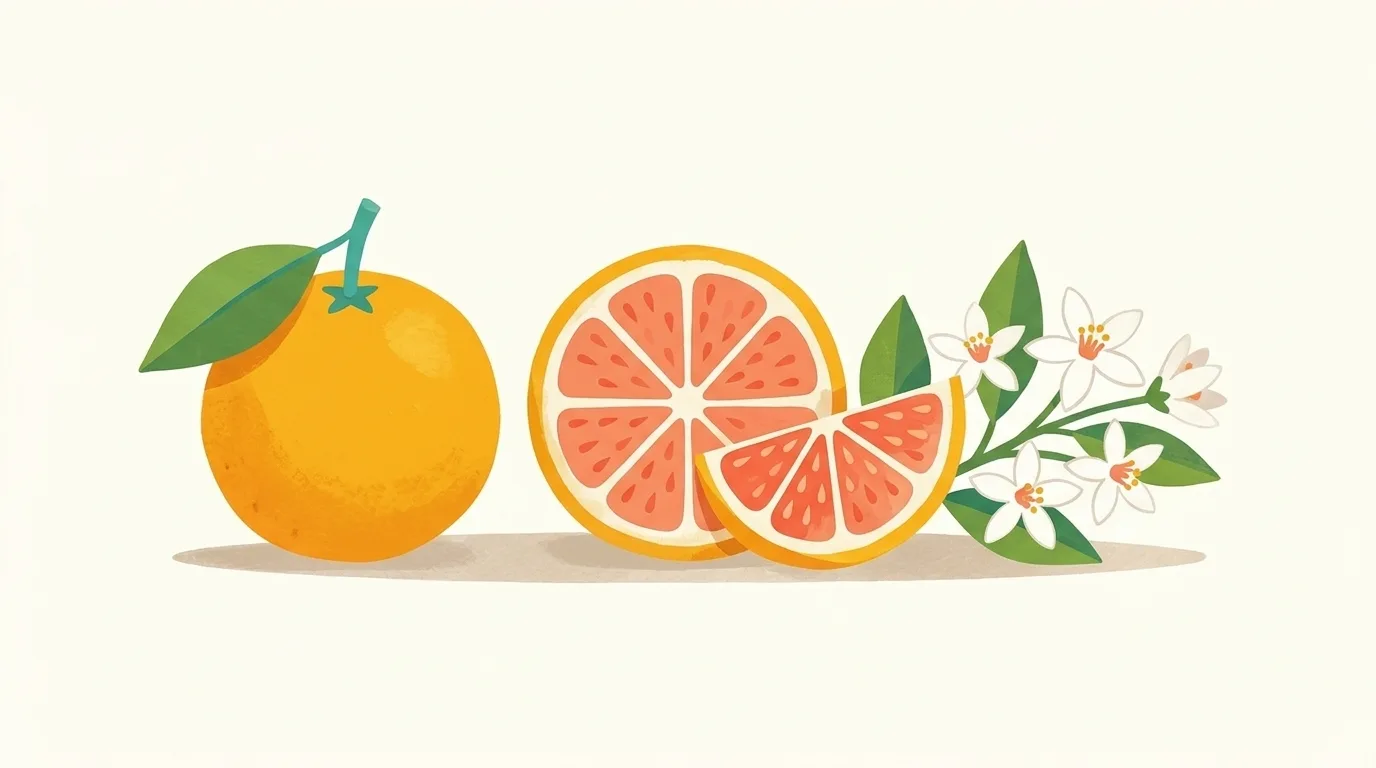
Illustration, made with AI
Why is the inside of an orange split into segments?
The segments were already planned inside the flower!
An orange grows from the flower's ovary, which is divided into sections. Each section swells into one segment, with its own thin wall and often a seed or two.
Like a house with its rooms already drawn.
Tell me more
Botanists call the segments carpels, and an orange usually has about ten of them. Now look closely inside one. It is packed with tiny juice-filled bags, and each little bag is actually a special kind of hair cell, full of juice! Some oranges hold a surprise too. A navel orange has a small second fruit tucked into its end, which bulges out a bit like a belly button. Navel oranges have no seeds, so growers make new trees by joining cut twigs onto other trees. Sweet oranges first came from a region that includes southern China, northeast India and Myanmar.
Words to know
- carpelsthe sections inside a fruit that hold its seeds
- ovarythe part in a flower's middle that grows into a fruit
Try it at home
Peel an orange with a grown-up and count its segments. Then gently open one and look for the tiny juice bags inside!

 Dig deeper

 What else?

 Surprise me!