
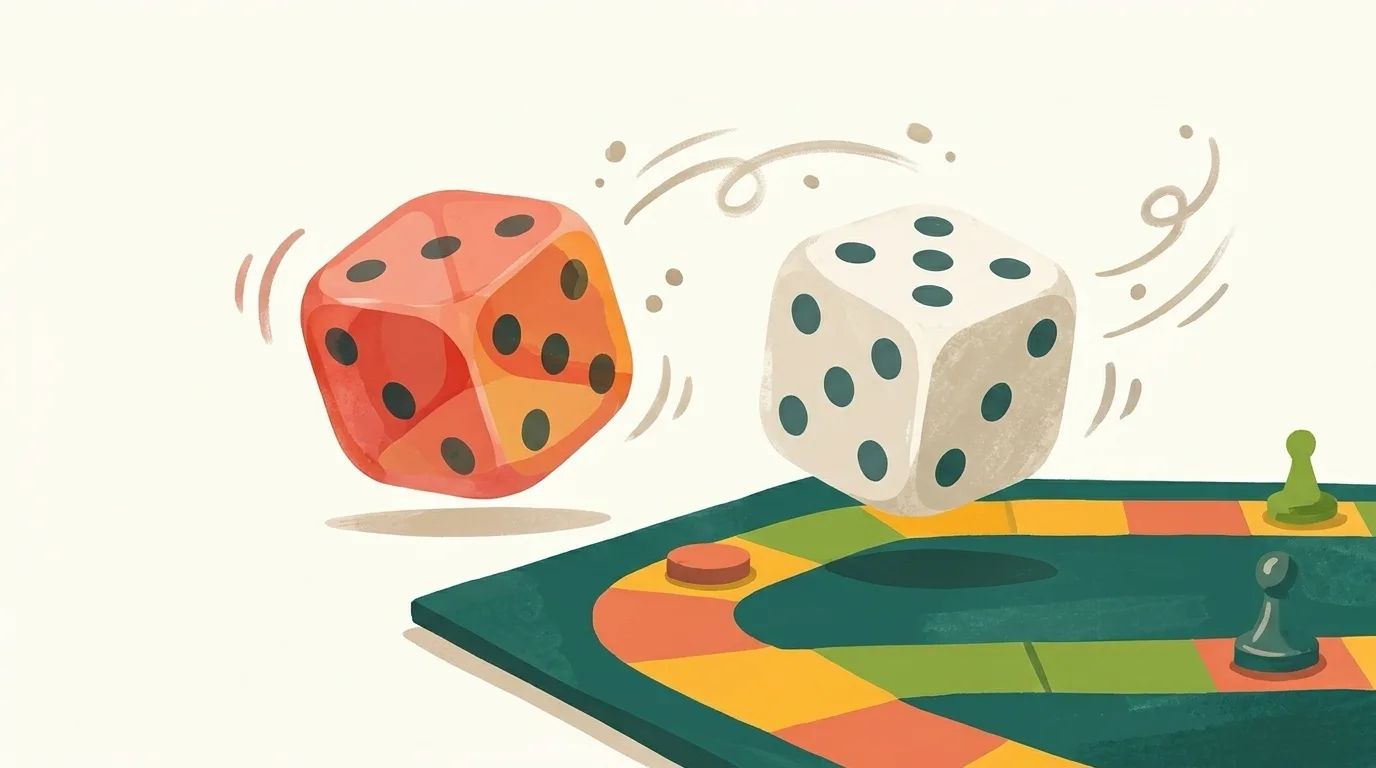
Illustration, made with AI
Is rolling a dice really fair?
Almost! A well-made dice is the same on every side, so each number has an equal chance.
A thrown dice tumbles and bounces in ways nobody can really control, so nobody knows which side will land on top.
It's like a six-sided coin toss.
Tell me more
A fair dice depends on symmetry: every face the same size and shape, with the weight spread evenly. Casino dice are made extra carefully. The dots are drilled, then filled with paint that weighs the same as the plastic, so the dice stays balanced. They are see-through, so nobody can hide a weight inside. A loaded dice has been tampered with, using rounded faces or hidden weights, so one side lands up more often. On most dice, opposite sides add up to seven. One dice found in the ancient city of Mohenjo-daro, about 4,000 years old, already did!
Words to know
- symmetrywhen all the sides match each other
- loadedsecretly changed to land one way more often
Try it at home
Roll a dice 30 times while a grown-up makes a tally mark for each number. Do all six come up about the same? Try 30 more!
 Dig deeper

 What else?

 Surprise me!