

Illustration, made with AI
How do skyscrapers stand up so tall and skinny?
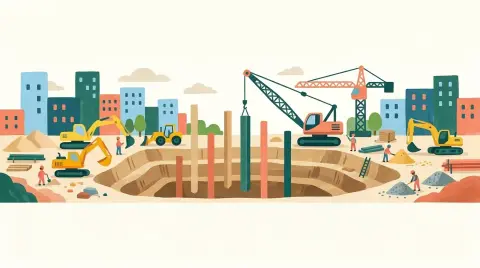
A strong steel skeleton holds them up, standing on an extra-strong base called the foundations.
The steel frame carries the building's weight down to the ground. The outside walls just hang on it.
It's like your bones holding up your skin!
Tell me more
Very tall buildings also have a concrete core, a strong tube up the middle. Their hardest job is fighting the wind, because wind pushes harder the higher you go. Some skyscrapers carry heavy dampers, which help stop them swaying. Skyscrapers are very heavy, so their foundations must be much stronger than a small house's. The first skyscraper with a steel frame was the Home Insurance Building. It had 10 floors and was 42 metres tall, which is small next to the giants built since. Taller buildings also need more elevators, to carry people up to all those floors.
Words to know
- foundationsthe strong base hidden under a building or bridge
- corea strong tube up the middle of a tall building
- dampersheavy parts that calm a building's swaying
Try it at home
Build a tower of paper cups or blocks. Then build one around a cardboard tube standing in the middle. Blow on both. Which one stands up best?
 Dig deeper

 What else?



 Surprise me!