
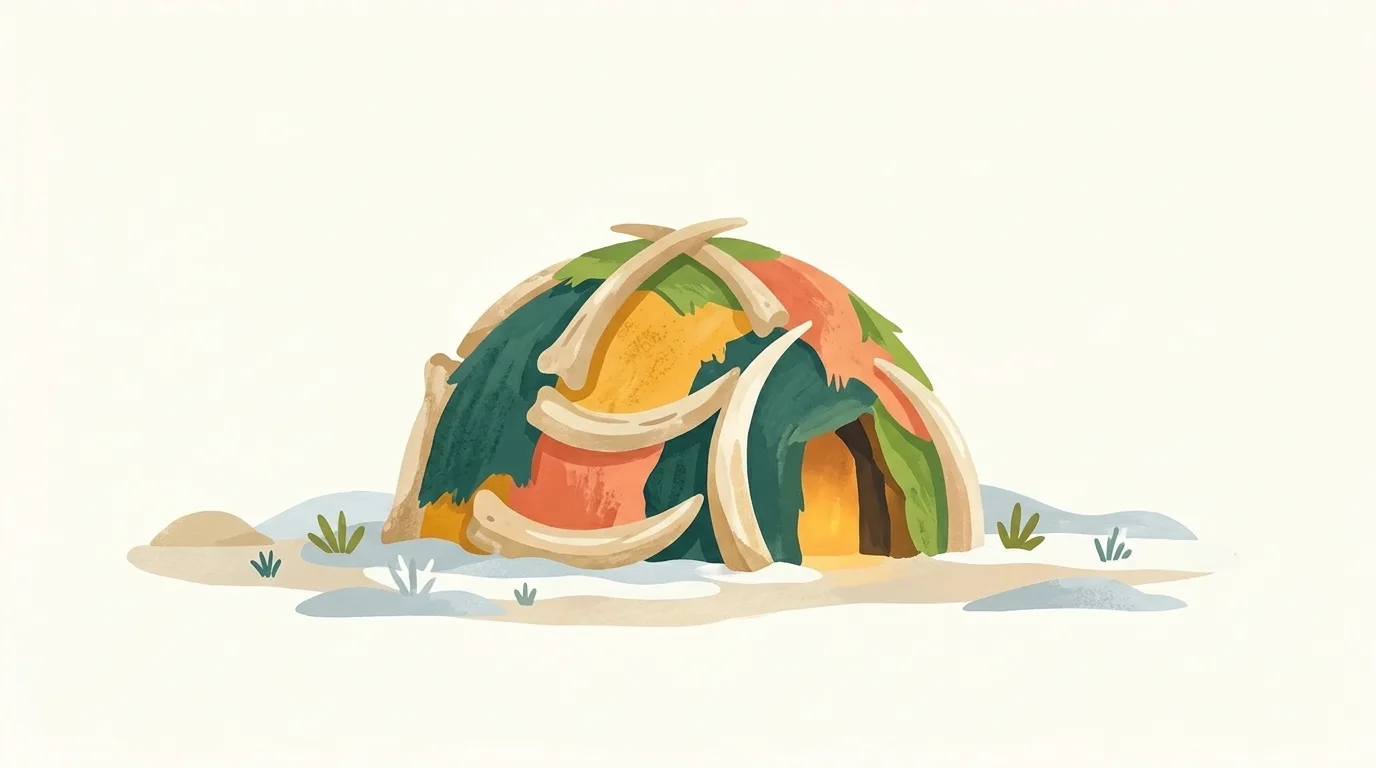
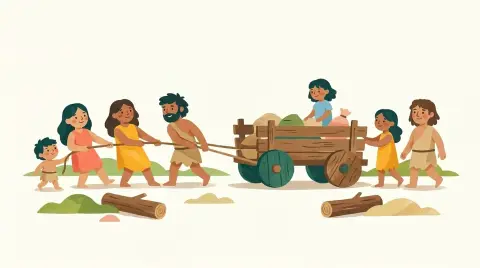
Illustration, made with AI
What were the very first houses made of?
Wood, stone, grass, animal skins, and mammoth bones! Early people built with whatever they found nearby.
They made simple homes called huts. Huts are quick to build, with no special tools, and they gave shelter.
It's like making a den from sticks and blankets!
Tell me more
The oldest known structure built by early humans is at Kalambo Falls, in Africa. Two wooden beams were fitted together at least 476,000 years ago, before people like us even existed! It may have been a platform beside a place to get water. Much later, about 15,000 years ago, people in what is now Ukraine built huts from the bones of mammoths. Around the world, people have also built huts from snow, palm leaves, branches, clay and mud. Many families today still build homes this way, passing the know-how down from grown-ups to children.
Words to know
- mammotha huge, hairy elephant from long, long ago
- hutssmall, simple homes
- platforma flat, raised place to stand, sit or sleep on
Try it at home
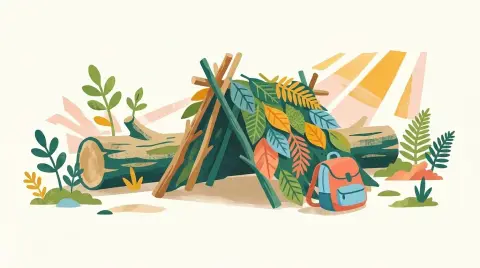
At a park or backyard, lean sticks together into a mini shelter and pile leaves on top. Does it block the wind for a toy hiding inside?
 What else?
 Surprise me!