
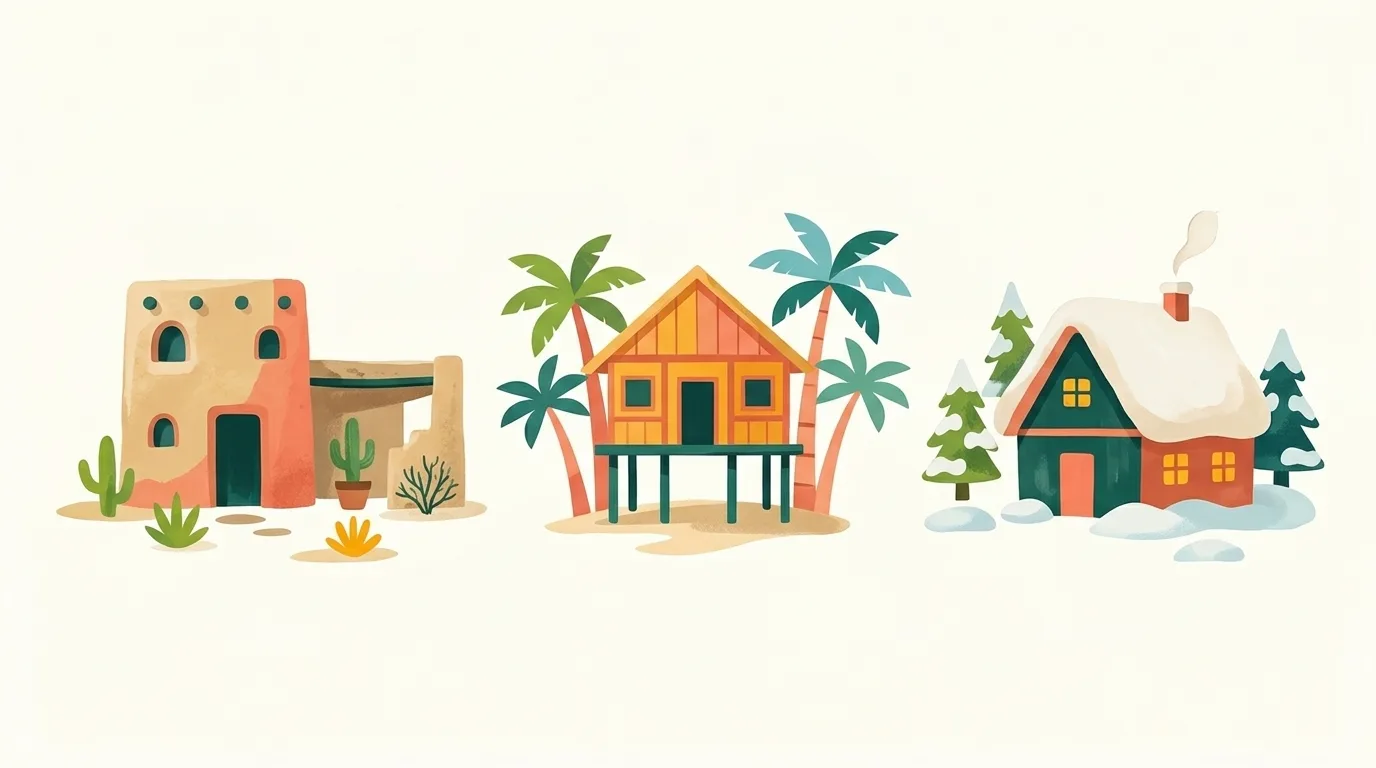
Illustration, made with AI
Why do houses look different in hot and cold places?
Because each house is built to beat its weather!
In hot, dry places, thick walls and small windows keep homes cool. In cold places, thick walls or insulation hold the warmth in.
It's like wearing shorts in summer and a coat in winter!
Tell me more
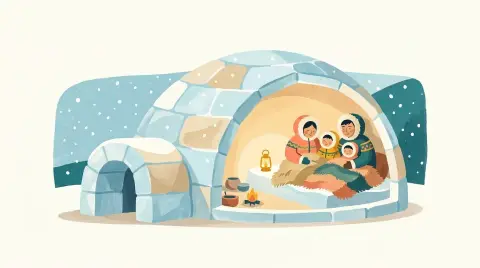
Rain and floods shape houses too. In places with lots of flooding or a rainy season called a monsoon, many homes stand on stilts, high above the water. Where it rains a lot, flat roofs are rare, because sloping roofs let the rain run off. In warm, wet places, people often build with bamboo. In hot, dry places around the Middle East, many homes are built around a courtyard, an open space in the middle, sometimes with a fountain or pond. And the Inuit of the far north have different shelters for different seasons, including the igloo for winter.
Words to know
- insulationstuff that keeps warmth in and cold out
- stiltstall posts that hold something up off the ground
- courtyardan open space with walls or buildings all around it
Try it at home
On a sunny day, notice which room in your home is coolest and which is warmest. Where are the windows? How might you build a house to stay cool, or to stay warm?

 Dig deeper
 What else?



 Surprise me!