

Illustration, made with AI
Could anyone ever run as fast as The Flash?
No, but people are fast! The fastest person ever, Usain Bolt, hit about 44 kilometres an hour.
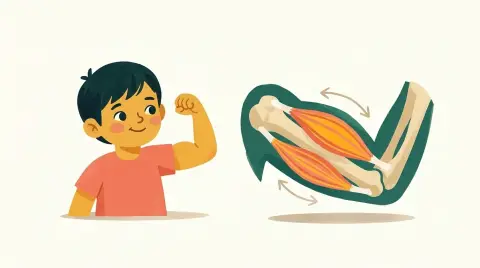
Speed comes from how hard your legs push the ground. Muscles can only push so hard, so people have a top speed.
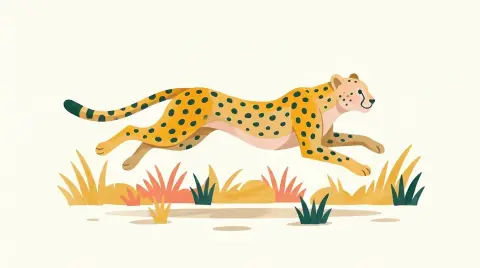
A pet cat runs even faster!
Tell me more
Here's a surprise: fast runners and slow runners swing their legs at almost the same speed. What makes a sprinter fast is pushing down harder, up to four times their own body weight with each step! Your muscles are made of two kinds of fibres. Fast-twitch fibres squeeze quickly but tire soon. Slow-twitch fibres keep going for a long time. Top sprinters can have up to 80 fast ones in every 100. People aren't the fastest animals, but we are great at going far: one runner finished a whole marathon, more than 42 kilometres, in about 2 hours. The Flash is make-believe!
Words to know
- sprintera runner who races short distances super fast
- musclesa body part that pulls to make things move
- fibresvery thin threads that things like wood and muscles are made of
Try it at home
At the park, run a short race twice: once with small soft steps, and once pushing hard into the ground with each step. Which one feels faster?
 Dig deeper
 What else?

 Surprise me!