
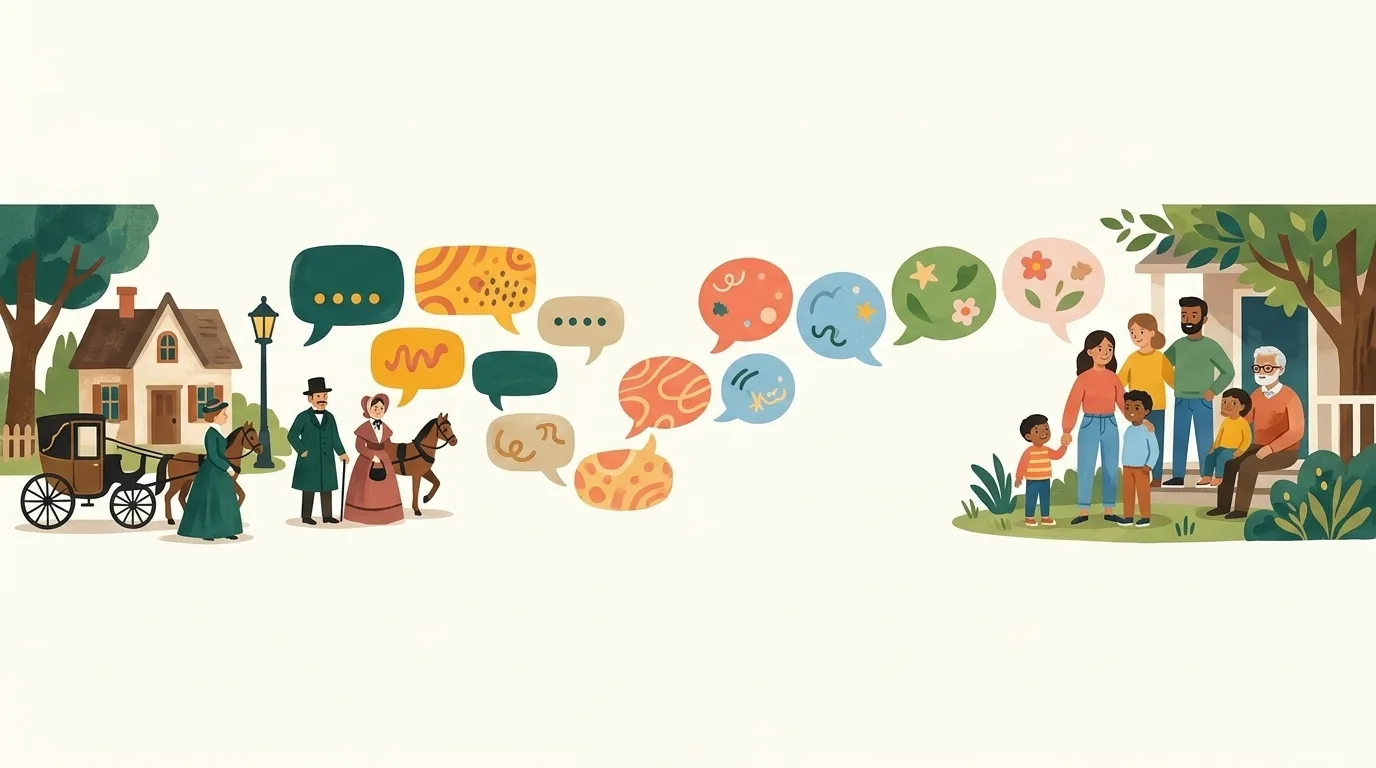
Illustration, made with AI
How does a language change over a long time?
Little by little! Every generation says some words differently, invents new ones and borrows others.
Children learn from grown-ups but don't copy them perfectly. Tiny changes spread, and over hundreds of years they add up.
It's like a centuries-long game of telephone.
Tell me more
The English spoken over 1,000 years ago is called Old English. Its grammar, words and sounds are so different from today's that it looks like another language. After 1066, rulers in England spoke a kind of French, and English soaked up lots of their words. Meanings drift too. The word "wicked" once meant only "evil", but now some people use it to mean "brilliant". Sounds wear down as well, so "going to" often comes out as "gonna". Each change starts small, and if enough people pick it up, it becomes normal.
Words to know
- generationeveryone born around the same time, like you and your friends
- Old Englishthe way people spoke English over 1,000 years ago
Try it at home
Ask a grandparent or older grown-up for a word they used as a kid that people don't say now. Then teach them one of your words!
 What else?
 Surprise me!