

Illustration, made with AI
How does my voice go high and low when I sing?
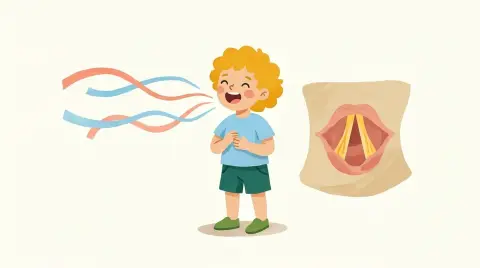
Two vocal folds in your voice box buzz as air rushes past.
Muscles in your larynx change how long and tight the folds are. That changes how fast they buzz. Faster buzzing makes a higher note.
It is like tightening a guitar string.
Tell me more
The folds are also called vocal cords. They stretch across the larynx, open when you breathe, and vibrate when you speak or sing. Their length affects pitch, like a stringed instrument. At birth, the folds are only about six to eight millimeters long. In adults they are about 12 to 25 millimeters long, and adults with longer, thicker folds usually have lower voices. Your tongue and lips then shape the buzz into words and tunes. A nerve called the vagus nerve helps control them. Above the real folds sit false folds, which are used for deep growls and some chants.
Words to know
- larynxyour voice box, in your throat, that makes sounds
- vocal foldsstretchy flaps in the voice box that shake to make sound
- pitchhow high or low a sound is
Try it at home
Rest a hand lightly on your throat and hum a low note, then slide up to a high note. Feel the buzz change.
 Dig deeper

 What else?



 Surprise me!