
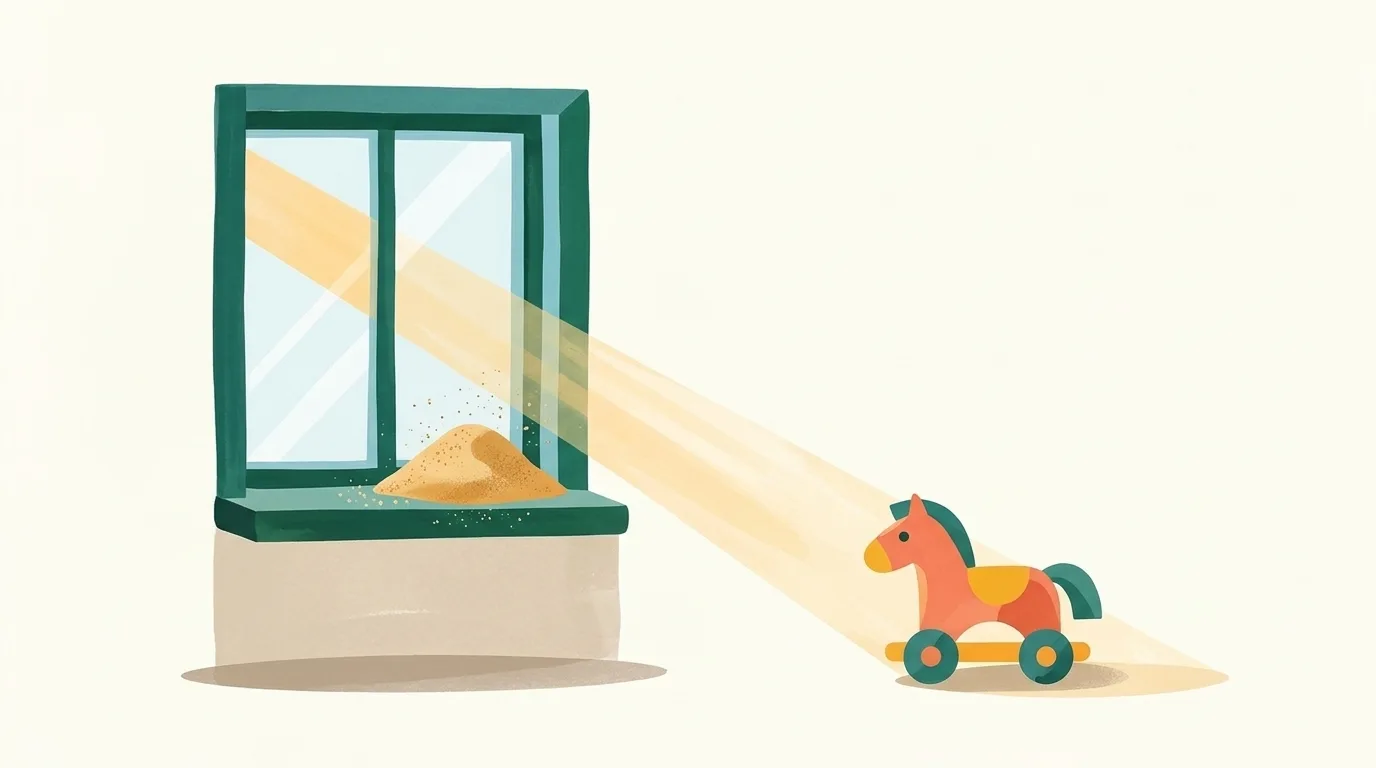
Illustration, made with AI
Why can I see right through glass?
Light zooms right through it! Glass has no tiny grains inside to bounce light around.
Many solids are made of little crystals whose edges scatter light. Glass atoms are jumbled, with no edges, so light passes on.
Like seeing through still water, not foam.
Tell me more
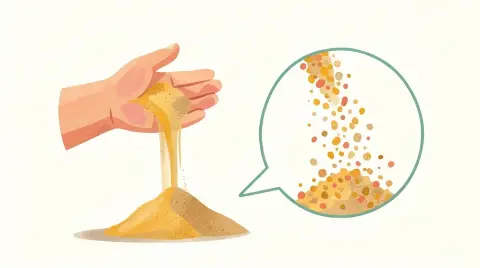
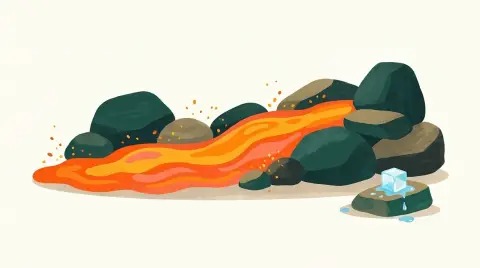
Glass is made by heating sand until it melts, at about 1,700 degrees Celsius. Then it is cooled so quickly that its atoms have no time to line up into crystals. They stay jumbled, which makes glass an amorphous solid. Most glass in windows and jars is soda-lime glass, which is about 70% silica, the main stuff in sand. Glass can also form in nature. When lava from a volcano cools very fast, it can make a natural glass called obsidian. Stone Age people chipped obsidian into sharp tools, because it breaks with very sharp edges.
Words to know
- amorphous solida solid whose tiny bits are jumbled, not in neat rows
- crystalsa solid whose tiny pieces line up in a neat, repeating pattern
Try it at home
Shine a flashlight through a clear glass, then through a glass covered in wax paper. See how the paper scatters the light into a fuzzy glow?
 What else?
 Surprise me!