
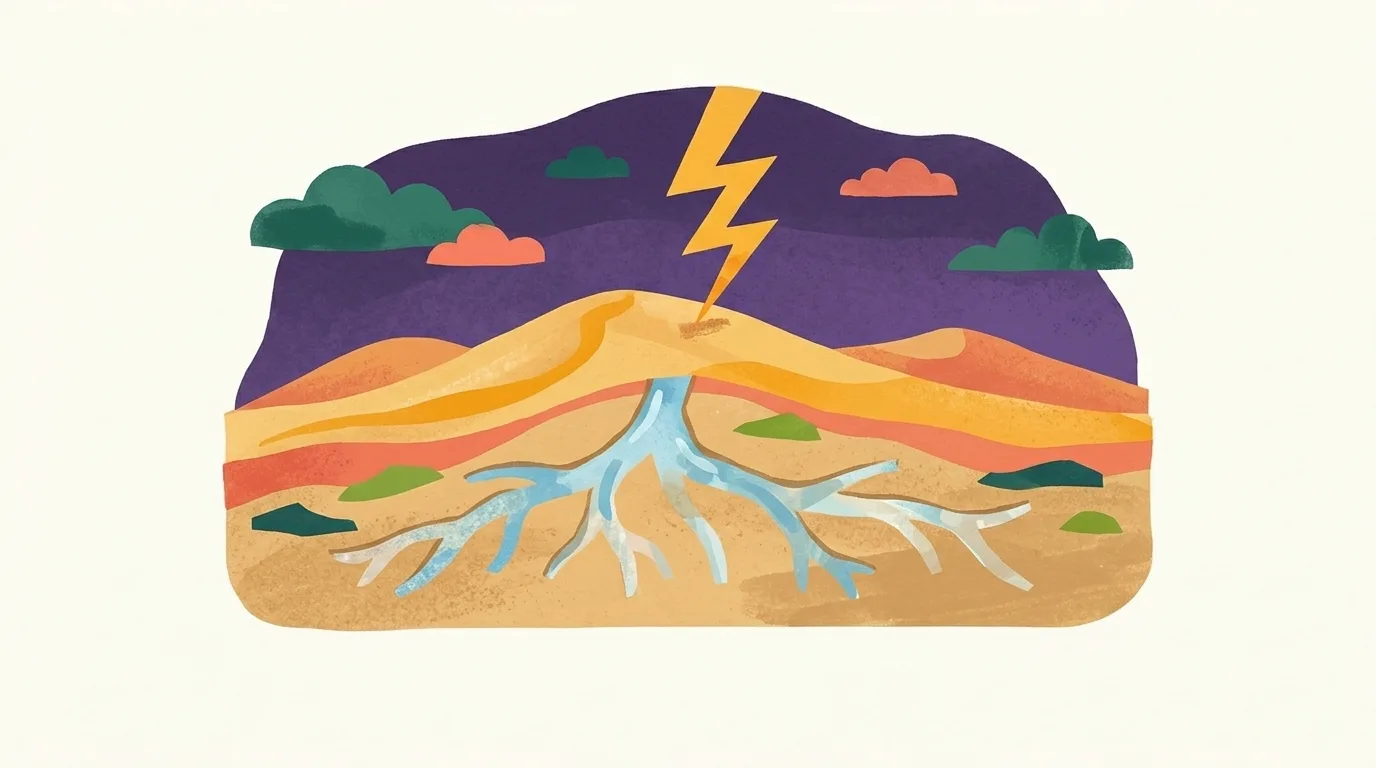
Illustration, made with AI
Can lightning turn sand into glass?
Yes! Lightning melts sand in a flash, leaving a glassy tube called a fulgurite.
The bolt is hotter than the Sun's surface. Its heat follows the electricity into the sand and melts the grains into glass.
The tube branches like roots.
Tell me more
A lightning bolt can heat the air to about 50,000 degrees Fahrenheit, around five times hotter than the Sun's surface. The word fulgurite comes from fulgur, the Latin word for lightning, and people call fulgurites fossilized lightning. Inside, the tube is usually smooth or lined with tiny bubbles. Outside, it's rough, with sand and little stones stuck on. Its colour depends on the minerals in the sand that was struck, from white to black. Fulgurites can reach as deep as 15 metres under the ground. They are found all over the world, but they are rare and break easily.
Words to know
- fulguritea glassy tube made when lightning melts sand
Try it at home
During a thunderstorm, watch safely from indoors. See how lightning branches like tree roots? Fulgurites in the ground branch the same way.

 Dig deeper

 What else?


 Surprise me!