
Illustration, made with AI
Where does sand come from?
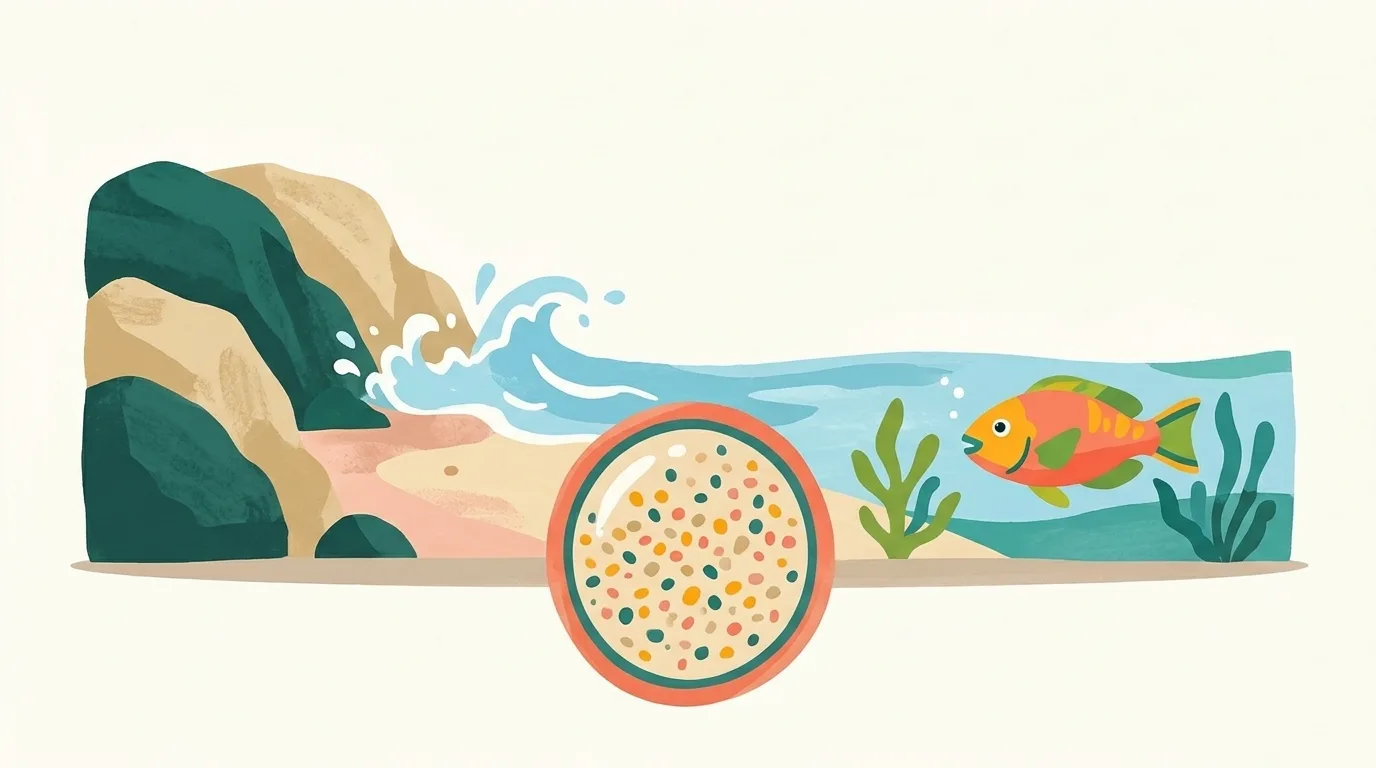
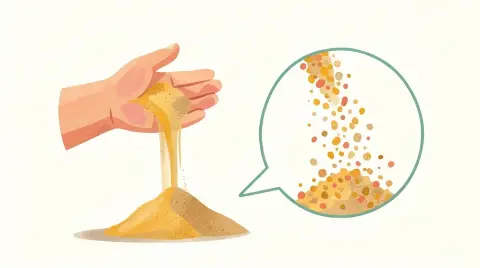
Mostly from rocks! Sand is what's left when rock breaks into tiny bits.
Weather wears rocks down over thousands or even millions of years. Rivers carry the pieces toward the sea, breaking them smaller on the way.
Like a giant rock grinder that never stops!
Tell me more
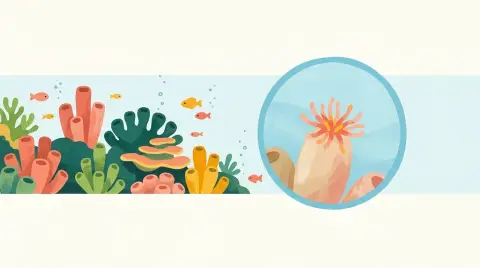
Most beaches are tan because of quartz and feldspar, two tough minerals that take a long time to break down. A little iron, a bit like rust, tints the quartz light brown. Black sand comes from broken-down lava and other dark volcanic rock, so it is found near volcanoes, like in Hawaii. Some white sand comes from living things. Parrotfish scrape algae off dead coral with their beak-like mouths, grind up the hard coral in their bellies, and poop it out as sand. Scientists call bits sand when most are bigger than silt but smaller than gravel.
Words to know
- quartza tough, common mineral, often a clear or white crystal
Try it at home
Hold two rough rocks over dark paper and rub them together. Look at the tiny grains that fall. You just made a little sand!
 Dig deeper
 What else?
 Surprise me!