
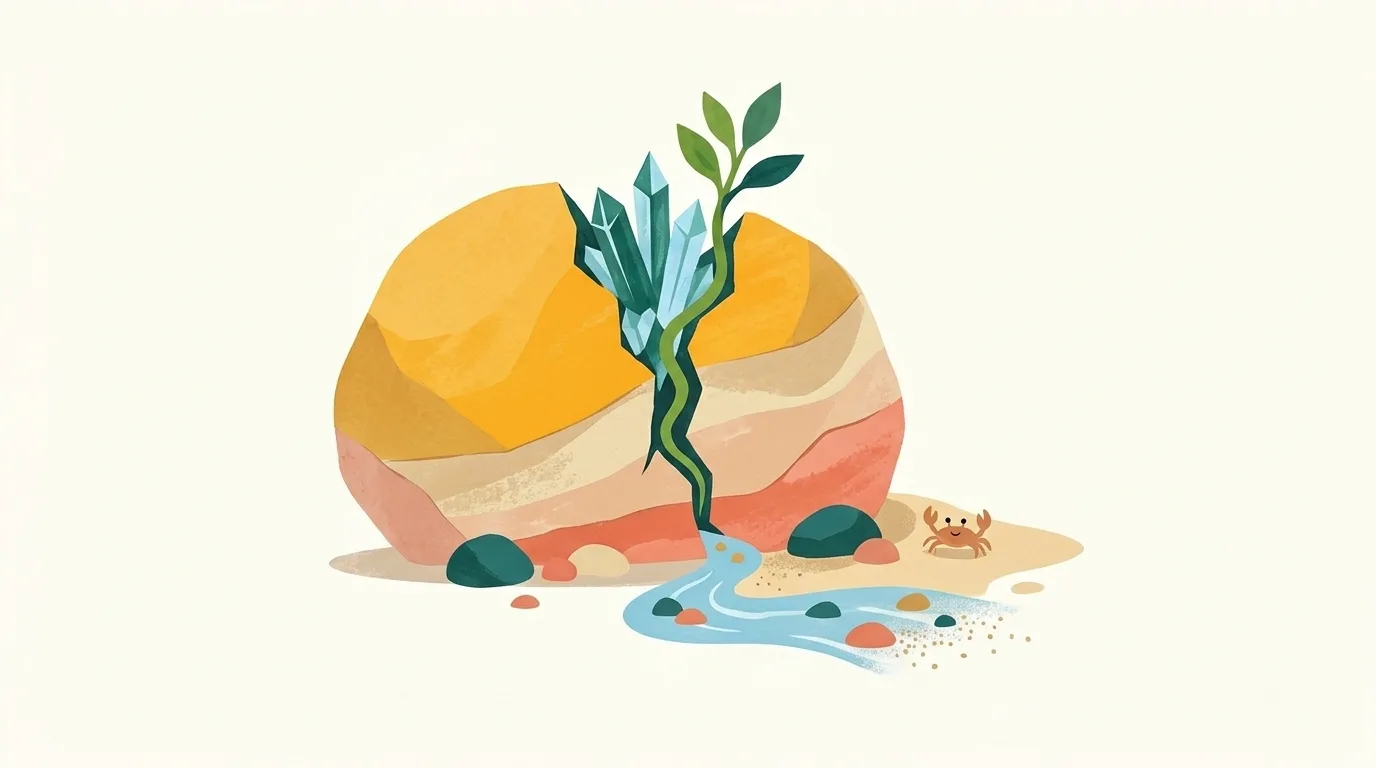
Illustration, made with AI
How do rain, ice and wind break big rocks apart?
Ice, roots, water and wind crumble rocks, bit by bit!
Water seeps into a crack and freezes. Ice takes more room, so it wedges the crack wider. Roots pry too. Then water and wind carry bits away.
Like a wedge splitting a log.
Tell me more
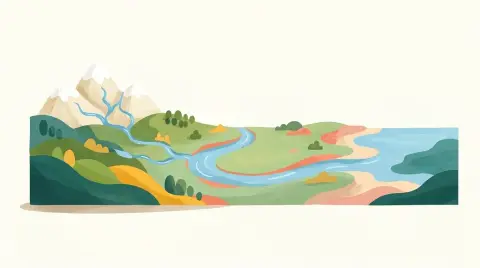
Breaking rock where it sits is called weathering. Carrying the broken bits away, by water, ice, wind, waves or gravity, is called erosion. Ice is the strongest rock-breaker of all: ice growing inside cracks pries them wider, again and again. Plant roots come next, creeping into cracks and prying them apart. Water can also slowly dissolve some rocks, like limestone, leaving clay behind. Over a very, very long time, the broken pieces are carried off and dropped somewhere else. Many of the hills, valleys and arches in a landscape were carved this way.
Words to know
- erosionwater, wind or ice slowly wearing rock away
- limestonea hard rock, made from shells and skeletons, that water slowly dissolves
 Dig deeper
 What else?
 Surprise me!