
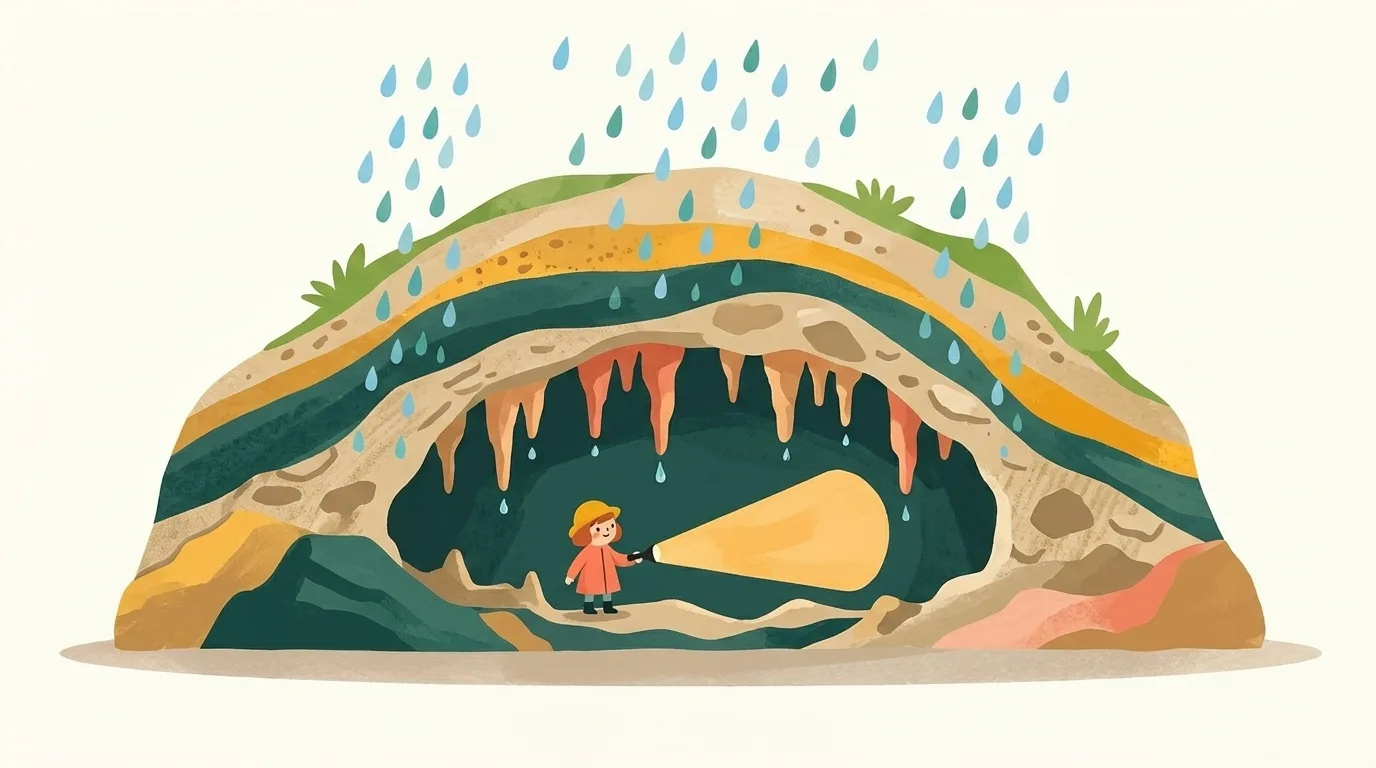
Illustration, made with AI
How do caves get made?
Mostly by rainwater, very slowly!
Rain mixes with a gas called carbon dioxide in the soil and becomes a weak acid. It trickles into cracks in limestone and dissolves the rock, widening them.
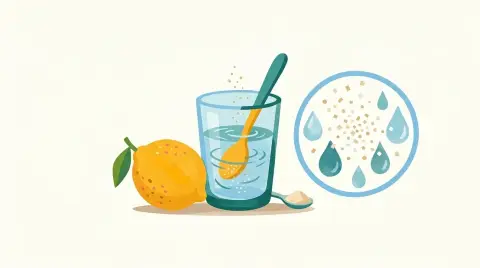
It's like a sugar cube slowly dissolving in water.
Tell me more
That weak acid is called carbonic acid. It's the same weak acid found in fizzy drinks! At first, water can barely move through a tiny crack. But once the crack gets a bit bigger, water flows through it, bringing more acid. Underground streams also carry sand and grit that scrub the soft limestone away. A cave passage with a stream grows about 1 millimetre a year at most. That sounds tiny, but in a thousand years it adds up to a passage a metre wide. Many caves are hundreds of thousands, or even millions, of years old.
Words to know
- limestonea hard rock, made from shells and skeletons, that water slowly dissolves
- carbonic acida weak, sour acid made when carbon dioxide mixes with water
Try it at home with a grown-up
With a grown-up, drop a piece of chalk into a cup of vinegar. Watch it fizz as the acid eats the chalk, a bit like rain carving a cave.
 Dig deeper
 What else?
 Surprise me!