
Illustration, made with AI
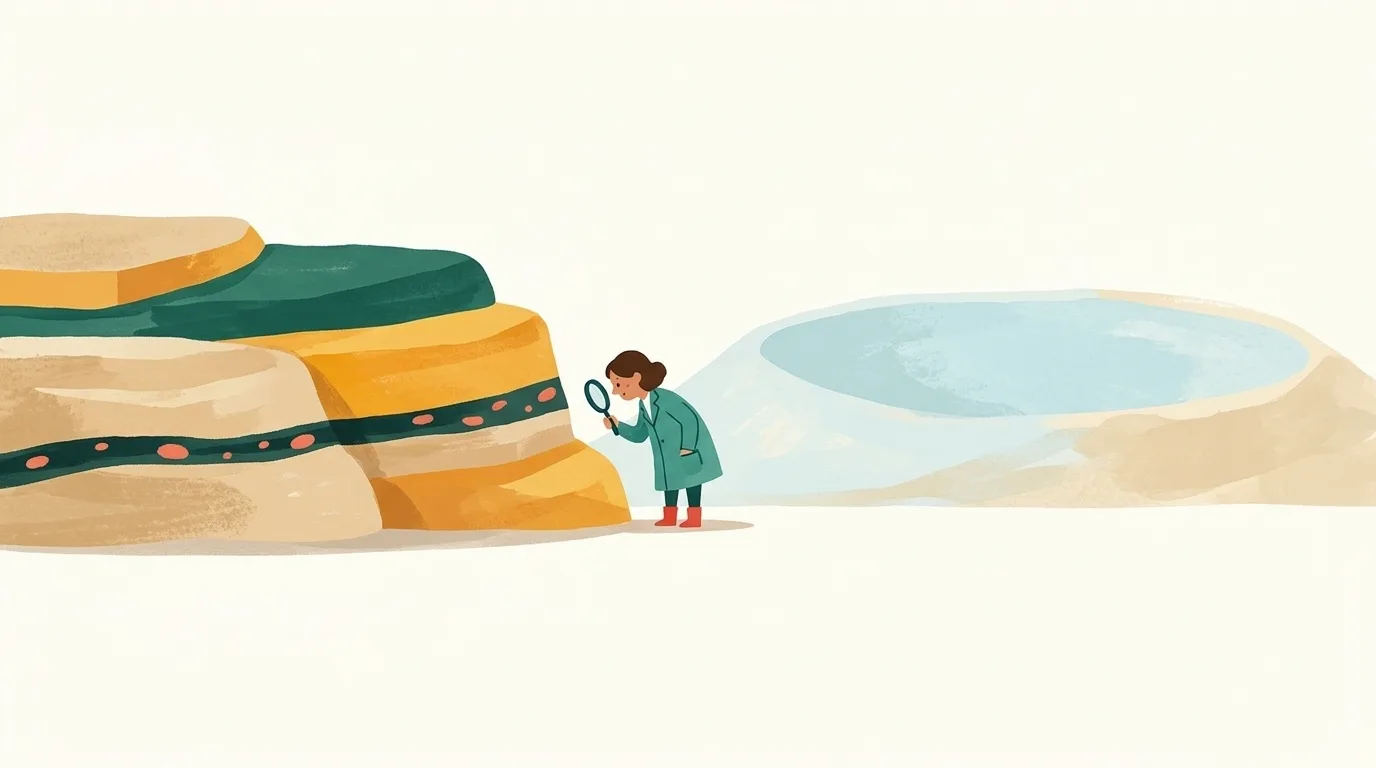
How do we know a space rock really hit Earth?
Clues in the rocks! All around the world, rocks from that time hold a thin layer rich in a rare space metal.
A giant crash spread it everywhere, and its crater is still buried in Mexico.
Like cookie crumbs leading to the jar!
Tell me more
In 1980, a scientist named Luis Alvarez and his son Walter said the layer came from a huge asteroid. The metal is iridium, one of the rarest metals on Earth but more common in space rocks. The same layer holds shocked quartz, sand grains marked by a giant blow, and tiny glass beads made from rock melted by the crash. Then the crater was found, hidden about one kilometre under younger rock in Mexico. It is exactly the same age as the dinosaurs' extinction. Scientists have since found the iridium layer in rocks from both land and sea.
Words to know
- iridiuma rare metal that is common in space rocks
- cratera big bowl-shaped hole made when something crashes in
Try it at home with a grown-up
With a grown-up, fill a tray with flour and sprinkle cocoa on top. Drop a marble from up high and look at the crater and splash it makes!

 Dig deeper

 What else?

 Surprise me!