
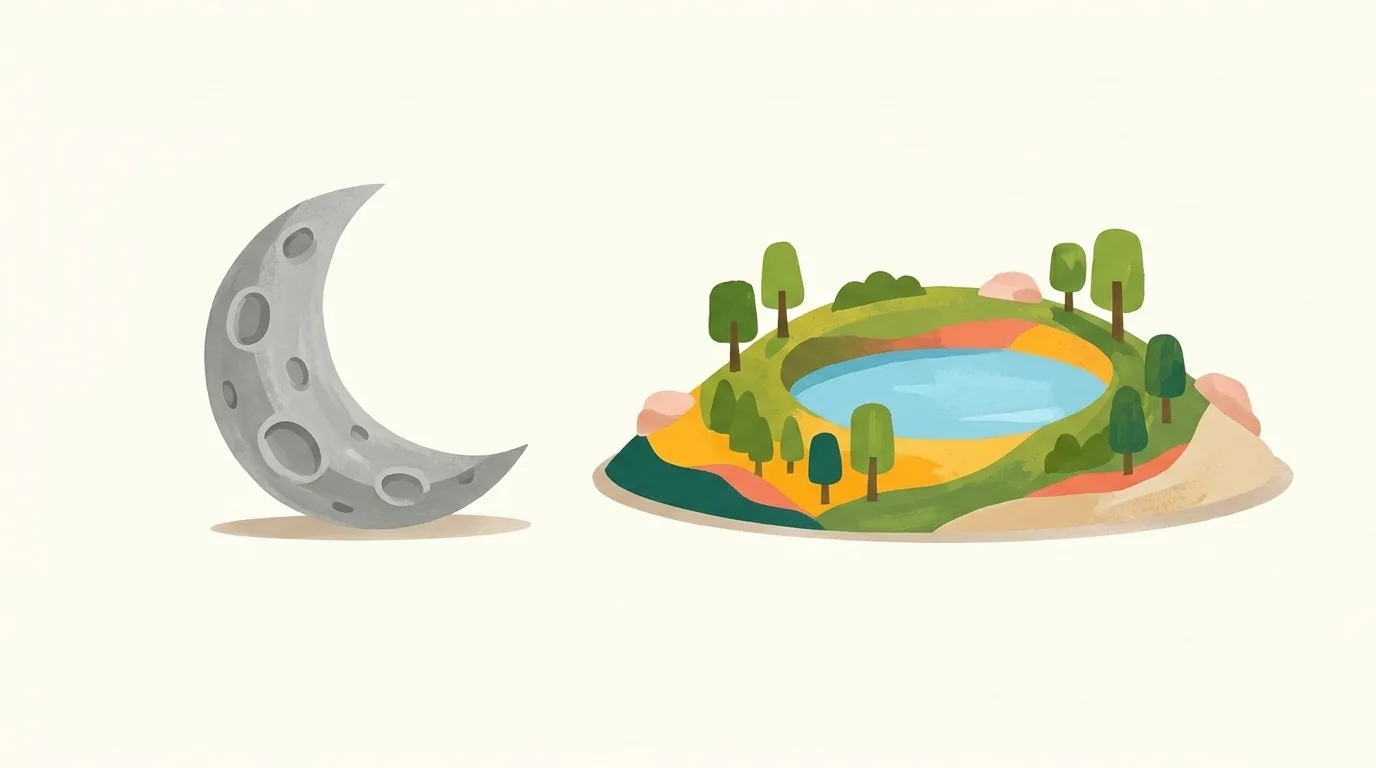
Illustration, made with AI
Why doesn't Earth have lots of craters like the Moon?
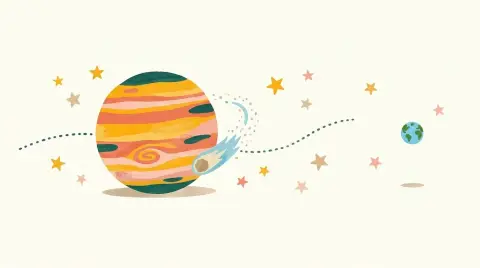
Earth gets hit too, but it hides and erases its craters!
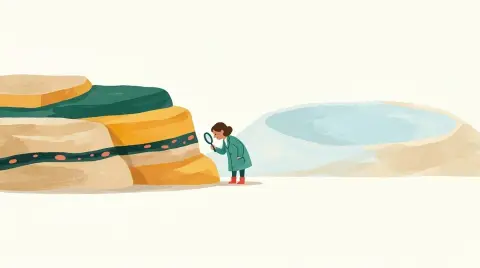
Erosion by rivers and glaciers wears craters away, and newer rock and mud bury others. Scientists have found only about 200.
It's like footprints on a beach smoothed away by waves.
Tell me more
About two-thirds of Earth's rocky outside is under the oceans, and the ocean floor keeps renewing itself. New sea floor forms along giant cracks, while old sea floor sinks back down into Earth, like a slow conveyor belt. No ocean floor is older than 200 million years, so older craters there are gone. Deep water also soaks up the energy of smaller space rocks. Our air helps too: many small rocks burn up high in the sky, each one a meteor. The giant crater from the asteroid at the end of dinosaur times is 160 kilometers wide, but it is hidden under younger layers in Mexico.
Words to know
- erosionwater, wind or ice slowly wearing rock away
- cratera big bowl-shaped hole made when something crashes in
- meteorthe glowing streak a space rock makes in our sky
Try it at home
Press a ball into a tray of sand to make a crater, then sprinkle sand over it. Watch your crater get buried, just like on Earth!
 Dig deeper
 What else?
 Surprise me!